

Receiving Damaged Packages: How Mailrooms Inspect, Document, and Claim Damage
A mailroom should handle damaged packages by inspecting each delivery at the door, writing specific notes about any damage before signing, taking photos, keeping the box and contents, notifying the recipient, and filing a claim with the carrier within its deadline. The steps are simple. The hard part is doing them the same way every time, because a claim is only as strong as the record behind it. Package tracking software helps by tying photos, notes, and times to the package, so the evidence is ready when you need it.
Most advice about damaged deliveries is written for one person with one broken item. A mailroom has a different job. You receive hundreds of packages for other people, you often do not know what is inside, and the person who files the claim may be in another building. This guide explains how to set up a damage procedure that works at that scale, what carriers expect, and what to record. If you are an individual recipient, our consumer article on what to do if a package arrives damaged is a better fit.
Why Damage Needs a Mailroom Procedure
When a package is damaged, three questions follow. Who damaged it, who owns the loss, and who has the proof? The answers depend on records created in the first few minutes. A box that was accepted without comment is much harder to dispute later, because the carrier can say it arrived in good condition.
The scale of the carrier network shows why this comes up. The U.S. Postal Service reported that its shipping and package volume was 6.8 billion pieces in fiscal year 2025. Even if only a tiny share of deliveries arrive harmed, a busy mailroom will see damaged boxes every week.
Picture a mailroom that receives 200 packages a day. If just one in a hundred shows damage, that is two packages a day, or about ten a week. Without a procedure, each one is handled differently. One clerk calls the recipient, another sets the box aside, and a third forgets about it. A procedure replaces ten different reactions with one routine.
Inspect at the Door, Before You Sign
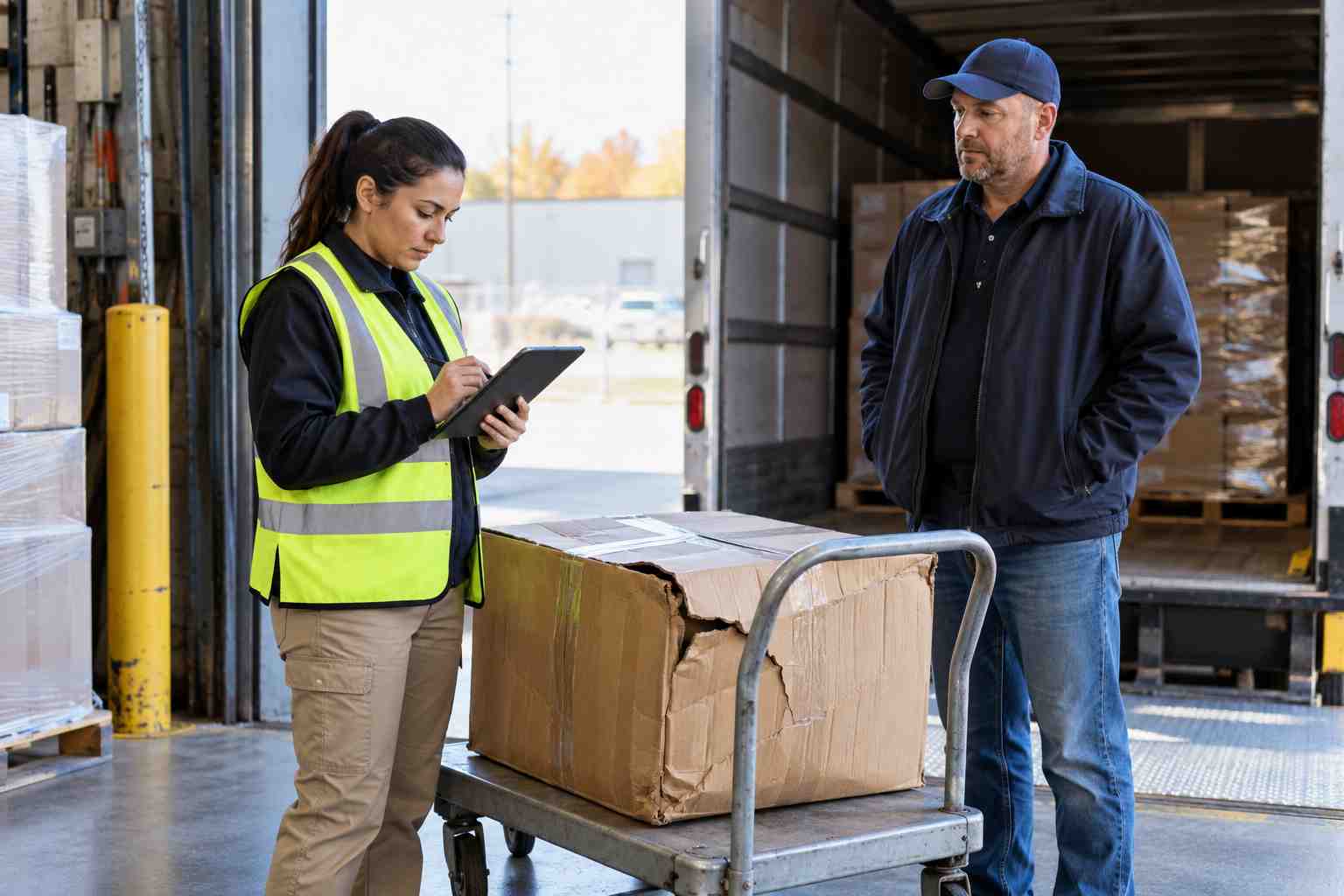
The best time to catch damage is while the driver is still there. Teach receivers to look at each box for crushed corners, punctures, wet or stained spots, torn tape, signs of reclosing, and anything that rattles or leaks. If a delivery has many boxes, count them and match the count to the paperwork.
Guidance from FedEx Freight tells recipients that they must carefully identify and document loss or damage on the delivery receipt at the time of delivery. That guide is written for freight and LTL shipments, and it notes that other carriers may have different claim-handling rules. Even so, the habit it describes is a good one for any mailroom, because it is much easier to note damage before the driver leaves than to argue about it later.
If your receiving area gets pallets or multi-box shipments, set a rule that nobody signs until the count and condition are checked. This is also a good place to review the receiving steps in your written procedures. Our guide to what package tracking software is gives a plain-language overview of how a scan at intake creates the record.
Write Notes That Carriers Will Accept
Vague notes do not help. The FedEx Freight guide says to use specific details and avoid general terms such as “box damaged” or “torn,” because that kind of notation does not provide adequate support for a claim. It also says that a note of “subject to inspection,” by itself, is not considered a valid notation of loss or damage. It gives an example of a proper note: “2 of 12 bottles #12345 hand soap damaged in 1 carton.”
Use that as a model. A good note says how many items, which items, what kind of damage, and where on the package. “Carton 3 of 5 crushed on the lower left corner, contents rattle, 1 monitor box wet” is far better than “damaged.” Teach staff to write it that way, and give them a short list of words to use: crushed, punctured, torn, wet, open, resealed, leaking, dented, and missing contents.
Imagine a clerk who writes “damaged” on a delivery slip for a box of lab supplies. Two weeks later the carrier asks what was damaged and how. No one remembers. Now imagine the clerk who wrote “Box 2 of 4, crushed top, 3 of 24 glass vials broken, liquid leaked.” The first claim stalls. The second can be filed the same day.
Take Photos and Keep Everything
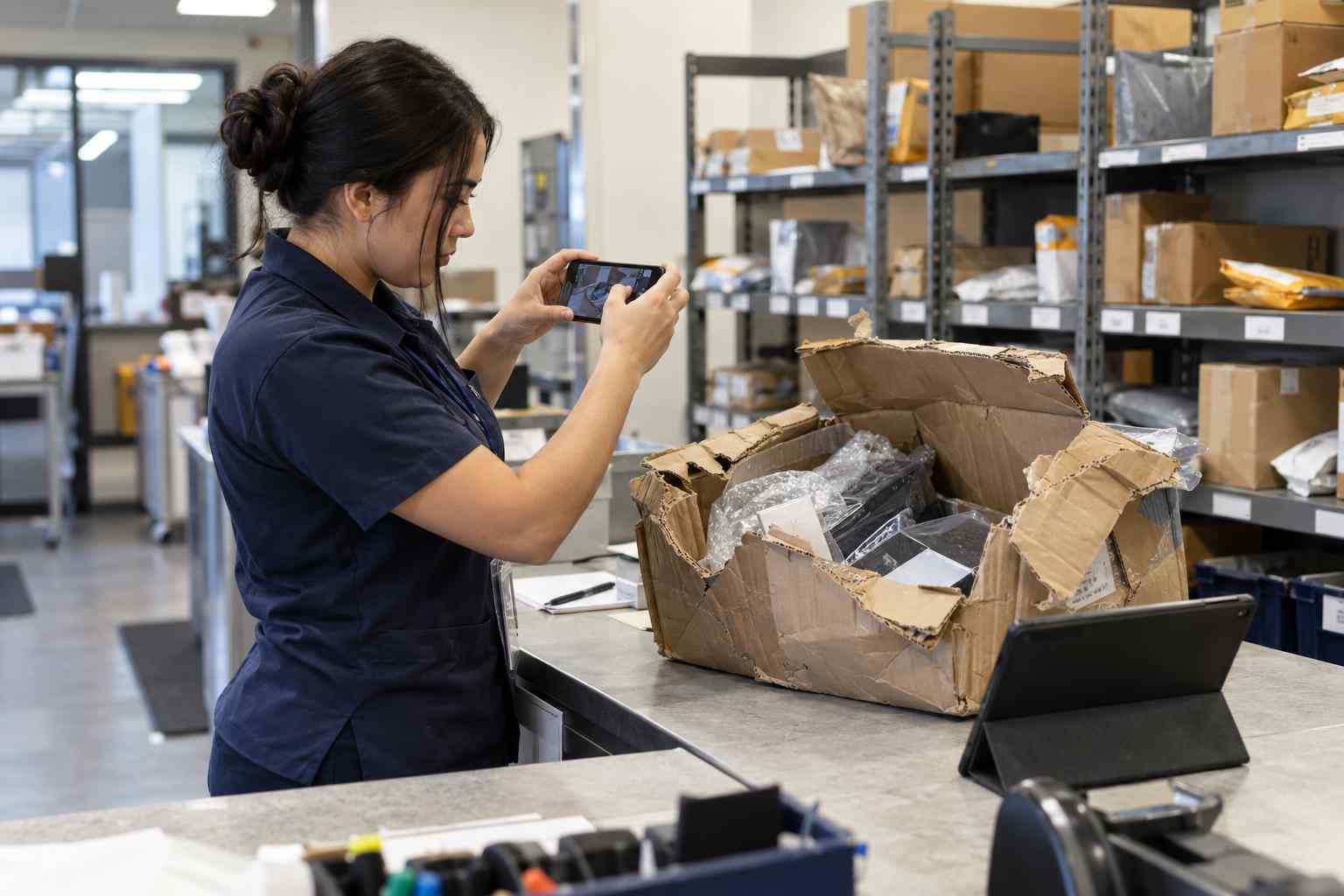
Photos are the quickest way to preserve evidence. Take a wide shot of the box with the label, a close shot of each damaged area, and a shot of the contents if you open it. Take the photos before you move, repack, or discard anything. Add a timestamp, which most phones and systems do by default.
Keep the packaging, too. The USPS Domestic Mail Manual states that when a claim is filed for damage or missing contents, the addressee must retain the mailing container, including any damaged articles, all packaging, and any contents received, and that failure to do so will result in denial of the claim. FedEx says to keep the original packaging and contents until a claim is resolved, since they may be required for inspection.
That means your mailroom needs a place to hold damaged boxes while a claim is open. Use a labeled shelf or cage, record the location in the package record, and set a rule about who may release the item. Throwing out a crushed box to clear space can cost the claim.
Know the Claim Deadlines
Deadlines differ by carrier and service, so confirm them for each one you use. FedEx’s claims page says to file a claim for damaged or missing contents no later than 60 calendar days from the shipment date for U.S. packages. USPS says in its Domestic Mail Manual that customers should file immediately and must file no later than 60 days from the date of mailing for damaged or missing contents.
Freight is different. The FedEx Freight guide says concealed damage should be reported to the carrier within 15 days of delivery, and that claimants have nine months from the date of delivery to file claims for loss or damage. Those are the rules for that service, so do not assume they apply to parcels. The point is that the clock can be short, and it often starts before the recipient has even opened the box.
Consider a package that was shipped on the 1st, reached your mailroom on the 6th, and sat unclaimed until the 20th. When the recipient opens it and finds a cracked device, 19 days of a 60-day window are already gone. If your mailroom had logged any visible damage on the 6th, the claim could have started early. This is another reason to reduce how long packages sit, which our article on how to organize a mailroom covers.
Concealed Damage: When the Box Looks Fine
Not all damage shows on the outside. A box can look perfect while the item inside is broken. This is called concealed damage, and it is usually found when the recipient opens the package. The FedEx Freight guide describes it as damage that was not apparent at the time of delivery.
Your procedure should tell recipients what to do when they find it. Ask them to stop, keep everything, take photos of the box and the item, and contact the mailroom right away. The mailroom can then link the new photos to the original intake record, which shows the box arrived without visible damage and helps the claim. It also keeps the recipient from tossing the packaging.
Make this part of your pickup message. A short line such as “Please open your package within two business days and report any damage to the mailroom” gives you a better chance of meeting carrier deadlines. It also sets a clear expectation without blaming anyone.
Decide Who Files the Claim
One common dispute is who is responsible for the claim. The sender, the recipient, or the mailroom may each have a role. The USPS Domestic Mail Manual says either the mailer or the addressee can file for damaged articles or articles with missing contents. For other carriers and for freight, the rules may be different, and a purchase agreement with the vendor may say the vendor files.
Your procedure should answer the question for your organization. For example, it might say that the mailroom documents and holds the item, the recipient’s department contacts the vendor, and the purchasing office files a claim when the vendor requires it. What matters is that everyone knows ahead of time, and that the mailroom has the records to hand over.
A claim also needs documents. The FedEx claims page lists items such as the original invoice, a retail receipt or order confirmation, photos of the damaged package and contents, and a copy of the shipping label. The mailroom can supply the photos and label. The department supplies the invoice. Spell out that split in writing so no one waits on the other.
Tell the Recipient Quickly and Plainly
Recipients should hear about damage right away, in clear language. Say what arrived, what you saw, where the item is, and what you need from them. Avoid blame. The mailroom did not cause the damage, but the recipient may think so if the first message is vague.
Give the recipient two choices when they can. They may inspect the item with a mailroom staff member present, or they may ask you to hold it for the vendor or carrier. In either case, record what they chose and when. If the item is urgent, tell them what to do next and who can help.

How Package Tracking Software Strengthens the Record
Paper slips and handwritten logs work until you need to find one. Software keeps the evidence in the package record. TekTrack supports photo and document attachments, so staff can capture the condition of a box at intake and the photos stay linked to the tracking number. The package logging software page describes how intake photo documentation creates timestamped visual evidence if a recipient later reports damage or a vendor disputes condition.
Software also keeps the chain of custody. A proof of delivery record shows who accepted a package, when it was logged, where it was stored, and who signed for it. If a package is damaged in your care instead of in transit, that history also protects you, because it shows exactly when the damage was found. For more on what a good record includes, read our article on what effective proof of delivery records need to capture.
Finally, software gives you reports. You can see how many damaged packages arrive each month, from which carrier, and in which service. If one carrier has far more damage than another, you have data for a conversation with the carrier, or with a vendor that packs poorly. Without records, those conversations are based on impressions.
A Short Damage Checklist for Your Procedures
You can turn the ideas above into a short list that fits on one page and hangs by the dock.
- Look before you sign. Check each box and count the pieces while the driver is present.
- Write a specific note. Say how many, which items, and what kind of damage.
- Take photos. Capture the label, the damage, and any contents shown.
- Keep everything. Hold the box, packaging, and contents in a labeled place.
- Tell the recipient. Send a clear message with the next step.
- Start the claim clock. Note the carrier deadline and who files.
Review the checklist with every new hire and test it with a real or practice delivery. Update it when you add a carrier or change who files claims. A small habit repeated on every delivery is what turns a pile of damaged boxes into a set of supported claims.
Frequently Asked Questions
What should a mailroom do when a package arrives damaged?
Inspect it while the driver is present, write a specific note about the damage, take photos, keep the box and contents, notify the recipient, and file a claim with the carrier within its deadline.
Should we refuse a damaged delivery?
That depends on your agreement with the vendor and the carrier. Many organizations accept the delivery with a clear notation of damage, since that keeps the record and the goods in hand. Check your own policy and any contract terms.
How long do we have to file a damage claim?
It varies by carrier and service. FedEx and USPS both state 60 days for many parcel claims, while freight rules differ. Check the current rules for each carrier you use, and log the deadline when damage is found.
What is concealed damage?
It is damage that cannot be seen from the outside and is found only after the box is opened. Ask recipients to stop, keep the packaging, take photos, and call the mailroom right away.
Can package tracking software help with damage claims?
Yes. It can store photos, notes, timestamps, and signatures with the package record, so you can show the condition of a package at intake and who handled it afterward.
Want to see how photo records and notes can live inside every package record? Schedule a demo and we will walk through a damaged package from the dock to the claim.
