
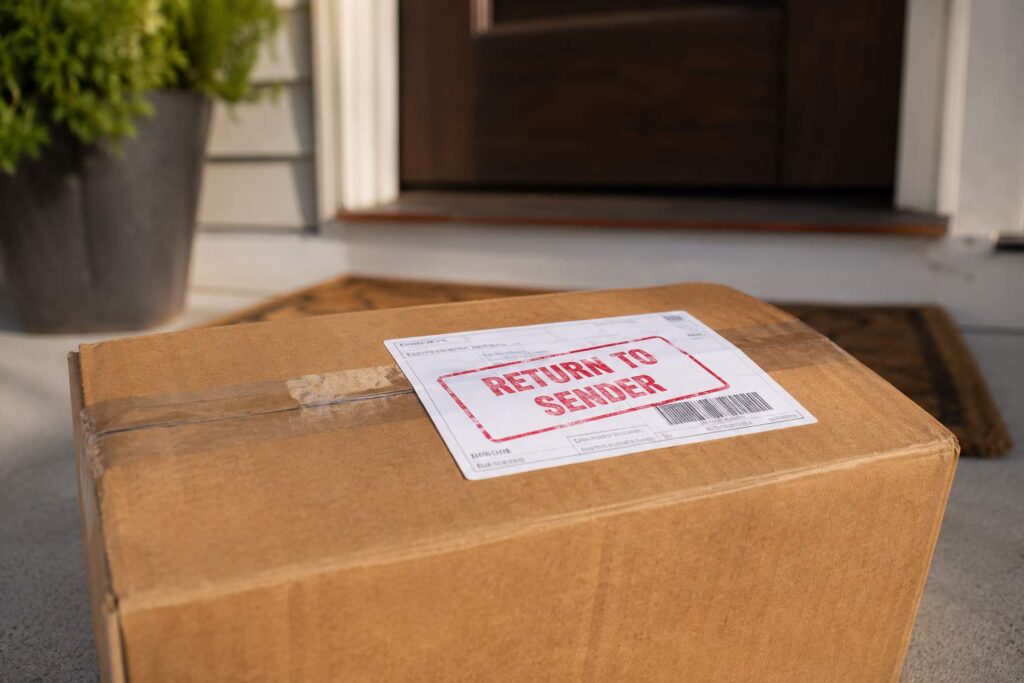
Why Was My Package Returned to Sender?
A package gets returned to sender when the carrier cannot complete delivery and sends the item back to the person or business who shipped it, usually because of a bad address, a refused delivery, a missed signature, unpaid postage, or a mail forwarding order that ran out before the package arrived. You will usually see this as a tracking update that says something like “Return to Sender,” “Returned to Shipper,” or “Undeliverable as Addressed.” If this just happened to you, either as the person waiting on the package or the person who sent it, here is exactly what it means, why it happens, and what you can do next.
What “Return to Sender” Actually Means
When a carrier marks a package “Return to Sender” (often shortened to RTS), it has stopped trying to deliver the item to the address on the label and started shipping it back the way it came. This is not the same as a package being lost or stolen. The carrier still has the package, it is simply going in the opposite direction. Depending on the carrier and the reason for the return, the package can take anywhere from a few days to a few weeks to make it back to the original shipper, and in most cases the tracking page will keep updating the whole way.
USPS alone delivers to nearly 169 million addresses across the country, according to USPS Postal Facts. With that much volume moving daily, address mismatches, refused deliveries, and expired forwarding orders add up to a steady stream of returns. It is a common event, not a rare glitch.
The Most Common Reasons Packages Get Sent Back
Imagine you ordered a phone case online, tracked it for three days, and then watched the status flip to “Return to Sender” with no explanation. Frustrating as that is, the reason almost always falls into one of these categories.
- Undeliverable or incomplete address. A missing apartment number, a misspelled street name, or a typo in the ZIP code can make an address unreadable to the carrier’s sorting system, especially if the address was entered by hand at checkout.
- The recipient refused the package. Anyone can legally refuse a delivery before signing for it or accepting it from a carrier, which sends it straight back without any delivery attempt at all.
- A signature was required and no one was available. After a set number of failed delivery attempts, some carriers stop trying and return the package instead of leaving it unattended.
- The delivery location was not accessible. A locked apartment lobby, a gated community without carrier access, or a business that was closed when the driver arrived can all block delivery.
- Postage was insufficient, or the package exceeds size or weight limits. If the shipper underpaid postage or the box is heavier or larger than the service allows, the carrier can bounce it back rather than deliver it short-paid.
- The contents are restricted or prohibited. Certain items, such as some batteries, aerosols, or agricultural products, can be pulled and returned if they were shipped through a service that does not allow them.
- A mail forwarding order expired. If someone moved and set up mail forwarding, but the forwarding period ended before the package shipped, the carrier has no new address to send it to.
That last one catches a lot of people off guard, so it is worth explaining in detail, because the timeline is longer than most people expect.
How Carriers Handle a Returned Package
Each major carrier has its own process and its own wording for a returned shipment, so it helps to know what you are looking at on the tracking page.
With USPS, standard mail forwarding lasts 12 months from the date you file a change of address, according to USPS.com. Once that 12 month window closes, USPS does not just drop the mail. Instead, for the following 6 months, the Postal Service returns mail to the sender with a label showing the recipient’s new address, so the sender can update their records and try again. After that 18 month combined window, mail is returned to sender with no forwarding address attached at all. USPS also lets you pay to extend forwarding by 6, 12, or 18 additional months if you know you will need more time. On the tracking page, a returned USPS package usually shows a status like “Return to Sender” or “Undeliverable as Addressed,” often alongside a delivery attempt or “Notice Left” scan from a few days earlier.
UPS and FedEx work a little differently. Instead of automatically forwarding to a new address the way USPS does, both carriers typically attempt delivery, and if the package cannot be delivered after those attempts, whether from a refused delivery, an inaccessible address, or an address the courier cannot verify, the shipment is marked as an exception and routed back to the shipper. You will usually see this as “Returned to Shipper” or a delivery exception scan with a reason code attached, and the package physically retraces its route back through the same regional hubs it came from.
Amazon-fulfilled and Amazon Logistics packages follow a similar pattern to UPS and FedEx. If a driver cannot complete delivery after the attempts allowed for that shipment, the package heads back to an Amazon fulfillment center, and the order page will usually show a delivery exception before it shows a return.
DHL Express, which handles a large share of international shipments, tends to hold a package at a local facility and attempt contact with the recipient before returning it, since international returns involve customs paperwork on both ends. If you are waiting on an international package, an unexpected “Return to Sender” often traces back to a customs issue rather than a simple address problem.
How Long It Takes for a Returned Package to Get Back
Say a package ships from a warehouse in Ohio to a customer in Texas, gets refused at the door, and starts its trip back. In most cases, a domestic return travels roughly the same distance and takes roughly the same number of transit days as the original shipment did, since it is moving through the same sorting network in reverse. A ground package that took 4 to 6 days to arrive will usually take another 4 to 6 days to make it back to the shipper. Expedited or air services return faster, often in 2 to 3 days, because they use the same faster network on the way back.
International returns take considerably longer. A package returning from overseas has to clear customs again, sometimes in both directions, which routinely adds one to several weeks on top of normal transit time. Do not expect an international return on the same timeline as the original delivery.
What to Do If You Are Expecting the Package
If you are the customer waiting on something that just flipped to “Return to Sender,” start with these steps.
- Check the address you provided. Log into the order and confirm the shipping address is complete, including apartment or suite numbers, before you contact anyone.
- Contact the seller or shipper, not just the carrier. The seller controls the label and any reshipment or refund, and the carrier generally cannot redirect an order placed through a retailer.
- Ask whether they will reship or refund. Most retailers will either send a replacement to a corrected address once the original package is scanned back in, or issue a refund if the return takes too long.
- Watch the tracking page rather than assuming the worst. A “Return to Sender” scan does not mean the package is lost. It usually means it is simply headed in a different direction than you expected.
For example, someone who moved apartments two weeks before an online order shipped might see it returned simply because the new unit number was never updated in their saved payment profile. In that situation, updating the address and asking the retailer to reship solves the problem in a single message.
What to Do If You Are the One Who Shipped It
If you are a small business owner or an individual seller and a package you sent is coming back, the fix depends on why it was returned.
If the return was caused by a bad address, correct the address with your customer before you reship, and consider requesting address verification at checkout going forward. If the package was refused, reach out to the buyer to understand why before sending it again, since a second refusal just repeats the cost. If postage was insufficient, weigh and measure the package again and repurchase a label with the correct amount. Once the returned package is back in your hands, most carriers do not charge to reship it, only the original shipping cost, unless you choose an expedited service the second time.
Can You Stop a Package From Being Returned?
Sometimes yes, if you catch it in time. USPS offers a free Package Intercept service in many cases, which lets you redirect a package that is still in the mail stream before it completes its return trip, either back to you at a new address or to the original recipient. UPS and FedEx both offer similar reroute or “intercept” options through their online tracking tools or customer service, usually for a fee, and usually only while the package is still in transit and has not yet reached the final return sort. Once a package has already been handed back to the original shipper’s local facility, it is generally too late to intercept, and the fastest path forward is coordinating a reship directly with the seller.
How to Prevent This From Happening Again
Most returned packages trace back to something fixable. Double check the shipping address before you place an order, especially apartment, suite, or unit numbers, since those are the most commonly dropped details at checkout. If you recently moved, update your address with retailers directly rather than relying on mail forwarding to catch everything, since forwarding does not apply to every carrier or shipment type. If a delivery will require a signature, plan to be home, or have it sent somewhere someone can accept it. Businesses shipping product should verify addresses at checkout and weigh packages accurately before printing postage.
Frequently Asked Questions
Does a returned package mean I get a refund automatically?
Not automatically. Refund and reshipment policies depend on the seller, not the carrier. Most retailers will refund or reship once the returned package is scanned back into their system, but you typically need to reach out and ask.
Will I be charged again if a seller reships a returned package?
Usually not, if the return was not your fault. Most sellers absorb the cost of reshipping a package that was returned because of a carrier issue or an address problem on their end, though policies vary, so it is worth asking directly.
Can a package be returned to sender without any delivery attempt at all?
Yes. If an address is unreadable, incomplete, or clearly undeliverable, or if the recipient explicitly refuses the shipment, carriers can return it without ever attempting to leave it at the door.
How do I know if my package was returned because of customs rather than a shipping error?
Check the tracking history for a customs-related scan, such as a hold or inspection entry, in the days before the return. International returns caused by customs issues almost always show a customs scan first, while domestic address or delivery issues will not.
If you are the one keeping track of packages for other people, like a mailroom, an apartment complex, or a business receiving area, and misdirected or returned deliveries are a regular headache, package tracking software can make it much easier to catch address and delivery problems before a package ever gets sent back.
