
Why Pickup Verification Matters as Much as Intake Logging for Package Security
Most mailroom security discussions focus on the moment a package arrives, scanning it in, logging who it belongs to, storing it safely, but the pickup moment deserves just as much attention, since it is the point where a package can end up in the wrong hands even after everything before it went correctly. A facility that carefully logs intake but only checks a name at pickup, without verifying identity, still leaves an opening for the wrong person to walk out with someone else’s delivery, regardless of how carefully everything before that final handoff was documented.
The Gap Between Careful Intake and Loose Pickup
It is a common pattern: a receiving operation invests in scanning barcodes, matching packages to the correct recipient, and logging exactly when each item arrived, then hands the package over at pickup based on little more than someone saying the right name out loud. That gap matters because intake accuracy only protects the front half of the process. A package correctly logged and correctly stored can still be picked up by someone other than the intended recipient if the only check at the counter is a verbal name match, which is easy to overhear, guess, or simply claim.
Facilities that rely only on an open shelf and a simple sign-in sheet consistently see higher loss rates than those that verify identity at pickup and log every handoff, since a controlled pickup process closes off the easiest opportunity for a package to walk out with the wrong person: someone who is present in the building anyway, whether a coworker, a fellow resident, or an occasional visitor, and simply says a name that happens to match a waiting package.
What Verified Pickup Actually Looks Like
Effective pickup verification does not need to be complicated or slow down the process significantly. A few common approaches, often used together, close most of the gap:
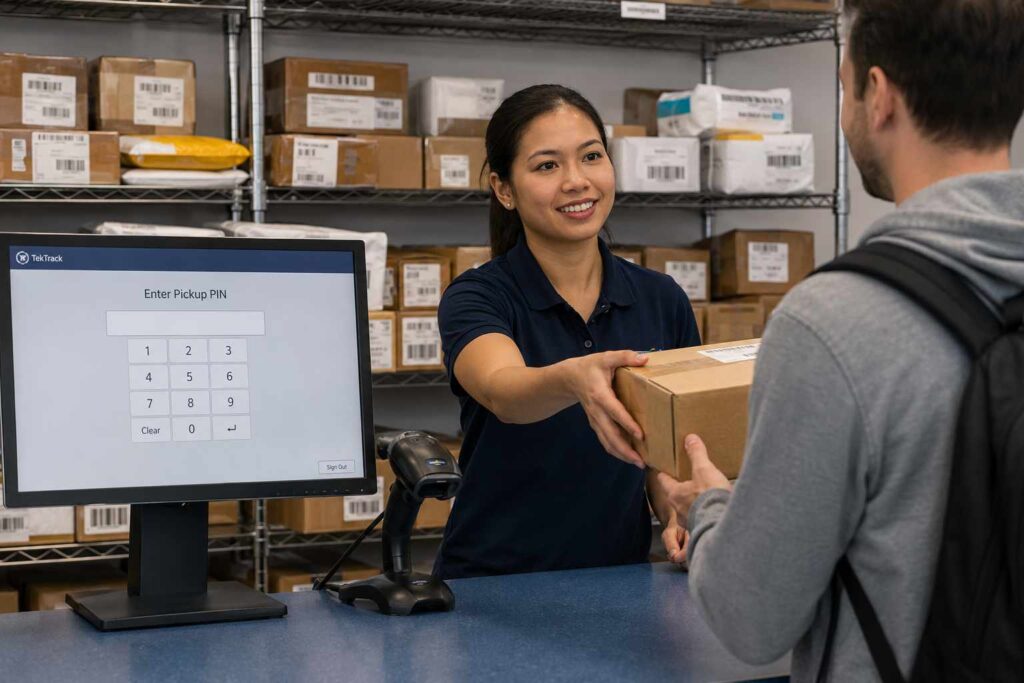
- PIN or code verification. A unique code sent along with the arrival notification, which the recipient enters or shows at pickup, confirms they actually received the notification meant for them rather than simply guessing a name.
- Photo ID check for higher value items. For expensive or sensitive packages specifically, a quick ID check at the counter adds a stronger layer than a PIN alone, without requiring it for every routine delivery.
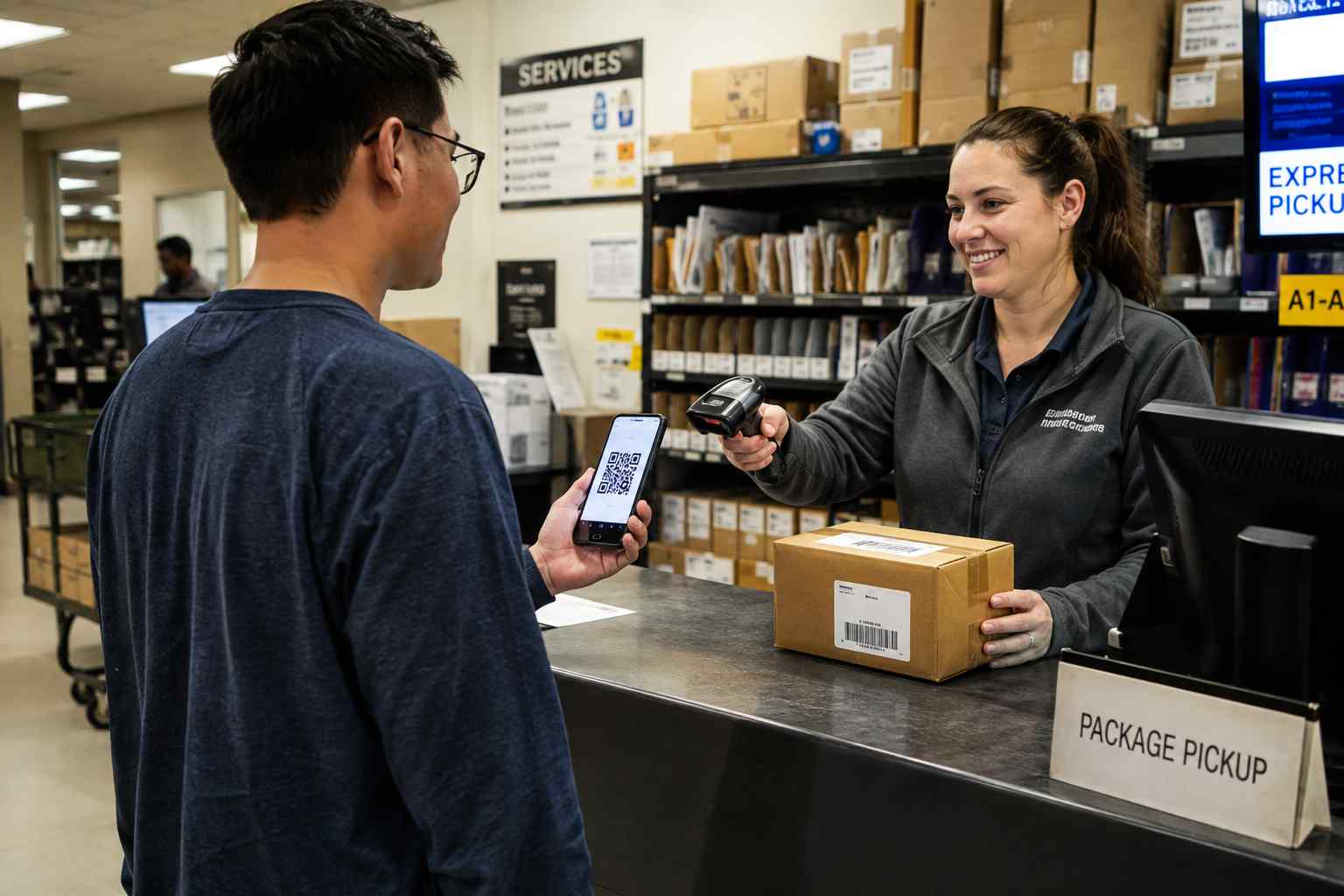
- QR code or barcode scan tied to the recipient’s account. Similar to a boarding pass, a code generated specifically for that recipient and that package ties the physical handoff to a specific digital record rather than a verbal exchange.
- Photo capture at handoff. A timestamped photo of the actual pickup moment creates a visual record that is far harder to dispute than a signature or a checked name on a list.
None of these require an elaborate security process. Most take only a few seconds longer than a simple name check, and the systems that support them typically generate the code or verification requirement automatically as part of the same notification already being sent when the package arrives, so there is no separate step for staff to set up or manage on top of the intake process already in place.
A Realistic Example
Picture a busy corporate mailroom where dozens of employees pick up packages during the same lunch hour rush. Under a name-only system, an employee grabbing their own delivery might notice a colleague’s package sitting nearby with a name they recognize, and without much friction, could pick it up “to save them a trip,” intending to hand it over later, or in rarer cases, someone could deliberately claim a package that is not theirs. With PIN-based pickup verification tied to the original notification, that scenario is closed off structurally rather than relying on staff catching every instance, since the code itself is the actual proof of identity, not a name that anyone standing nearby could plausibly claim.
The same logic applies just as clearly to accidental misdelivery at pickup, not only deliberate misconduct. A recipient with a common last name, or two employees who share a first initial and last name, can easily be handed the wrong package under a name-only system even when everyone involved is acting in good faith. A PIN or code tied to the specific notification eliminates that ambiguity entirely, since it does not depend on staff correctly distinguishing between two similar-sounding names during a busy pickup window.
Why This Matters More As Package Volume Grows
The risk from loose pickup verification scales directly with how many packages and how many people move through a facility. A small office with a dozen employees who all know each other by sight faces relatively low risk from a name-only pickup process, since an unfamiliar face claiming a coworker’s package would likely draw attention on its own. A university mailroom, a large apartment complex, or a corporate campus with hundreds or thousands of people moving through daily loses that natural check entirely, staff cannot reasonably recognize every resident or employee by sight, which is exactly the environment where PIN or ID-based verification provides the most value relative to the small amount of extra time it adds to each pickup.
This is also where the return on the extra verification step becomes easiest to see in practical terms. A facility handling a few dozen pickups a week can absorb the occasional dispute without much difficulty, staff can usually reconstruct what happened from memory alone. A facility handling hundreds of pickups a day cannot rely on memory the same way, and without a verified record, a single misdelivered high-value package can consume far more staff time resolving the dispute after the fact than the verification step itself would have taken across an entire week of normal pickups.
What to Look For When Adding Pickup Verification
A few practical considerations separate a verification step that genuinely closes the gap from one that just adds friction without much real benefit. The verification method should tie directly back to the original arrival notification, so the code or credential itself is proof the right person received the alert, rather than being a separate, disconnected step staff have to cross-reference manually. It should also be flexible enough to scale by item value or sensitivity, a full photo ID check on every routine package will frustrate people and slow down high-traffic pickup periods for little added benefit, while reserving that stronger check for higher value or sensitive items keeps the friction proportional to the actual risk. Finally, the system should log every verified pickup automatically, creating a searchable record without requiring staff to separately write anything down, since a verification step that is not actually documented does not meaningfully improve on a name check when it comes time to resolve a dispute later.
Where This Fits With Broader Chain of Custody
Pickup verification is the final link in a complete chain of custody, and it is worth treating with the same seriousness as intake scanning and storage logging rather than as an afterthought. A system that documents exactly who received an item, confirmed through something more concrete than a spoken name, closes the loop that a chain of custody record depends on. Pairing verified pickup with broader digital mailroom tools extends that same documented accountability across the entire process, from the moment a package arrives to the moment it actually leaves with its intended recipient, rather than leaving the final and arguably most important step as the weakest link in an otherwise carefully documented process.
Getting Started
For a receiving operation currently relying on a name check or a sign-in sheet at pickup, adding PIN or code verification is usually a lower lift than it sounds, since most systems can generate the code automatically as part of the same notification workflow already in place. You can get a quote to see what verified pickup would look like layered onto your current process.
Frequently Asked Questions
Does pickup verification slow down the process significantly? Generally not. Entering a PIN or scanning a code typically takes only a few seconds longer than stating a name, and for most routine pickups that is the only added step.
Is ID verification needed for every package? Not necessarily. Many organizations reserve a full ID check for higher value or sensitive items, while using a simpler PIN or code system for routine deliveries.
What happens if someone forgets or loses their pickup code? Most systems allow staff to verify identity through an alternative method, such as looking up the notification by name or resending the code, so a lost code does not mean the package becomes inaccessible.
