
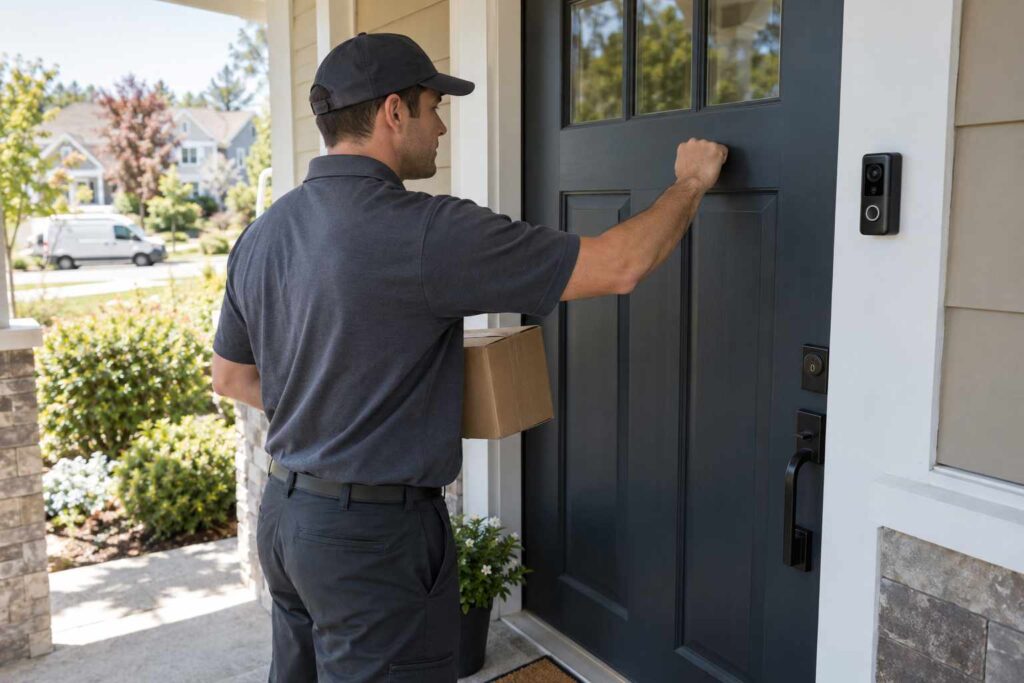
What Happens to a Package If No One Is Home to Receive It?
If no one is home when a package arrives, most carriers will simply leave it in a safe spot at the door, since a signature usually is not required. If the driver judges the location unsafe, or the package does require a signature, the carrier will typically leave a delivery notice, try a neighbor if you have authorized that option, or attempt redelivery on the next business day. Each major carrier, USPS, UPS, FedEx, and Amazon, handles this slightly differently, and each one also offers a free tool that lets you plan ahead so a missed delivery never becomes a bigger problem.
How Often This Actually Happens
Missing a delivery is far more common than most people realize. Research published by Harvard Business Review found that up to 20 percent of e-commerce packages are not delivered successfully on the first attempt, a figure driven by a mix of factors including nobody being available at the address, incomplete or inaccurate address information, and access issues at apartment buildings or gated communities. With online order volume continuing to climb every year, that percentage translates into a very large number of delivery notices, redelivery attempts, and trips to a local pickup counter across the country every single day, which is exactly why every major carrier has built free tools to help you avoid becoming part of that statistic.
What Each Carrier’s Driver Actually Does
For the vast majority of packages, no signature is required at all, so a driver arriving at an empty house will simply leave the box in a spot that looks reasonably protected from weather and view, such as a covered porch, a side door, or behind a planter, and move on to the next stop. USPS carriers generally treat most parcels this way, leaving them with the regular mail or in a location that matches any delivery instructions on file. UPS follows a similar approach for standard ground shipments; if the package does not require a signature, the driver leaves it in what looks like the safest available spot and logs the delivery as complete. FedEx drivers use their own judgment in much the same way, and if you have set up delivery instructions through FedEx Delivery Manager, the driver can see a note about where you prefer packages to be left, such as a side gate or a delivery box.
Consider a renter who works a normal daytime shift and orders a set of kitchen items online. The FedEx truck arrives at two in the afternoon while she is at the office. Because the shipment does not require a signature, the driver leaves it beside her apartment door, takes a photo for the delivery record, and the tracking page updates to “Delivered” within a few minutes. She never has to do anything at all, and this outcome, not a missed delivery, is what happens on the overwhelming majority of stops where nobody happens to be home.
When a Package Actually Requires Someone Present
The situation changes when a shipment is marked for signature service, which is common for high-value electronics, certain legal or financial documents, prescription medications, and age-restricted items like alcohol. In those cases, if no one answers, the driver cannot legally leave the package unattended. UPS will generally leave a delivery notice with instructions and make another attempt the next business day, often for up to three attempts before returning the package to the shipper or holding it at a local UPS location for pickup. FedEx follows a similar pattern, leaving a door tag, often called a Delivery Notice, with a QR code or phone number you can use to schedule a redelivery, reroute the package to a nearby FedEx location, or authorize a release without a signature going forward. USPS leaves PS Form 3849, its official delivery notice, explaining whether the mail carrier will attempt delivery again, whether the item is being held at the local post office, and how many days you have to pick it up before it is returned to the sender.
Proactive Tools That Prevent a Missed Delivery in the First Place
Every major carrier now offers a free way to get ahead of this problem instead of reacting to it after the fact. The USPS Hold Mail service pauses delivery of both mail and packages to your address for a minimum of three days and a maximum of thirty days while the postal service holds everything securely at your local post office; you can schedule it online through a USPS.com account, by phone, or in person, and it automatically resumes on the next scheduled delivery day once the hold period ends. UPS My Choice, a free membership program, lets you set standing delivery instructions, such as where a driver should leave packages, and gives you the ability to reschedule an individual delivery, redirect it to a neighbor’s address, or send it to one of more than twenty thousand UPS Access Point locations nationwide, which include partner retail stores where you can pick a package up on your own schedule. FedEx Delivery Manager offers a comparable vacation hold feature, suspending FedEx Express and FedEx Ground deliveries to your address for up to fourteen days and automatically resuming afterward, and the same tool lets you set standing instructions for where a driver should leave a package when you are simply out during the day rather than away for an extended trip.
Amazon has its own version built directly into the app and website. Under Your Orders, you can add delivery instructions for a specific address, such as “leave with the doorman” or “place inside the screened porch,” and these instructions carry forward to future orders shipped to that address, whether Amazon’s own delivery network or a partner carrier handles the final leg. For a household that travels frequently, combining one of these hold services with saved delivery instructions for the days in between trips removes most of the guesswork around an empty house.
What to Do If a Delivery Notice Is Left on Your Door
If you come home to a notice rather than a package, the fastest path is almost always the option printed on the slip itself. A USPS PS Form 3849 will indicate whether your item is out for redelivery automatically, waiting at the post office for pickup, or available for a neighbor or someone else at the address to sign for using the form. A UPS or FedEx notice typically includes a tracking number and a phone number or QR code that lets you request a specific redelivery date, reroute the package to a staffed location near you, or, for non-signature shipments, authorize the driver to leave it without anyone present on the next attempt. Waiting too long matters here; USPS generally holds an item for about ten days before returning it to the sender, FedEx tends to hold undelivered packages for about a week before the same thing happens, and UPS’s hold window is similar, so a delivery notice left unanswered for two weeks often means the item is already on its way back rather than sitting nearby waiting.
A small business owner who works from a shared coworking space offers a useful illustration. She orders replacement equipment that requires a signature, and the FedEx driver leaves a door tag at her home address because no one answered. Rather than waiting for a second automatic attempt, she scans the QR code on the tag that evening, selects a FedEx Access location a few blocks from her coworking space, and picks the package up herself two days later on her own schedule, instead of hoping to be home during a second delivery window she cannot fully predict.
How Amazon Handles a Missed Delivery Differently
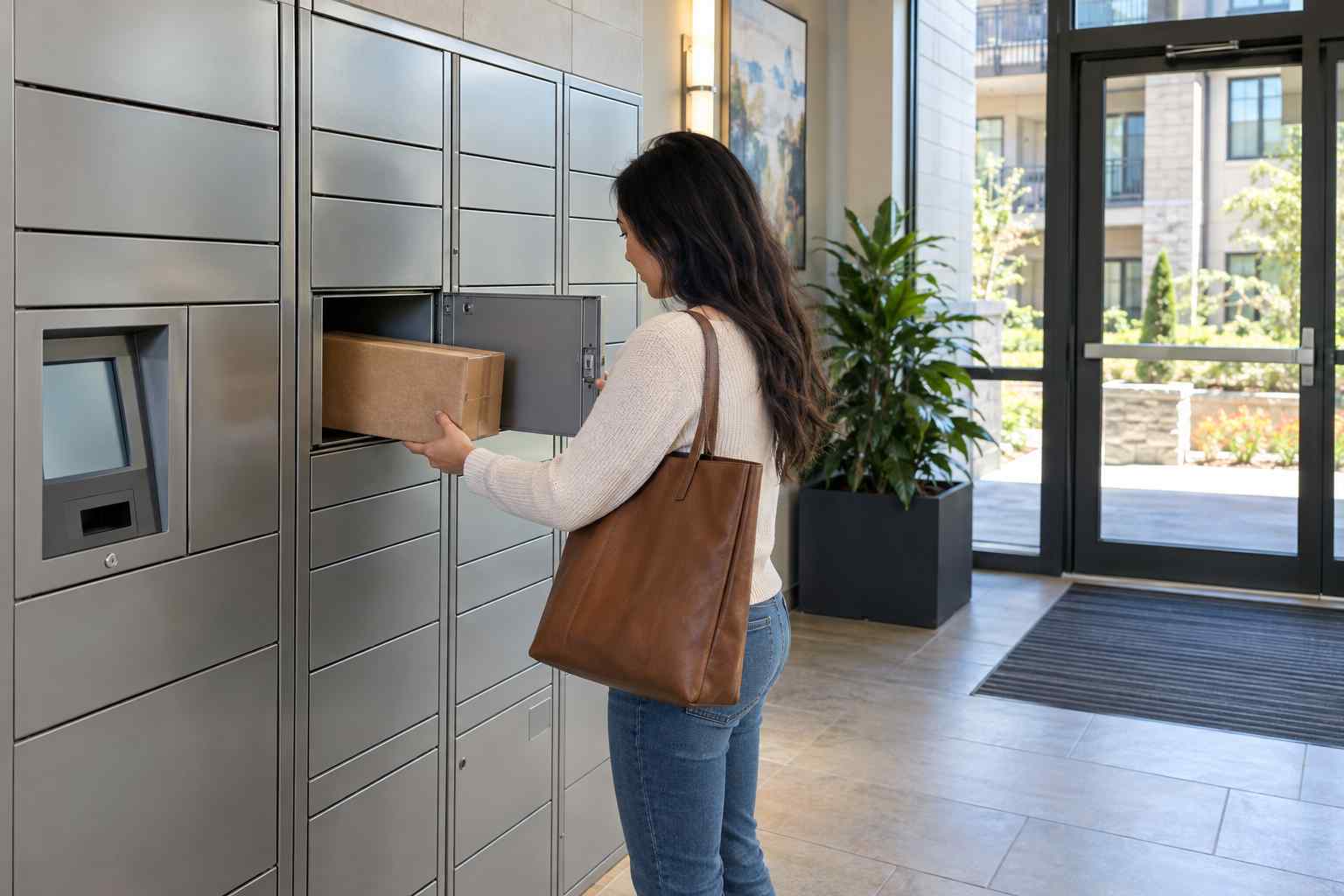
Amazon relies on its own delivery network, Amazon Logistics, for a large share of packages in addition to partner carriers like UPS and USPS, and it built delivery flexibility directly into its own app rather than requiring a separate account. Under Your Orders, a customer can add standing delivery instructions tied to a specific address, such as “leave at the back door” or “hand to the building concierge,” and those instructions automatically apply to future orders shipped to that address regardless of which carrier ends up handling the final leg. For deliveries that do require some form of confirmation, Amazon drivers typically take a photograph of the package at the doorstep as proof, which appears directly on the order’s tracking page. Amazon also maintains its own large network of Amazon Lockers and Amazon Hub Counter pickup locations inside partner stores, giving shoppers who are rarely home during the day a fixed, secure location to choose as the delivery address from the start, rather than dealing with a missed attempt after the fact.
Why This Matters More for Shared and Multi-Unit Addresses
An empty single-family house is one thing, but an apartment building, a shared workplace, or any address with a staffed front desk or mailroom introduces another layer entirely, since “no one is home” often really means “no one at the individual unit happened to be there,” even though someone was present at the building the whole time. In those settings, a driver often hands a package to whoever is staffing the front desk or drops it in a shared mailroom rather than leaving it outside an individual unit’s door, and the carrier’s tracking page marks the shipment “delivered” the moment that handoff happens, well before the actual resident ever sees it. A package left in a hallway or lobby without any record of who received it, or when it was picked up again, is far more likely to go missing or spark a dispute later, which is a fundamentally different problem than a single house sitting empty for an afternoon, and it is one reason larger residential and commercial buildings often need a more structured intake process than an individual household does.
If you are the one responsible for packages arriving at a building rather than a single front door, such as running a mailroom, apartment community, or business receiving area, a logged, trackable record of every delivery and pickup is exactly what package tracking software is built to provide.
