
What Does “Delivered to Agent” Mean If You Do Not Have a Front Desk or Doorman?
“Delivered to agent” means a carrier handed your package to a person or location that is authorized to accept deliveries on your behalf, rather than leaving it directly at your door or handing it to you personally. If you live somewhere without a doorman, front desk, or building staff, this status can be confusing and even alarming, but it almost always points to a specific, findable location rather than a lost package. The agent could be a neighbor, a mail room, a nearby retail pickup point, or in some cases a building manager you were not expecting to be involved at all.
What “Agent” Actually Means to a Carrier
Carriers use the word “agent” broadly to describe anyone or anything authorized to receive a package when the intended recipient is not available to accept it directly. According to USPS’s own tracking status guidance, USPS tracking is considered complete once an item is delivered to the recipient or “the recipient’s agent,” a category that can include a household member, a coworker at a business address, or a third party the carrier is permitted to hand a package to under its delivery rules. UPS and FedEx use the same general concept, even though the exact wording that appears on their tracking pages can vary slightly by service type.
The key detail is that “agent” does not necessarily mean a formal employee of your building. It is a catch-all term for whoever legitimately received the package on your behalf, which can range from a professional front desk clerk to a neighbor who happened to be home when you were not.
Common Scenarios When You Do Not Have Staff On Site
If you live in a single-family home, a small apartment building, or any property without dedicated front desk or concierge staff, a “delivered to agent” status usually points to one of a few realistic situations. A driver who could not reach you and did not want to leave a package unattended in a high-traffic area may have left it with a neighbor who was outside or answered the door, especially in a townhouse or duplex where units share a common entry area. In some buildings, a property manager’s office or leasing office, even a small one that only staffs limited hours, is treated by the carrier as an authorized location for holding packages when residents are not home.
Another common scenario involves a rerouted pickup point rather than a person at all. Both FedEx and UPS offer services that redirect a package to a staffed retail location instead of leaving it at an empty address. FedEx’s Hold at Location service, for example, lets a shipment be redirected to “a secure FedEx location for pickup,” where customers “need a government-issued photo ID” to retrieve it, and the package is generally held for up to seven days before being returned to the sender. A pharmacy, shipping store, or other authorized pickup counter can register in a tracking history as an “agent” even though nobody at your actual address was involved in the delivery at all.
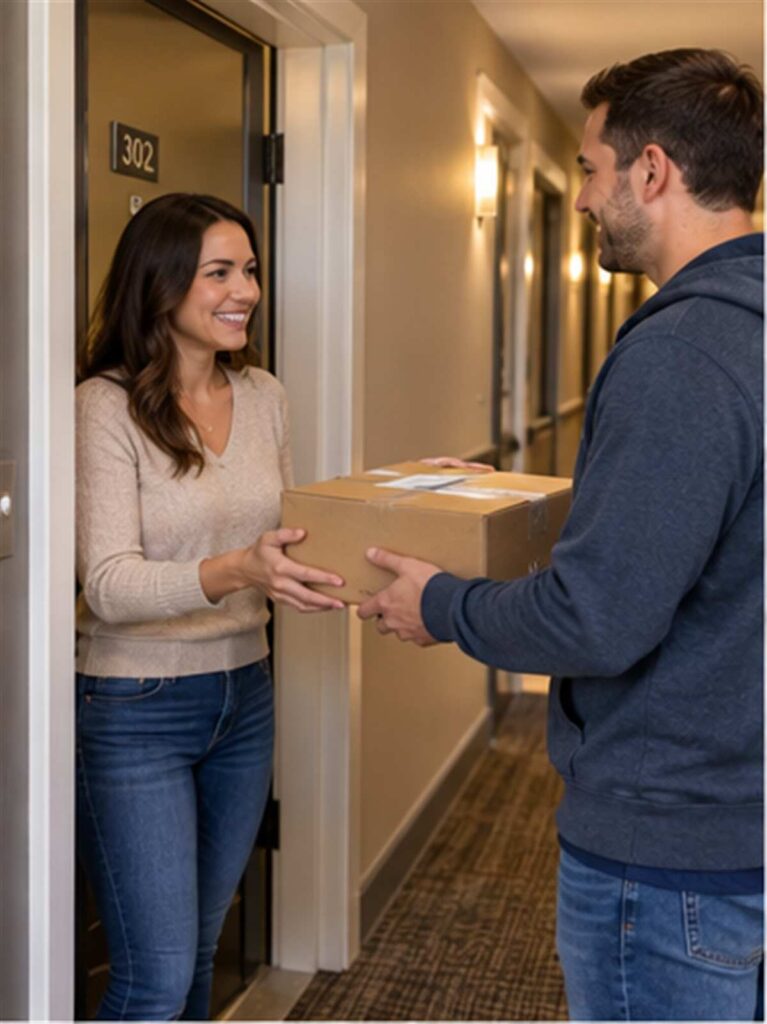
Consider a realistic example. A renter in a small four-unit building orders a set of kitchen appliances. The driver arrives during the day while the renter is at work, and rather than leave several large boxes unattended on an exposed front step next to a busy sidewalk, the driver knocks on a neighboring unit’s door, and that neighbor agrees to hold the packages until the renter gets home. The tracking page updates to “delivered to agent” with no further detail, which can feel alarming to someone who does not know their building has no formal staff to begin with. In this situation, the neighbor is functioning as the recipient’s agent in exactly the sense the carrier’s own tracking terminology intends, even though nothing about the building looks like it has a front desk or dedicated delivery staff.
A smaller number of cases involve mail aggregation services. If you use a virtual mailbox, a package forwarding service, or a shared receiving address for a small business, the company operating that service is functioning as your formal agent for every delivery, which is why “delivered to agent” appears on essentially every shipment sent to that kind of address rather than being an unusual, one-time event.
How to Figure Out Exactly Who Received It
The fastest way to identify the actual agent is to open the delivery details on the tracking page and look for a signature capture or delivery photo, since many carriers attach one or the other to an agent-delivered package specifically because the recipient was not present. A signature capture typically shows the name the person who accepted the package provided to the driver, which is often enough on its own to identify a neighbor or building staff member. If a photo was captured instead, it frequently shows the exact spot where the package was left, such as a leasing office counter or a specific doorstep.
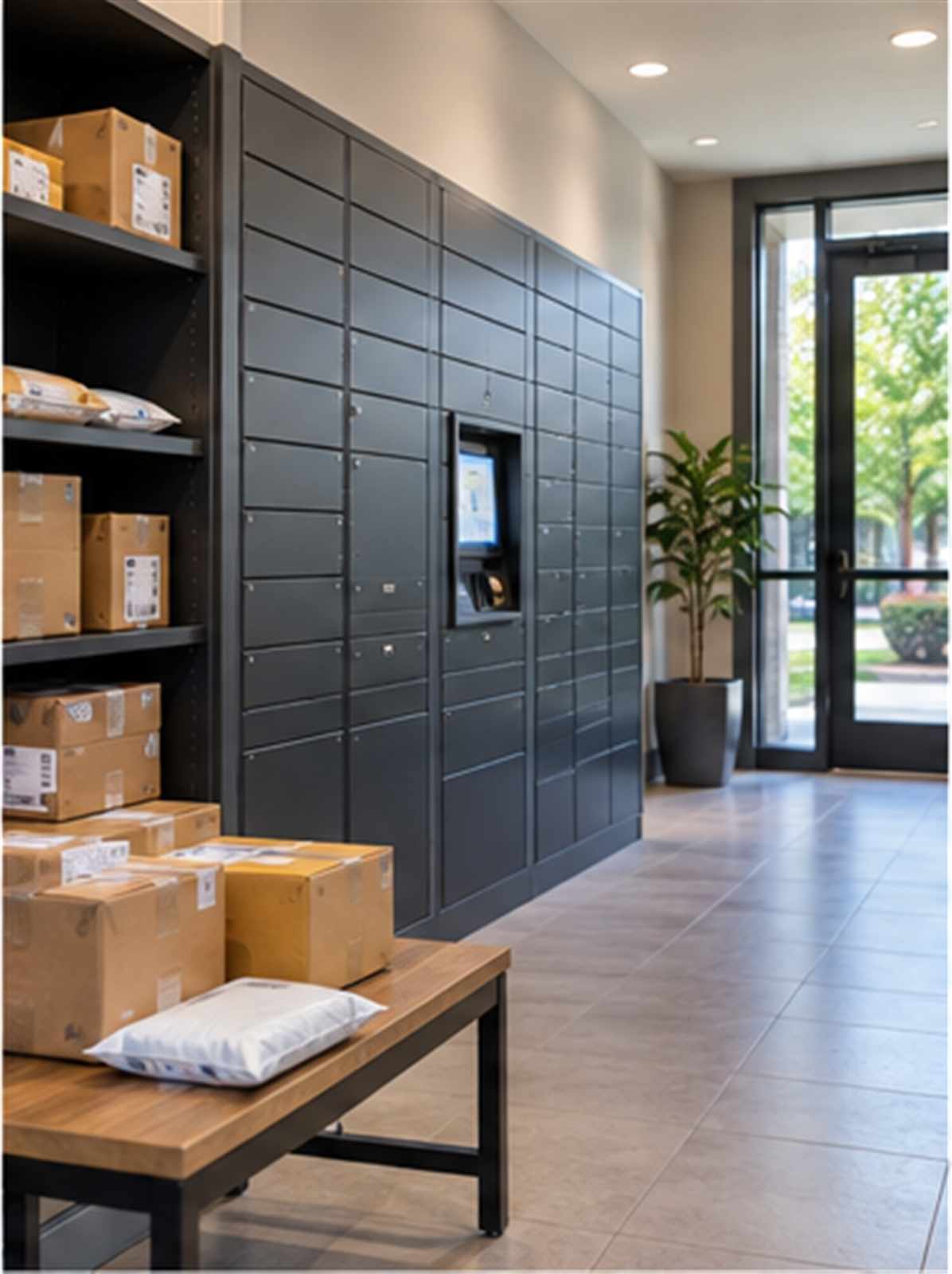
If neither a signature nor a photo is available, checking with any on-site management office, even an informal one, is a reasonable next step, followed by asking neighbors directly, particularly anyone in a unit close to a shared entrance or mailroom area. For a redirected pickup-point delivery, the tracking page or a notification email will usually name the specific retail location and provide its address and hours, along with any identification requirements needed to claim the package.
What to Do If You Cannot Locate the Package
If a reasonable search of your building and immediate neighbors does not turn up the package, contacting the carrier directly is the next step, since the carrier’s support team can often see additional internal notes about exactly who signed for the delivery, even when that detail is not visible on the public tracking page. Carriers can also confirm whether the delivery was actually a redirected Hold at Location or similar pickup-point delivery rather than a delivery to a person, which narrows down where to look considerably.
If the carrier confirms the delivery details do not match anyone associated with your address at all, that is a sign the package may have gone to the wrong building entirely, and the retailer or seller can typically step in to issue a replacement or refund once the carrier’s own investigation confirms the mismatch.
How Each Major Carrier Describes This Status
The exact wording that shows up on a tracking page varies by carrier, which adds to the confusion when you see it for the first time. USPS most commonly uses phrasing such as “Delivered, Individual Picked Up at Postal Facility” or a reference to the recipient’s agent directly, reflecting the fact that USPS tracking is considered complete once an item reaches the recipient or a person authorized to accept mail on their behalf. UPS and FedEx both use similar underlying logic but tend to describe the specific mechanism more directly on the tracking page itself, such as naming a Hold at Location pickup point or an Access Point retail partner rather than using the word “agent” as the primary label. If your tracking history uses unfamiliar wording you have not seen before, searching that exact phrase on the carrier’s own support site is usually faster than guessing, since each carrier publishes a status glossary that explains its specific terms.
Setting Delivery Preferences to Reduce Surprise Agent Deliveries
If agent deliveries happen often enough to be a recurring inconvenience, most carriers offer free tools that let you set standing instructions ahead of time rather than leaving the decision to the driver on the day of delivery. USPS account holders can set delivery instructions tied to their address that apply automatically to future packages once accepted. UPS My Choice members can specify a preferred delivery approach or a backup location in advance. FedEx Delivery Manager lets you choose a signature-release preference or proactively redirect shipments to a Hold at Location pickup point before the driver ever attempts your address. Setting these preferences will not eliminate every agent delivery, since a driver may still need to use judgment when something unexpected happens on their route, but it does reduce how often you are surprised by an unfamiliar location on your tracking page.
Frequently Asked Questions
- Does “delivered to agent” always mean a person signed for it? No. It can also mean the package was redirected to a staffed retail pickup location, such as a FedEx or UPS access point, where you would need to show identification to collect it.
- Is this the same as “left in a safe place”? No. A safe place delivery stays on your own property in a less visible spot, while a delivery to an agent means a specific person or authorized location, sometimes off your property entirely, actually accepted the package.
- Can I stop a carrier from using an agent for my deliveries? In most cases you can set specific delivery preferences through the carrier’s free account tools, though a carrier may still use an agent when nobody is available and no other instructions are on file.
- Should I be worried if I have never seen this status before? Not automatically. It typically means a driver used a legitimate backup option because you were not available, and the tracking details or a signature capture can usually confirm exactly who received it.
If you are the one responsible for tracking packages for other people, such as running a mailroom, apartment complex, or business receiving area, sorting out exactly who accepted which delivery becomes a lot harder to manage by memory alone once volume increases. Teams in that position often find it easier to rely on dedicated package tracking software instead.
