
Reducing Package Theft and Misdelivery in Corporate and Residential Mailrooms
Package theft and misdelivery in shared-building mailrooms are reduced most effectively through a combination of controlled pickup verification, clear intake documentation, and secure holding areas, backed by package tracking software that records exactly who received each item and when. Facilities that rely only on an open shelf and a sign-in sheet consistently see higher loss rates than those that verify identity at pickup and log every handoff.
Why Shared Mailrooms Are a Common Target
Corporate offices, apartment buildings, condominiums, and university residence halls all share a structural weakness that a single-family home does not have: many people, most of whom do not know each other, pass through the same receiving area every day. The USPS Office of Inspector General reported at least 58 million packages stolen across the United States in 2024, and separate research from Security.org found that residents of apartments and condominiums are more than three times as likely to experience a stolen package as someone living in a single-family home. A shared mailroom that anyone in the building can walk through is, by design, a higher-traffic, lower-accountability environment than a private front porch.
Misdelivery adds a second, related problem on top of outright theft. When packages are shelved by hand and organized loosely by last name or unit number, a rushed clerk or a resident grabbing a box that looks similar to their own can walk off with the wrong item entirely, without any intent to steal. From the building’s perspective, a misdelivered package and a stolen one often look identical afterward: an item that left the mailroom and cannot be accounted for.
Where the Process Breaks Down
Theft and misdelivery rarely trace back to a single dramatic failure. They usually come from small gaps in an otherwise normal daily routine. A package sits on an open shelf accessible to anyone walking by. A pickup is confirmed with a verbal “that’s mine” rather than an ID check or a signature. A high volume day means a clerk shelves twenty boxes quickly without double-checking labels against a directory. Any one of these gaps is minor on its own, but a facility handling hundreds of packages a week accumulates enough of them that losses become a predictable, recurring cost rather than a rare incident.
Consider a realistic scenario: a corporate receiving dock takes in forty packages on a Monday morning, all shelved by the same rushed clerk before a scheduled meeting. Two packages addressed to employees with similar last names, Anderson and Andersen, get placed on the wrong shelf. Andersen picks up both packages without either side noticing the label mismatch, and Anderson’s item is now missing with no record of what happened to it. Nothing was stolen in the traditional sense, but the outcome for Anderson is the same as if it had been: a package that is gone with no documented explanation.

Verified Pickup Is the Single Highest-Impact Change
Of every control a mailroom can add, requiring some form of identity verification at pickup produces the largest measurable drop in loss and misdelivery. This does not need to be complicated. A digital signature on a tablet, a scanned ID badge, or a photo taken at the moment of handoff through proof of delivery software is enough to close most of the gap that an honor-system pickup leaves open.
The value of verified pickup is not only in preventing theft outright, it is in what happens after a dispute arises. When a resident or employee claims they never received a package that mailroom records show was picked up, a timestamped photo or signature turns an unresolvable argument into a five-minute review of the actual record. Without that record, staff are left choosing between taking the complainant’s word for it and replacing the item, or disputing a claim they cannot actually prove or disprove either way.
Secure Holding Reduces Opportunity, Not Just Documentation
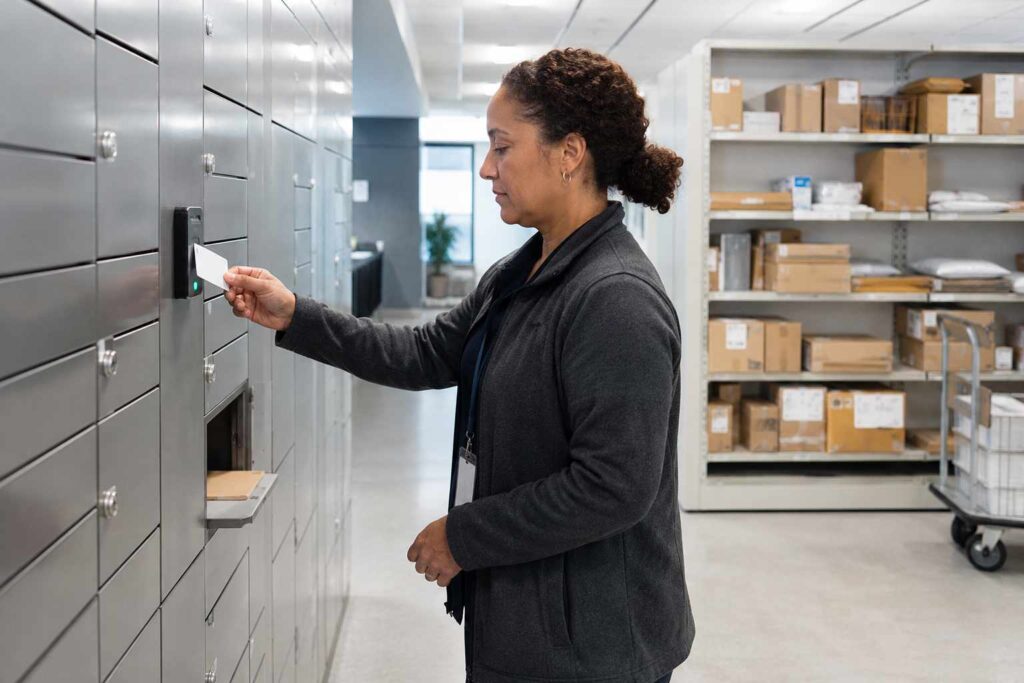
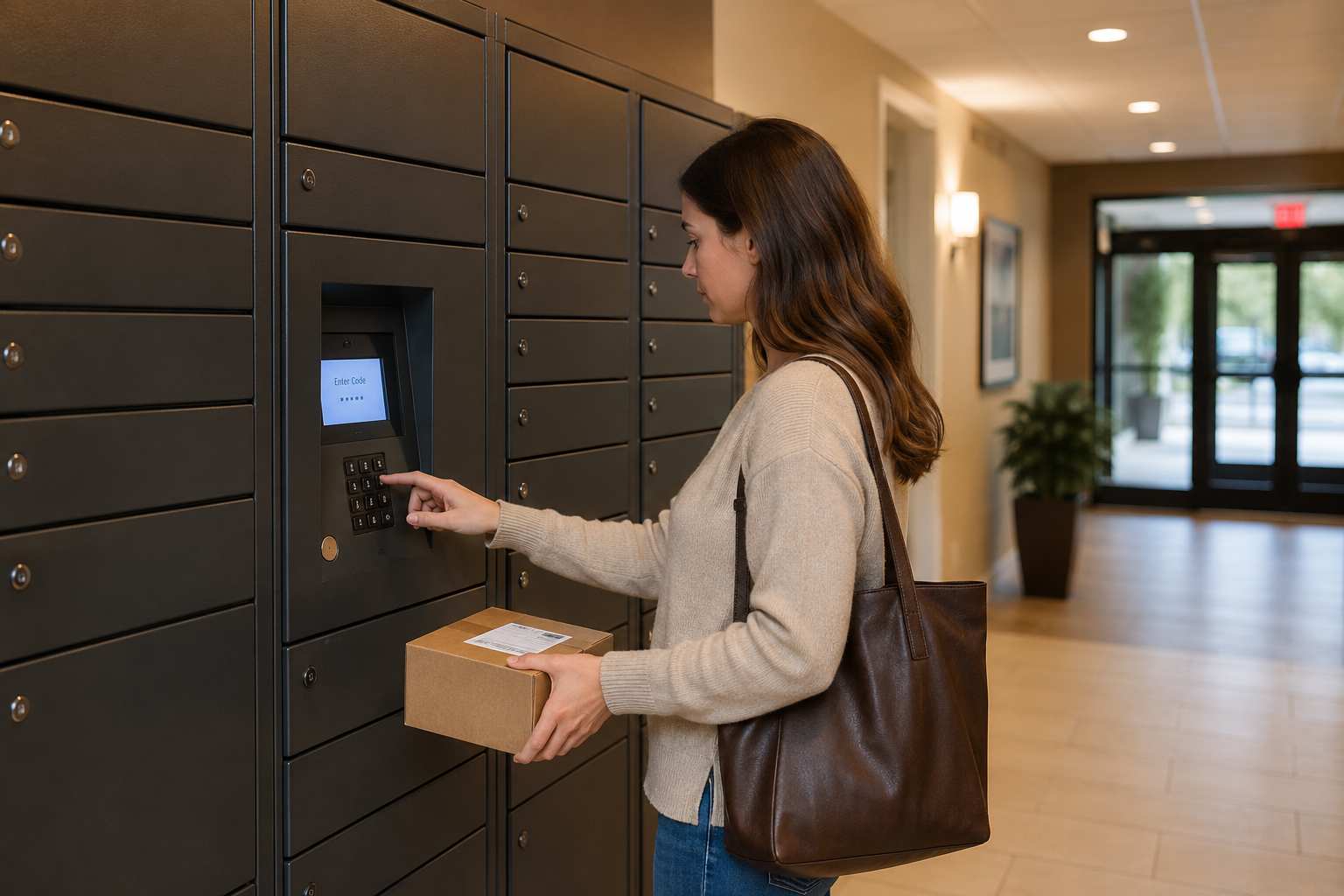
Verification addresses accountability after the fact, but reducing physical access to packages before pickup addresses the opportunity for theft directly. Locked parcel lockers, a staffed counter instead of open shelving, or a receiving room with restricted key or badge access all reduce the number of people who can physically reach a package before its rightful recipient does. For high-value or sensitive items, a separate secured area with its own access log adds a further layer, since it narrows down who could plausibly have handled the item if something does go wrong.
Facilities using digital mailroom software to manage this process typically combine both layers rather than choosing one: automated recipient notifications so packages are picked up quickly instead of sitting exposed for days, paired with a location that is not freely walkable by anyone in the building.
Intake Documentation Closes the Loop
Pickup verification and secure storage both depend on a solid starting record, which is why intake matters just as much as the point of handoff. A package that is scanned, photographed, and logged with a timestamp the moment it arrives, through package receiving software, gives staff an unambiguous starting point: this item definitely arrived, at this time, in this condition. Without that record, a facility cannot even confirm whether a “missing” package actually made it into the building in the first place, since there is nothing to compare against.
Combined, these three layers, verified intake, secure holding, and verified pickup, form what is often called a chain of custody: a complete, gap-free record from the moment a courier hands off a package to the moment the correct recipient confirms receipt of it. A facility that can produce that full record for any given package has effectively closed off both theft and misdelivery as unexplained events, since every handoff in between is documented.
What This Looks Like in Practice
A mid-sized corporate office receiving roughly 150 packages a week previously used an open shelf organized by department, with no sign-in requirement and no photo record. After switching to scan-based intake, badge-verified pickup, and a locked receiving room, the office saw its monthly count of unresolved “missing package” reports drop from an average of six or seven to fewer than one, based on the kind of results organizations commonly report after adopting mailroom automation. The remaining rare cases were resolved in minutes rather than hours, since staff could pull the intake photo and pickup confirmation instead of relying on memory or guesswork.
Measuring and Tracking Incident Trends Over Time
A single missing package is an incident. A pattern of missing packages is a signal that something in the process itself needs to change, but that pattern is only visible if someone is actually tracking it. Facilities that rely on memory or a loose mental tally of “we’ve had a few complaints lately” consistently underestimate how often losses occur, since isolated incidents feel unconnected when they are handled one at a time by whichever staff member happens to be on shift that day.
Logging every reported loss or misdelivery, even the ones that get resolved quickly once a photo record is pulled, builds a dataset that reveals patterns an individual incident never would. A facility might discover that a disproportionate share of disputes cluster around a single shift, a single day of the week when volume spikes, or a specific shelf location that is harder for staff to see clearly. None of that is obvious from any one case, but it becomes obvious once ten or twenty cases are logged with a timestamp, a location, and an outcome.
This is also where the chain-of-custody data described above pays for itself a second time. The same intake and pickup records used to resolve an individual dispute can be aggregated into a monthly report showing total packages handled, total disputes opened, and average resolution time. A facility manager presenting that report to ownership or a board has a concrete, numbers-based case for continued investment in mailroom controls, rather than relying on anecdotal impressions of whether the current system is working.
Tracking trends over time also helps distinguish a genuine process failure from an outlier. A single misdelivered package during an unusually high-volume week is a different problem than the same mistake recurring every week regardless of volume. Without a record to compare against, both look identical to whoever is fielding the complaint that day, which makes it impossible to tell whether a facility needs a policy change or simply had a bad afternoon.

Who Bears Liability When a Package Goes Missing
A property manager or facilities team is not automatically liable just because a package disappeared from a shared mailroom, this is a common misconception on both sides of a dispute. Liability generally comes down to whether the facility failed to maintain reasonable security, not simply whether a theft occurred at all. A resident or employee whose package goes missing despite a facility having functioning locks, working cameras, and no documented history of prior thefts in that area has a weak liability claim against the property, even though the loss itself is real and frustrating.
That calculus changes when a facility has known, unaddressed security gaps. A broken mailroom door lock that management was notified about, cameras left non-functional for weeks, or a documented pattern of repeated thefts that was never addressed all shift a facility toward genuine liability exposure, since the negligence, not the theft itself, is what typically creates the claim. A property that promised secure package handling in its lease or marketing materials and then failed to deliver on that promise faces the same exposure. This is precisely why the verified pickup, secure holding, and intake documentation controls described above matter beyond loss prevention alone; they also form the evidence a facility needs to show it met a reasonable standard of care if a dispute ever escalates.
Renters Insurance and Other Recovery Options When Prevention Fails
Even a well-run mailroom occasionally loses a package, and it helps facility staff to know what options exist for the resident or employee on the other side of that loss, since fielding that question well is part of managing the relationship. Renters insurance typically covers theft, including packages stolen from a shared mailroom or doorstep, though most standard policies carry a deductible in the 500 to 1,000 dollar range, which means filing a claim usually only makes sense for a higher-value item rather than a routine delivery.
For lower-value losses, the more practical path is usually the retailer or shipping carrier directly, since many retailers will replace or refund a package reported missing within a reasonable window, and carriers accept claims for packages that show as delivered but were never received. Facility staff who can point residents or employees toward these options, rather than treating every missing package as the facility’s own problem to solve financially, resolve disputes faster and avoid setting an expectation that the facility itself will absorb every loss.
Frequently Asked Questions
Does verified pickup really reduce theft, or does it just document it after the fact? Both. The documentation itself deters casual theft, since anyone attempting to falsely claim a package knows a photo or signature record exists, in addition to giving staff a clean way to resolve disputes when they do happen.
Is this only worth it for large facilities? No. A single missing package dispute consumes real staff time reconstructing what happened regardless of facility size, so smaller mailrooms benefit proportionally as much as large ones, just across fewer total incidents.
What is the fastest change a mailroom can make with the least disruption? Moving from an honor-system pickup to a simple signature or photo confirmation at handoff is usually the highest-impact, lowest-disruption change, since it requires no new physical infrastructure, only a documented step added to the existing pickup process.
A mailroom that combines verified intake, secure holding, and verified pickup turns theft and misdelivery from an ongoing cost of doing business into a rare, quickly resolved exception. If your facility is still relying on an open shelf and a sign-in sheet, you can schedule a demo to see how a purpose-built system handles intake-to-pickup tracking for a mailroom your size.
