
Integrating Package Tracking Software With Property Management and Access Control Systems
Package tracking software works best when it does not operate as an island. For apartment communities, condos, and mixed-use properties, the real value comes from connecting that software to the property management system (PMS) that already holds resident and unit data, and to the access control or intercom system that lets carriers into the building in the first place. Without that connection, staff end up re-typing the same resident information into two or three separate systems, notifications lag behind actual deliveries, and package logs quietly drift out of sync with who is actually living in each unit.
Why Disconnected Systems Slow Down Every Delivery
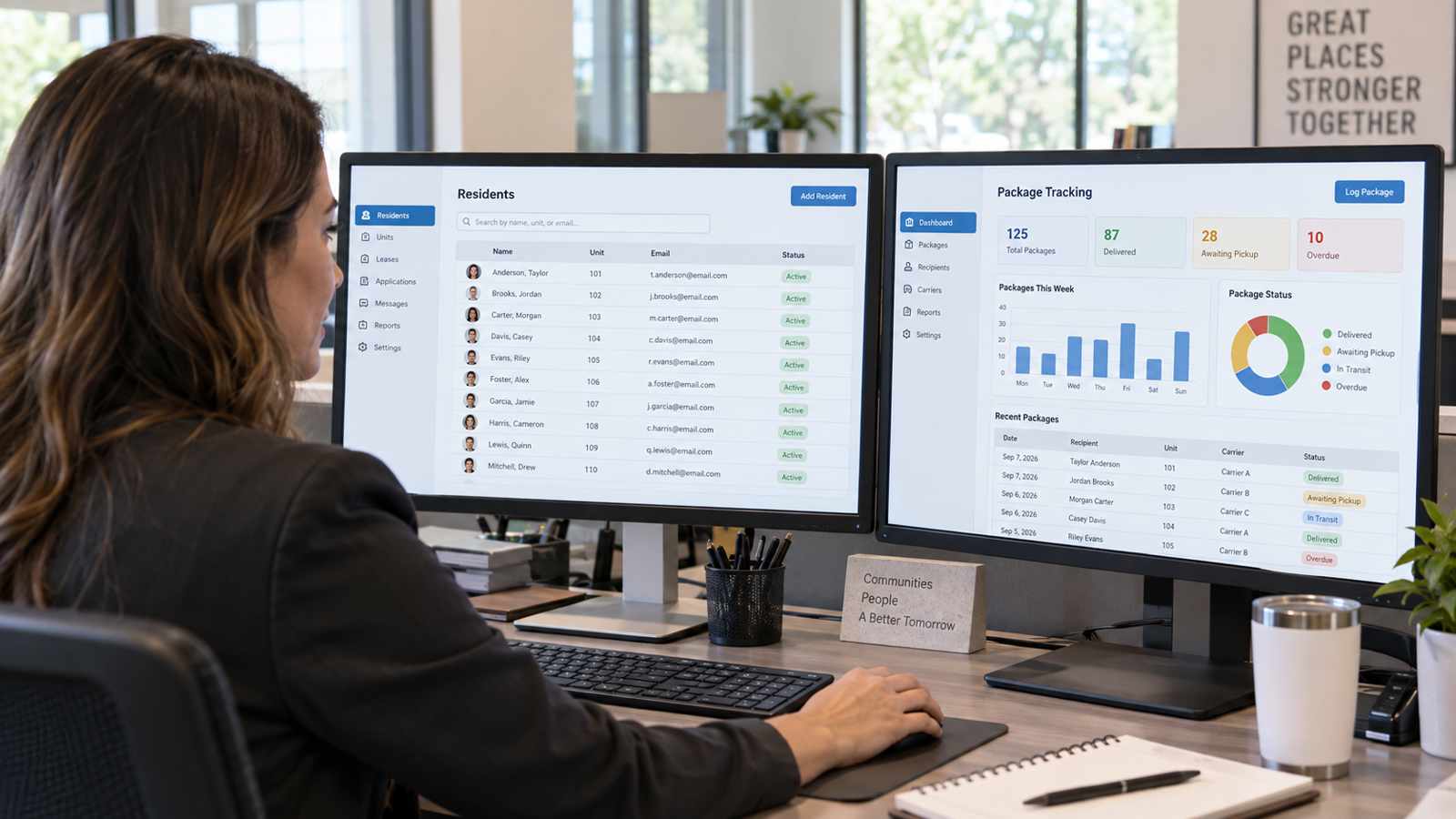
Most properties already run a PMS such as Yardi, RealPage, Entrata, or AppFolio to manage leases, rent rolls, and resident contact information. When the package tracking system is not connected to that PMS, front desk or mailroom staff have to manually keep resident lists current in a second place, which means every move-in, move-out, and unit transfer has to be entered twice. According to a recent overview of PMS integration in multifamily housing, when systems are not connected, “teams spend time exporting, formatting, uploading, and reconciling data that already exists in the PMS,” which creates lag, version-control issues, and data quality risks (Rentana). In a package tracking context, that lag shows up as packages logged under a resident who moved out last month, or a new resident who cannot be found in the system at all when their first delivery arrives.
Consider a 300-unit community with weekly turnover during the summer leasing season. If the mailroom’s resident list is only updated once a week from a manual export, a staff member scanning in a package for a new resident on move-in day may find no matching record, forcing a manual workaround that slows down the whole intake line behind that one package. Multiply that by a handful of move-ins a week, and the property loses real staff hours to a problem that a live data connection would have prevented entirely.
What a Real Package Tracking and PMS Integration Looks Like
A genuine integration is not just an occasional file export. It is typically an API connection that keeps resident names, unit numbers, and contact information current in the package tracking system automatically, without anyone re-entering data by hand. Some integrations sync on a schedule, such as every hour, while others update in real time as soon as a change is saved in the PMS. The best setups also support write-back, meaning that information captured in the tracking software, such as a resident’s preferred notification method, can flow back into the PMS instead of living only in a separate silo.
This is the same logic behind residential package tracking software built for apartment and condo environments specifically: it is designed to sit alongside the systems a property already depends on rather than replace them, so staff keep working from one accurate resident list instead of reconciling two.
Single sign-on is another piece of the same puzzle that is easy to overlook during a purchase decision. Mailroom and front desk staff often juggle several logins across leasing software, maintenance ticketing, and a package tracking tool, and every extra password is one more place for access to lag behind actual staffing changes. When a departing employee’s PMS access is revoked but their package tracking login is a separate system entirely, that account can sit active for weeks after they leave. A tighter integration, ideally tied to the same identity system the property already uses for its PMS, closes that gap automatically instead of relying on someone remembering to deactivate a second account.
Connecting Package Tracking to Access Control and Intercom Systems
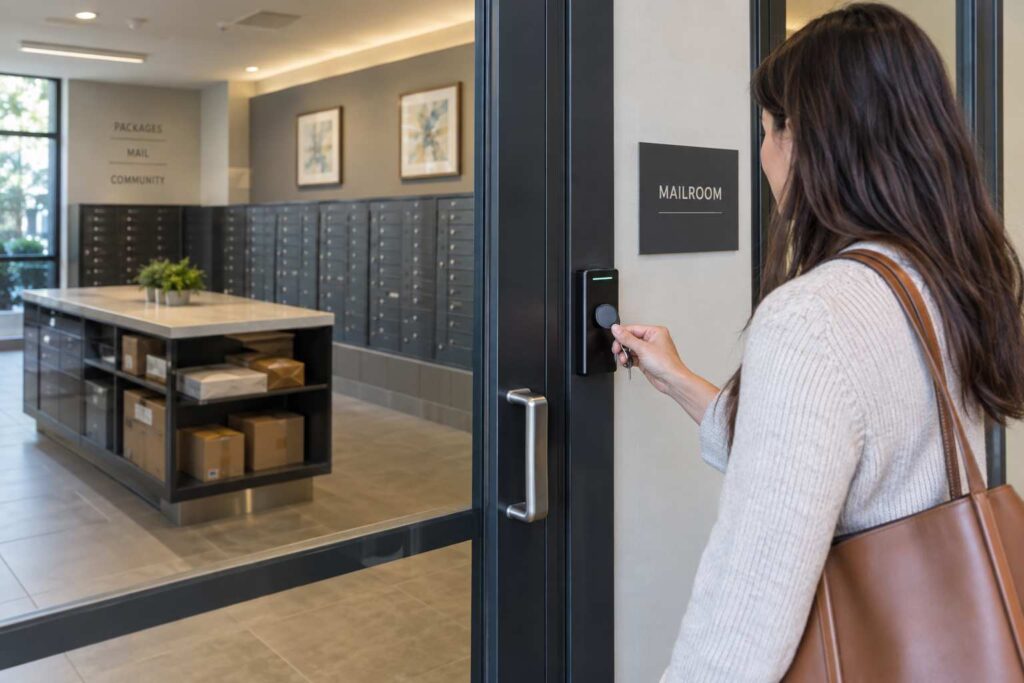
The second connection that matters just as much is between package tracking and the building’s access control or intercom system, since a carrier cannot deliver a package to a locked package room they cannot get into. Modern video intercoms let a property assign a delivery PIN code to a specific carrier, so a driver can enter the building or package room without calling a resident or waiting for staff, and many systems also take a time and date-stamped photo of anyone who uses that PIN, creating a simple entry log tied to each delivery. When that access event and the package scan happen in two unrelated systems, there is no way to easily confirm that the person who entered the room at 2:14 p.m. is the same driver whose scan appears in the tracking log at 2:15 p.m.
That gap matters more than it used to. A 2025 study from Parks Associates, conducted with Kwikset, found that nearly 72 percent of multifamily owners and operators plan to upgrade smart building solutions, including access control, on at least one property within the next 12 months (Parks Associates). As more properties modernize access control at the same time they modernize package handling, the properties that plan for both systems to talk to each other will avoid building two separate, disconnected security records for the same delivery event. A tighter connection also supports better use of parcel management software for the package room itself, since access events and package scans can be reviewed together instead of pulled from two different administrative panels after the fact.
What to Ask Vendors About Integration Before You Buy
Facilities and property managers evaluating package tracking software should treat integration capability as a core requirement, not a nice-to-have feature to sort out later. A few direct questions can save months of manual workaround after go-live.
- Does the vendor publish a documented API. A real integration depends on a stable, documented way for two systems to exchange data, not a one-time manual data dump at setup.
- How often does resident data sync. Real-time or hourly syncing prevents the kind of lag that causes mismatched resident records on move-in day.
- Which PMS platforms has the vendor already connected to. A vendor with existing, working connections to common platforms like Yardi, RealPage, Entrata, or AppFolio will typically implement faster and more reliably than one building a first-time custom connection for your property.
- Can the access control system share entry events. Even a simple, one-way feed showing when a delivery PIN was used can be enough to cross-reference against package scans for audit purposes.
These questions also belong in the broader evaluation covered in TekCore’s package tracking solution overview, which walks through how the platform fits into an existing technology stack rather than requiring a property to rebuild its systems around a single new tool.
It also helps to ask who owns the relationship once the integration is live. Some vendors treat integration as a one-time setup task handled during onboarding and little else afterward, while others actively maintain the connection as the PMS vendor pushes its own updates. A PMS provider that changes its API without notice can quietly break a poorly maintained integration, so it is worth asking a prospective package tracking vendor how they monitor and test their existing PMS connections over time, not just how they built them initially. A property that only asks about setup and skips this question can end up with an integration that worked well for the first six months and then silently stopped syncing after a routine PMS update, with no one noticing until resident records were visibly out of date again.
Getting Integration Right From the Start
Picture a facilities manager overseeing three properties, each running a different PMS because they were acquired at different times. Without integration, that manager’s team maintains three separate resident lists inside the package tracking software, manually updated whenever someone remembers to do it. With a proper integration at each property, resident data flows in from each PMS automatically, and the manager can look at consistent, current package activity across all three sites without chasing down which list is actually up to date. That is the practical difference integration makes: not a new feature for residents to notice, but hours of staff time given back every single week.
There is also a data governance side to this that is easy to skip past during a demo. Once resident names, unit numbers, and contact details flow automatically between a PMS, a package tracking system, and an access control platform, a property is effectively spreading the same personal information across three vendors instead of one. Before signing an integration agreement, ask each vendor what happens to synced resident data if the contract ends, whether data is encrypted in transit between systems, and which vendor is responsible for removing a resident’s information once they move out. These are reasonable questions for any vendor handling live resident data, and a vendor that cannot answer them clearly is a signal to look closer before committing.
Properties planning a package tracking rollout should treat the integration conversation as part of the buying decision itself, not an afterthought handled during implementation. To see how TekCore’s integration options would fit your specific PMS and access control setup, schedule a demo and walk through your current technology stack with the team.
