
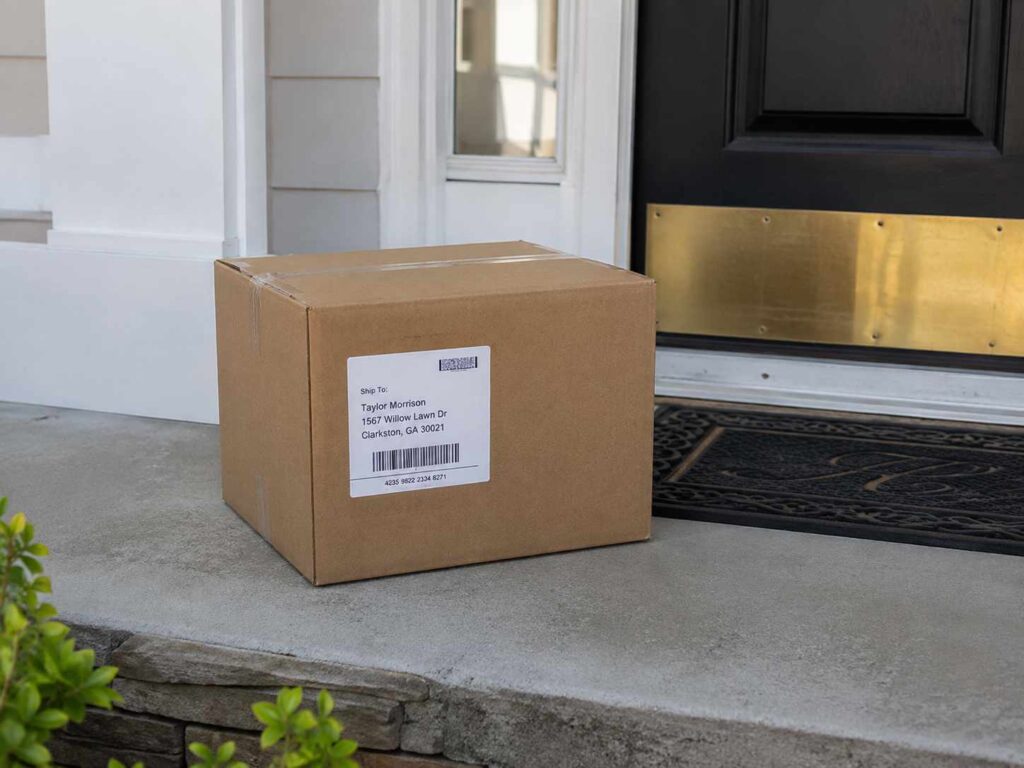
I Keep Receiving Packages for the Previous Resident, What Should I Do?
Do not open it, do not throw it away, and do not just keep it. The correct move is to write “Not at This Address” or “Return to Sender” on the package, or hand it back to the carrier or your mail carrier, so it gets routed back to the sender. If this keeps happening, contacting the shipping carrier directly and, for USPS mail specifically, your local post office, is the fastest way to get it to stop for good.
Why This Happens So Often
Getting packages for someone who used to live at your address is an extremely common experience, not a sign that something has gone wrong with your delivery. It usually comes down to one simple thing: the previous resident’s old address is still saved somewhere, in a retailer’s account, a subscription service, a friend’s contact list, or an old shipping label template, and nobody has updated it yet. Online shopping habits make this worse than it used to be, since a single person might have dozens of merchants with a saved address on file, and updating every one of them the moment they move is not something most people think to do right away.
The scale of this makes it clear why it is so common. According to the U.S. Census Bureau, 11.8 percent of the U.S. population moved to a different residence in 2024. That works out to tens of millions of people changing addresses in a single year, each one leaving behind some number of retailers, subscription boxes, and shipping accounts still pointed at their old home. If even a small fraction of those old addresses take a few months to fully update, the result is a steady, ongoing stream of misaddressed packages landing on new residents’ doorsteps nationwide.
This is different from a package that was misdelivered to the wrong address entirely, where a carrier simply left an item at the wrong house by mistake. Here, the carrier delivered the package exactly where it was addressed to go, your address, it is just addressed to a person who is no longer there. That distinction matters because it changes who is responsible for fixing it: not the carrier, but the sender’s outdated address information.
What the Law Actually Says About Mail That Is Not Yours
For packages and letters sent through the United States Postal Service specifically, federal law is direct about this. Under 18 U.S. Code § 1702, it is a federal crime to intentionally open, hide, or destroy mail that is not addressed to you, punishable by a fine or up to five years in prison. A separate statute, 18 U.S. Code § 1708, makes it a crime to knowingly keep mail that was not intended for you. Neither law applies if you genuinely did not realize the package was not yours when you opened it, intent is what the law is built around, but once you know it belongs to someone else, what you do next is what matters.
It is worth knowing that this specific set of federal mail statutes was written around the U.S. Postal Service. Packages shipped through UPS, FedEx, or other private carriers are not covered by those same federal mail laws, since those companies are not part of the postal system. That does not mean it is fine to keep or open a UPS or FedEx package addressed to someone else, doing so can still expose you to state property and theft laws, and the carrier or sender can still treat it as a real problem, it simply is not prosecuted under the specific federal mail statutes written for USPS mail.
What To Do the Moment a Misaddressed Package Arrives
A few consistent steps handle almost every version of this situation cleanly.
- Leave it unopened. Even if you are fairly sure who it is for, do not open it, since intent to inspect someone else’s mail is exactly what the relevant laws are concerned with.
- Write the correct note on it. For USPS mail, write “Not at This Address” or “Return to Sender” directly on the package and place it back in your mailbox for pickup, or hand it to your regular mail carrier.
- Contact the carrier for private shipments. For UPS, FedEx, or DHL packages, contact that carrier directly (most have an online form or phone line for misdelivered packages) rather than trying to reroute it yourself, since only the carrier can properly redirect it back into their system.
- Do not attempt to forward it yourself. Re-shipping the package to the previous resident’s new address yourself, at your own expense, is not required and can create its own complications if the item is high value or the new address is wrong.
For example, imagine a UPS package arrives addressed to a name you do not recognize, and you realize it belongs to the tenant who moved out of your apartment two months ago. Rather than guessing at their new address or opening it to check, contacting UPS with the tracking number on the label (if visible) and explaining the resident moved is the cleanest path, UPS can then arrange to retrieve or reroute it without you needing to be involved further.
If This Keeps Happening Repeatedly
A single misaddressed package is a minor inconvenience, but a steady stream of them from the same source is worth actively stopping rather than handling one at a time indefinitely.
For USPS mail, visiting your local post office in person and speaking with the postmaster or a supervisor is the most effective fix. Bring a few examples of the misaddressed mail with you, and ask them to place a note on your address indicating that the previous resident no longer lives there. This can meaningfully reduce, though not always completely eliminate, future misdirected mail, since it depends on each individual sender updating their own records too.
For recurring packages from a specific online retailer or subscription service, contacting that company directly and explaining that their customer no longer lives at your address is usually the fastest fix, since it stops the problem at the source rather than relying on the carrier to catch it every time.
What About Amazon and Other Marketplace Packages?
A large share of misaddressed packages today come through Amazon and similar marketplaces, and they generally work a little differently than a standalone USPS or UPS shipment. Amazon packages are often fulfilled and shipped using the retailer’s own delivery network or a regional courier rather than a traditional carrier, and Amazon’s customer service can typically redirect or recall a misdelivered package once notified, even without a visible tracking number on the box itself.
If a name on an Amazon-style package is unfamiliar and there is no way to tell who the intended recipient is, the most reliable path is still the same: do not open it, and if it was left at your door rather than handed to you directly, a quick note through the Amazon app or website (“package delivered to my address, not mine”) is usually enough for their support team to take it from there. For a subscription box or recurring delivery, the underlying company can typically stop future shipments to your address entirely once you explain that the intended customer has moved, which prevents the same problem from repeating every billing cycle.
What If You Know How to Reach the Previous Resident?
If you happen to have a forwarding address or contact information for the person who used to live there, letting them know a package arrived can be a reasonable courtesy, especially in a small apartment building or a situation where you are on good terms with them. But you are not obligated to track them down, hold packages for them, or coordinate a handoff. Returning the item to the carrier or sender is always an acceptable response even if you do have their new contact information.
Frequently Asked Questions
Is it illegal to open a package addressed to a previous resident? Yes, if you know it is not yours and open it anyway. For USPS mail, this falls under federal obstruction of correspondence law. Accidentally opening something before realizing it was not addressed to you is generally not treated as a crime, since intent matters.
Can I just throw it away? No. Even mail you consider junk should be returned or handed to the carrier rather than discarded, since knowingly destroying someone else’s mail can itself be treated as obstruction.
Do UPS and FedEx packages fall under the same law as USPS mail? No, the specific federal mail statutes apply to the postal system. Private carrier packages are handled through that carrier’s own misdelivery process instead, though keeping or opening someone else’s package is still not advisable under general property law.
Will this ever fully stop happening? Usually it fades out over a few months as senders’ address records get updated, though a formal note at your local post office can speed that up for USPS mail specifically.
If you are the one responsible for sorting packages for a lot of different names in one place, like a mailroom, apartment complex, or business receiving area, matching packages to the right current resident is exactly the kind of problem package receiving software is built to make easier.
