
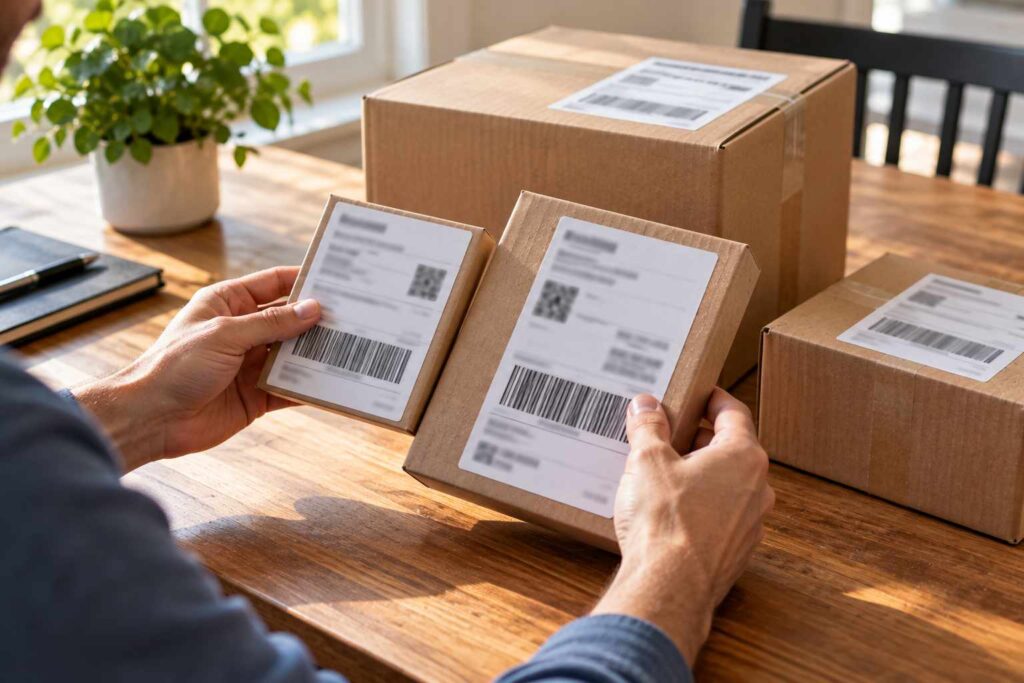
How Can I Tell Which Carrier a Tracking Number Belongs To?
You can usually tell which carrier a tracking number belongs to by looking at its length and its first characters. A number that starts with “1Z” is UPS. A number with 20 to 22 digits that often starts with 92, 93, or 94 is usually USPS. A number with 12 or 15 digits and no letters is usually FedEx. These patterns are a strong clue, not a guarantee, so the safest last step is to paste the number into the carrier’s own tracking page and see if it recognizes it.
People run into this problem all the time. A seller sends you a long number with no label, and you do not know where to type it. Or you have a number in an old email and cannot remember who shipped it. This guide shows you how to read the most common formats, how to spot packages from Amazon and international carriers, what to do when the number matches nothing, and how to avoid the fake tracking links that scammers love to send.
Why Tracking Numbers Look Different
Every carrier builds its tracking numbers its own way. Some use only digits. Some mix in letters. Some include a hidden code for the sender or the service. The number is mostly a label that the carrier’s computers use to look up your package, but the shape of that label often reveals who made it.
Think of it like phone numbers. A seven digit number, a ten digit number, and a number that starts with a plus sign each tell you something different, even before you dial. Tracking numbers work the same way. Once you learn a few shapes, you can often guess the carrier in a few seconds.
How to Recognize the Big Carriers
UPS: Starts With 1Z
The easiest one to spot is UPS. A standard UPS tracking number starts with the letters “1Z” and has 18 characters in total. After the “1Z” comes a six character code for the shipper, a two digit code for the service level, and then eight more characters that identify the package. A typical example looks like 1Z999AA10123456784, a pattern UPS and many tracking guides use. If you see “1Z” at the front, you can feel confident the package is a UPS shipment.
UPS also uses other formats for some services, such as numbers that begin with the letter T or are all digits. If your number does not start with 1Z but came from an email that says UPS, try it on the UPS site anyway.
USPS: Long Numbers, Often Starting With 92, 93, or 94
USPS tracking numbers for domestic packages are usually 20 to 22 digits long, and many start with 92, 93, or 94. These numbers come from a barcode system the Postal Service calls the Intelligent Mail Package Barcode. The first digits show how the label was created. For example, 94 is commonly used for packages that were paid for online or with a postage meter, while 92 and 93 are used for some business shipments.
USPS also has shorter, older-style numbers for special services. Priority Mail Express numbers often start with “EA” or “EC” and end with “US,” while registered mail starts with an “R.” International mail from other countries often follows the same letters-and-digits pattern, which we cover below. Because USPS numbers are so long, it is easy to make a typing mistake. If you have a long number, copy and paste it instead of typing.
FedEx: Plain Numbers, Usually 12 or 15 Digits
FedEx tracking numbers are mostly numeric, with no letters. The most common lengths are 12 digits for Express and Ground, and 15 digits for some Ground and other services. FedEx also has longer numbers on the shipping label barcode, which is why you may see a very long string of digits on the label itself. The number you use for tracking is usually the shorter one printed near the barcode.
Here is a point that trips people up. A 12 digit number could belong to FedEx or to a different system, such as a store order number, because plain digits are not unique to one carrier. If your 12 digit number does not work on FedEx, check whether it is actually an order number from the seller.
Amazon: Starts With TBA
Amazon packages delivered by Amazon’s own network often have a tracking ID that starts with “TBA” followed by a long string of digits. Those numbers work in the Amazon app and on the Amazon website, but they usually do not work on the UPS, FedEx, or USPS sites, because Amazon is the carrier. If you have a TBA number, go to your Amazon orders page. Our article on why Amazon shows a package delivered by “Amazon Logistics” explains why this happens.
DHL and International Mail
DHL Express uses a 10 digit number in many cases, though DHL has other formats too. International mail between postal services follows a standard that uses two letters, nine digits, and then two letters. The last two letters are the country code of the origin country. For example, a number that ends in “CN” came from China, and one that ends in “US” came from the United States.
That ending is useful in a practical way. Suppose you ordered a phone case from an overseas shop and the number is RB123456789CN. You know the package began in China with the postal system there, and it will probably be handed to USPS when it reaches the United States. At that point, USPS may show it on its tracking page, though the early stages may only be visible on the origin country’s postal site. If your package seems to show two carriers, see our guide on packages that switch from FedEx to USPS.
A Quick Cheat Sheet
Here is a short summary you can save. Treat it as a guide, since carriers do add and change formats over time. For a broader look at how tracking numbers are built, the Wikipedia article on tracking numbers lists formats for many carriers.
- UPS. Starts with 1Z and has 18 characters.
- USPS. Usually 20 to 22 digits, often starting with 92, 93, or 94. Letters at the start and “US” at the end are common for Express and international.
- FedEx. Usually 12 or 15 digits and no letters.
- Amazon. Starts with TBA and is tracked in the Amazon app.
- International postal. Two letters, nine digits, and two letters, with the last two letters showing the country of origin.
What to Do When the Number Does Not Match Anything
Look at the Email or Receipt First
The best clue is not the number itself. It is the message around it. The shipping email almost always names the carrier, and the link in a real email often goes straight to that carrier’s tracking page. Instead of clicking, you can use the carrier name from the email and then go to the carrier’s site yourself and paste the number. That is also the safer option, as we explain in the scam section below.
Check for Typing Errors
One wrong digit, or a letter “O” typed in place of a zero, will make a good number fail. Copy and paste the number rather than typing it. Remove any spaces or dashes that were added by the email. Also be careful about extra characters at the end that can be picked up when you copy from a document.
Give It Time
A brand new number may not work for several hours. Sellers often print the label first, and the carrier does not see the package until it is scanned. If your number is new, read our article on why a tracking number may not work yet after you buy something.
Ask the Seller or Use a Multi Carrier Tool
If the number still does not show up, ask the seller which carrier they used. You can also paste the number into a multi carrier tracking tool, which tries many carriers at once. To learn more about the tools that follow packages from different carriers in one place, see our guide on tracking several packages from different carriers. Use a tool from a source you trust, and never enter a password or payment information just to see tracking.
Watch Out for Fake Tracking Messages
Because everyone is waiting for packages, scammers send fake texts and emails that look like tracking updates. They often say there is a problem with your delivery and ask you to click a link and pay a small fee. A real carrier will not ask for your bank card to release a package in a text message.
Knowing the number formats can help you here. If a text says it is from UPS but the number is 12 digits with no “1Z,” that is a red flag. It is not proof, but it should make you slow down. Instead of tapping the link, type the real carrier website into your browser and paste the number there. Our guide on how to tell if a package tracking text is a scam has a full checklist.
Where Else Can You Find the Number?
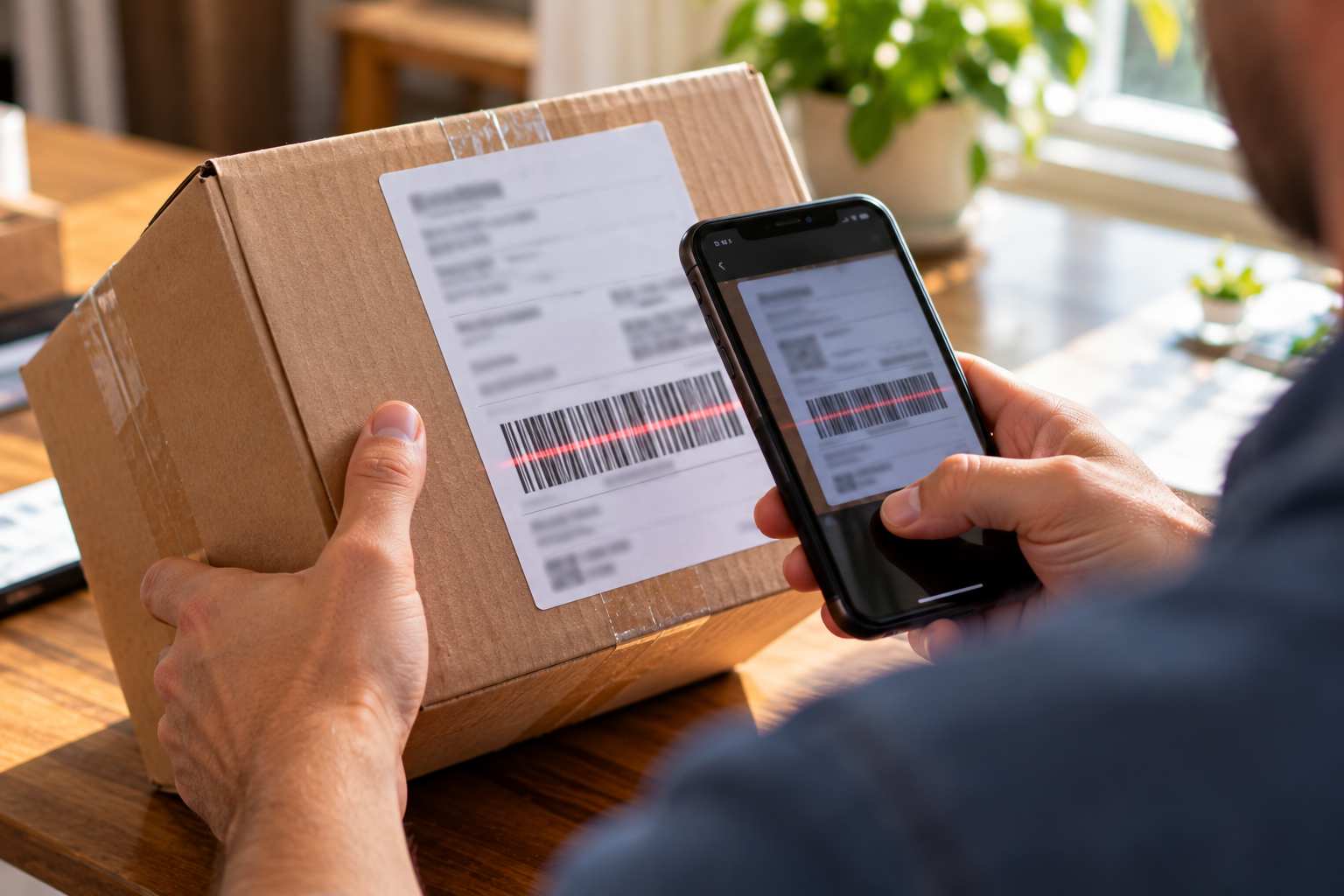
If you lost the number completely, you have a few options. Check your order confirmation or shipping email. Look in your account on the seller’s website. If you used a credit card, your email may have a receipt with a shipping link. If none of that works, our article on tracking a package without a tracking number covers other ways to find it.
Frequently Asked Questions
How do I know if a tracking number is UPS, USPS, or FedEx?
Check the shape. UPS numbers start with 1Z and have 18 characters. USPS numbers are usually 20 to 22 digits and often start with 92, 93, or 94. FedEx numbers are usually 12 or 15 digits with no letters.
What does TBA mean in a tracking number?
A number that starts with TBA is an Amazon Logistics tracking ID. It works in the Amazon app and website, not on other carrier sites.
Why does my tracking number say invalid?
The most common reasons are a typing mistake, a number that is too new to appear, or a number pasted into the wrong carrier’s site.
Can two carriers have the same type of tracking number?
Plain digit numbers can look alike across carriers and even across store order numbers, so the length and the email that came with the number matter as much as the digits.
What do the last two letters on an international tracking number mean?
They show the country where the package started, such as CN for China or US for the United States.
If you track packages for other people, such as in a mailroom, apartment complex, or business receiving area, TekCore’s parcel management software can help you log each package as it arrives.
