
How Do I Keep Packages Safe From Porch Thieves While I Am at Work?
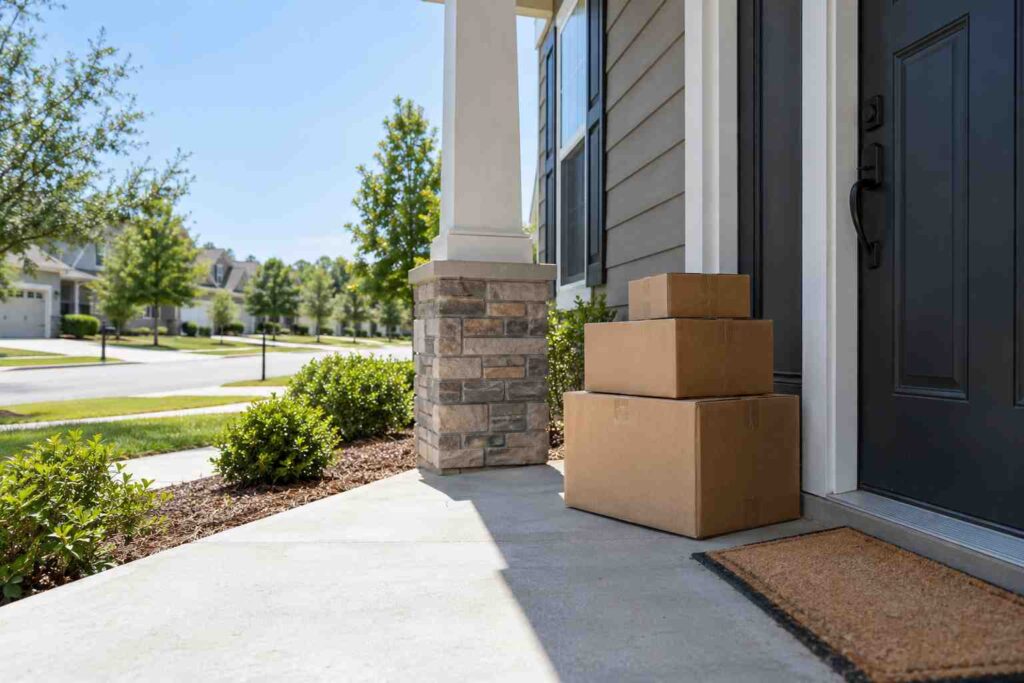
The best way to keep packages safe from porch thieves while you are at work is to make sure a package never sits alone on your porch. Send it to a place where someone is present or where it is locked up, such as a pickup locker, a carrier hold location, a trusted person, or your workplace if your employer allows it. Then add backups like delivery alerts, signature rules, and a camera. No single trick is perfect, but a mix of two or three cuts the risk a great deal.
This guide covers every common fix, what each one costs in time and money, and how to choose the right one for your home. Use it as a menu. Pick the options that fit your job, your address, and the value of what you order.
How Big Is the Porch Theft Problem?
It is large enough to plan for. The SafeWise 2025 package theft report surveyed 2,500 people and found that 31 percent of Americans had a package stolen in the past 12 months. SafeWise estimates that about 104.3 million packages were stolen, for $14.9 billion in losses, with an average value of $143 per package. It also found that 75 percent of victims lost more than one package.
The loss is hard to undo. In the same report, only 4 percent of victims got their stolen item back, and just 12 percent reported the theft to police. An earlier ValuePenguin survey of 1,545 adults found a similar pattern, with only 17 percent of recent victims reporting the theft to police. Prevention is easier than recovery.
Why Does Theft Happen While You Are at Work?
Porch theft is a crime of opportunity. SafeWise quotes criminologist Dr. Ben Stickle: “Package theft is a crime of opportunity. The longer packages sit on a porch, especially during busy holiday season, the easier they are for thieves to grab.” If you leave at 8 a.m. and get home at 6 p.m., a package that arrives at 10 a.m. has to survive eight hours in the open.
Picture Jordan, who works in an office across town. A box lands on the porch at 10:15 a.m. and sits there in plain view. Nobody is home to bring it in, and neighbors may not notice a stranger walking up. The fix is not to buy a bigger lock for the house. The fix is to change where and when that box arrives.
Can You Have Packages Delivered to Another Place?
This is the strongest fix because it removes the exposure completely. The Postal Inspection Service gives this advice in its package protection tips: “If you can’t be home, arrange for a friend and neighbor to pick it up.” A relative, a friend with a flexible schedule, or a neighbor who works from home can bring packages inside within minutes.
Some people ship to their workplace. Whether that is allowed depends on your employer, so ask first, and tell the mailroom or front desk what to expect. Do not send large personal orders to a workplace that has no clear rule about it. If you rent a PO Box, remember that UPS and FedEx usually cannot deliver into one, so it only helps for packages that ship by USPS.
Are Lockers and Pickup Points a Good Option?
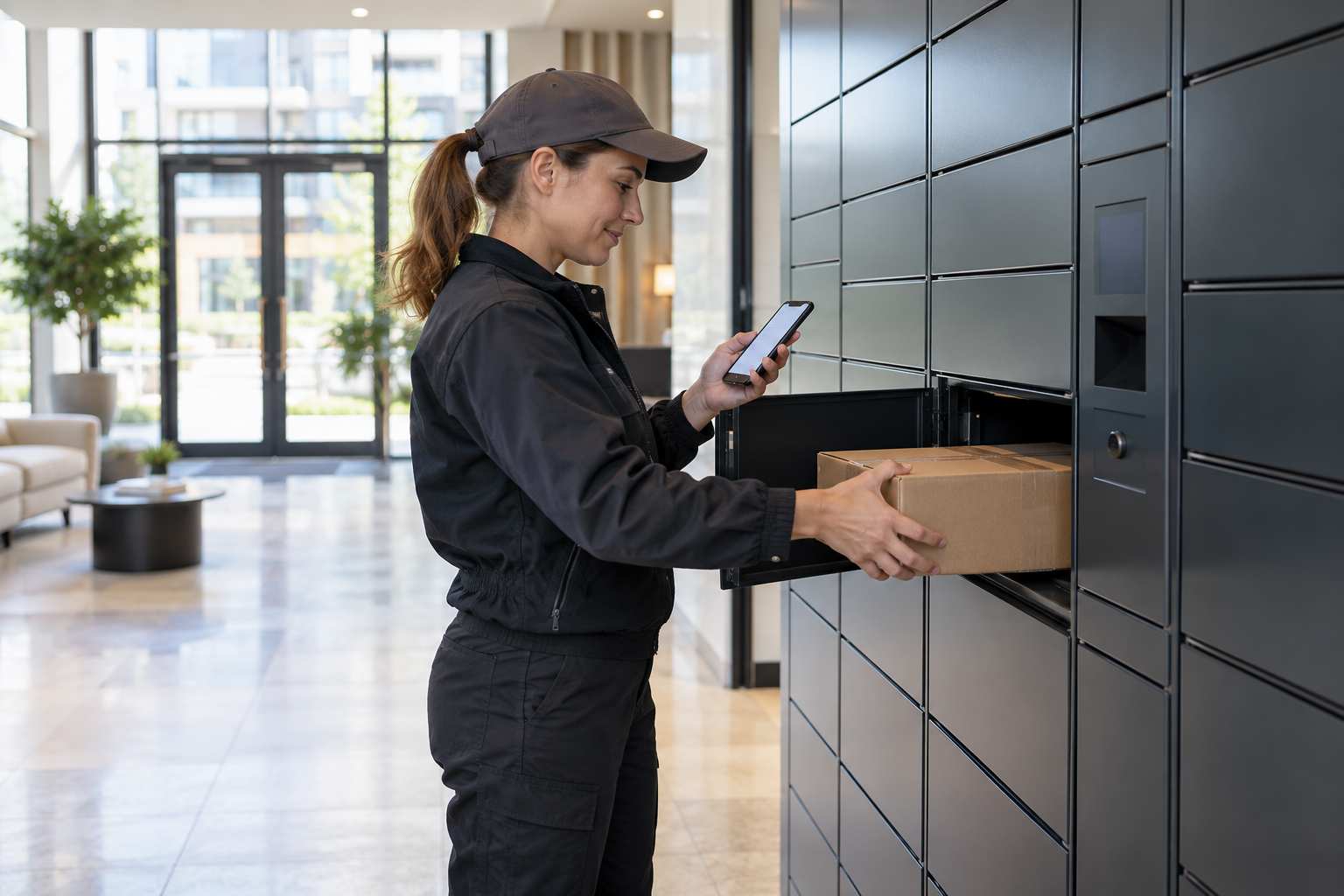
For most people who work all day, yes. A locker or pickup point holds the package in a secure place until you collect it. You choose the time, and you get a code or a notice. The tradeoff is that you have to make a trip, and the package has a deadline.
Amazon says customers can ship to a locker at no additional cost, and that it has more than 25,000 locker and pickup locations across the U.S. You get three calendar days to collect your package. FedEx has a similar option. Its Hold at Location page says you can redirect a package that is already heading your way to a secure FedEx location, where FedEx will hold it for up to 7 days. You need a government issued photo ID to pick it up. UPS has pickup points as well, and a May 2026 travel guide notes that UPS options for redirecting to Access Points can cost extra.
The Postal Service has its own version. USPS says that when you ship, you can always elect to Hold For Pickup, which lets the recipient collect a package at the local Post Office. This works well when a seller ships by USPS and you can pick up on your lunch break or on the way home. Our guide on what held at post office means explains how long the package waits.
Can You Control Where and When the Driver Delivers?
You can often steer both. USPS says that if your package does not fit in your mailbox and you will not be home, you can give USPS Delivery Instructions online to authorize your carrier to leave it in a specified location. That lets you ask for a spot at your address that is out of view from the street.
A hidden spot is better than an open porch, but it is not safe by itself. Use it as a backup for low value orders, not for anything expensive. Our guide on why a package says it was left in a safe place shows what can go wrong when drivers pick the spot.
Timing helps too. FedEx says you have until midnight the day before delivery to change your delivery location on eligible packages, and some changes start at $5.55 per request, according to the FedEx Delivery Manager FAQ. Our article on rerouting a package after it has shipped covers each carrier’s rules. In the ValuePenguin survey, 27 percent of affected people chose delivery times as a protective step.
Should You Require a Signature?
A signature rule means the driver cannot leave the package alone. The Postal Inspection Service lists it as a protective step: “Request a signature.” USPS also points to services such as Signature Confirmation to make sure the item ends up in the right hands. The catch is that you must be there, or someone else must sign. If nobody is home, you get a notice and have to pick up or reschedule. Our guide on what happens when you miss a signature delivery explains the steps.
Signatures make sense for higher value items. For everyday orders, they often cause more hassle than they prevent. If someone else in your home might sign, read our article on whether a neighbor or roommate can sign for your package first.
Do Alerts and Tracking Really Help?
Alerts help because they shrink the time a package sits outside. If you know the exact moment of delivery, you can ask a neighbor or a family member to grab it, or you can check a doorbell camera. In the ValuePenguin survey, setting up tracking notifications was the most common step, used by 45 percent of affected people.
USPS has a free tool for this. The Informed Delivery app offers push notifications for updates to incoming mail and packages. For other carriers, use the text and email options in each carrier account. A realistic routine is to turn on alerts for every order, then glance at your phone at lunch to see which boxes are out for delivery that afternoon.
What Can Cameras, Lights, and Boxes Do?
A camera does not stop a thief by itself, but it gives you proof. USPS recommends that if you have a camera system, you make sure it captures activity at your front door and mailbox. Proof helps with a police report, a carrier claim, or a conversation with the seller. Our guide on what to do when a package is stolen after delivery shows how to use that footage.
Do not count on cameras alone. ValuePenguin found that 35 percent of affected people had installed doorbell cameras, and that 60 percent of those who reported a stolen package had at least one security camera. Cameras help catch the story, not always the package.
A locked delivery box is another layer. It keeps the package out of sight, but it only works if the carrier will use it and the lock is strong. Treat it as one tool among many, and match it to the value of what you order.
Which Fix Should You Choose?
Match the tool to your situation. If you live in an apartment, look at the building’s package room or lockers. If you live in a house and work long hours, a locker or hold location is the safest choice. If you only order small, low cost items, delivery instructions and alerts may be enough. For anything costly, such as electronics or medicine, use a signature rule or a pickup point.
Here is how Jordan would use this. For small orders, Jordan sets USPS delivery instructions and turns on alerts. For big orders, Jordan ships to a locker. For one gift that costs $300, Jordan picks a signature rule and asks a neighbor to be home. That plan costs almost nothing and takes about ten minutes to set up.
What If a Package Is Stolen Anyway?
Report it quickly. Check your tracking, look around the property, and ask neighbors. Then contact the seller and the carrier. If you used a credit card, check its purchase protection. Our full guide on what to do after a stolen package walks through every step, and our article on how to file a lost package claim covers the paperwork.
Frequently Asked Questions
How can I stop porch pirates when I am not home all day?
Keep packages from sitting on the porch. Ship to a locker, a carrier hold location, or a trusted person, and add alerts, a signature rule for costly items, and a camera as backups.
Is it safe to ship packages to my workplace?
It can be, but only if your employer allows it. Ask your mailroom or front desk first, and let them know what is coming so the package does not sit unclaimed.
How long will a locker or hold location keep my package?
Amazon gives you three calendar days to pick up a package from a locker, and FedEx holds packages at a secure location for up to 7 days. Check the deadline for each service before you rely on it.
Do security cameras prevent package theft?
Cameras give you proof, but they do not always stop a theft. ValuePenguin found that 60 percent of people who reported a stolen package had at least one security camera.
Should I report a stolen package to the police?
Yes, if the loss is large or the thief was on camera. SafeWise found only 12 percent of victims reported the theft to police, and only 4 percent got the item back.
If you manage packages for residents, such as in an apartment community, TekCore’s residential package tracking software helps keep deliveries off the doorstep and in a secure place.
