
How Package Tracking Software Handles Restricted and Hazardous Material Deliveries in the Mailroom
Package tracking software handles restricted and hazardous material deliveries by flagging shipments based on carrier hazard labeling or shipper-declared content at intake, routing them to a designated handling process instead of standard storage, and recording the additional verification steps required before release. This keeps regulated items, such as laboratory chemicals, certain medical supplies, or flammable materials, from being treated the same way as an everyday office supply delivery, which reduces both safety risk and compliance exposure for the organization.
Why Standard Mailroom Handling Is Not Enough for Restricted Items
A typical mailroom workflow is built around speed and volume: scan the package, log the recipient, place it in a holding area, notify the recipient, and release it on pickup. That workflow works well for the overwhelming majority of deliveries, but it is not designed to account for items that carry legal handling requirements, storage restrictions, or safety hazards. A package of laboratory reagents placed on an open shelf next to routine office deliveries creates a genuine safety risk if it leaks or is handled incorrectly, and an organization receiving regulated materials without a documented handling process can face compliance findings during an audit even if no actual incident occurs.
Universities with research labs, hospitals, and manufacturing facilities are the organizations most likely to receive this kind of shipment regularly, but any facility can occasionally receive something that falls outside standard handling, whether it is a hazardous cleaning chemical, a battery shipment subject to transport restrictions, or a controlled item requiring signature verification beyond a normal delivery.
How Tracking Software Flags Restricted Shipments at Intake
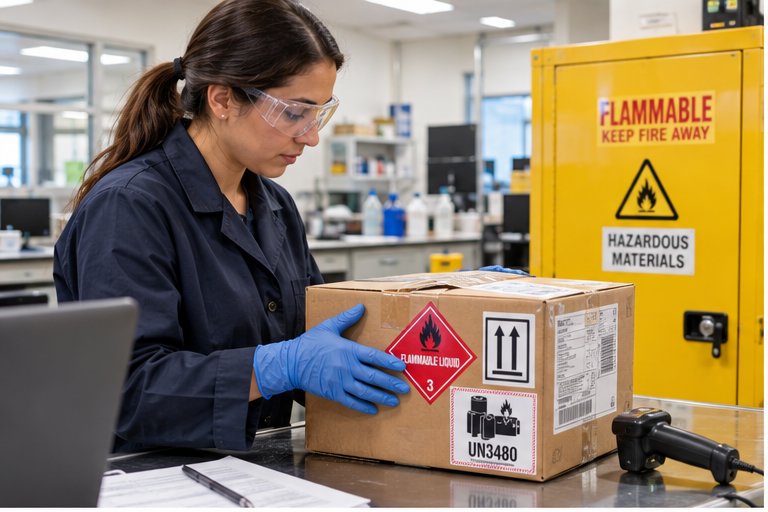
Most hazardous material shipments carry standardized hazard labels required by transport regulations, and many carriers also transmit hazard classification data electronically along with standard tracking information. Package tracking software configured for restricted-item handling can be set to recognize these labels or classification codes at the point of intake scanning, automatically flagging the shipment and triggering a different workflow than a standard package would follow. In cases where hazard information is not machine-readable, staff trained to recognize hazard labeling can manually flag a package in the system, which produces the same downstream handling process.
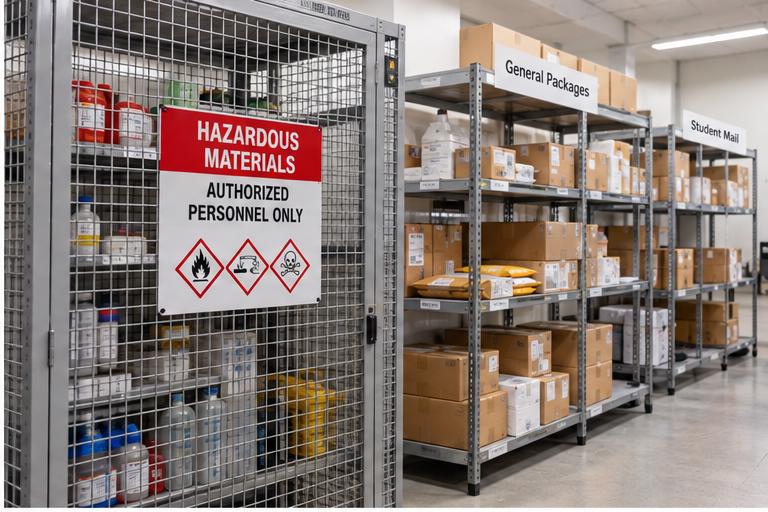
Once flagged, the software can route the item to a designated secure storage location rather than the general holding shelf, restrict which staff roles are authorized to release it, and require an additional verification step, such as confirming the recipient’s department has an active safety data sheet on file or that the recipient holds appropriate certification to receive the material, before the release is logged as complete.
Maintaining a Compliance-Ready Record
Regulatory frameworks governing hazardous materials generally require documentation of chain of custody from receipt through final handling, not just proof that a package was delivered. Package tracking software supporting this use case needs to log more than a standard delivery timestamp, ideally capturing who received the shipment into secure storage, who verified it before release, and when it was ultimately handed off to the recipient, creating a complete internal record that can be produced during a safety audit or regulatory inspection without staff needing to reconstruct the timeline manually from memory or paper logs.
A Practical Example
Consider a university research building that receives a shipment of laboratory chemicals addressed to a specific research group. Under a standard intake process, the package might sit on an open shelf in the general mailroom until someone from the lab happens to pick it up. With restricted-item handling built into the tracking software, the intake scan immediately flags the hazard label, the package is moved to a designated secure storage area rather than the open shelf, and the software requires confirmation that an authorized lab representative, rather than any general building occupant, is the one picking it up, with that verification logged as part of the permanent record.
Training Staff Alongside the Software
Even the best-configured tracking software depends on staff correctly identifying and flagging hazardous shipments that are not automatically machine-readable at intake. Facilities implementing this kind of workflow should pair the software configuration with basic staff training on recognizing common hazard labels and understanding when to escalate a package for secure handling rather than placing it directly into general storage, since a missed flag at intake defeats the purpose of the entire downstream process.
What to Look for When Evaluating Software for This Use Case
Facilities that regularly receive regulated materials should confirm whether a tracking platform supports custom intake flags and configurable release workflows, rather than a one-size-fits-all process applied to every package equally. It is also worth confirming what audit and reporting capabilities exist for restricted-item handling specifically, since general delivery reports are usually not detailed enough to satisfy a compliance review on their own.
Getting Started
Learn more about package chain of custody tracking and how hospital mailroom software supports regulated deliveries in clinical environments. Ready to see how a restricted-item workflow could work for your facility? Schedule a demo.
