
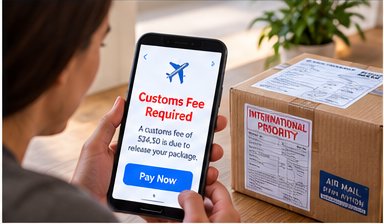
Why Am I Being Asked to Pay Customs Fees After My International Package Already Shipped?
You are being asked to pay customs fees after shipping because import duties and taxes are calculated once your package physically arrives in the destination country, not when the seller ships it. Customs authorities assess these charges based on the package’s declared value, contents, and country of origin at the border, which is a separate process from the shipping carrier’s job of moving the box from point A to point B. In many cases, the seller has no way to know the exact fee in advance, so it shows up as a surprise request for payment after the package is already on its way to you.
Why Duties Are Calculated After Shipping, Not Before
Customs duties depend on the harmonized tariff classification of the item, its declared value in the currency of the destination country, and sometimes the specific trade agreements between the origin and destination countries. This calculation happens when the package physically crosses the border and clears customs, which is often days or weeks after it left the seller’s warehouse. Some retailers estimate duties at checkout and include them in your total price upfront, a model known as Delivered Duty Paid. Many others, especially smaller international sellers, ship under Delivered Duty Unpaid terms, which means the buyer is responsible for paying duties directly to customs or the carrier once the package arrives in their country.
If you did not see duties itemized at checkout, there is a good chance your order shipped under Delivered Duty Unpaid terms, and the fee you are now being asked to pay is a normal part of that shipping method, not a scam or a mistake.
Who Actually Collects the Fee
Usually it is not the retailer who collects customs fees after shipment. Most commonly, the shipping carrier, such as UPS, FedEx, or your national postal service, pays the customs duty on your behalf to clear the package through the border, then bills you for that amount plus a brokerage or handling fee before or upon delivery. This is why the fee request often comes from the carrier’s website or a text message from the carrier, not from the store where you originally placed the order.
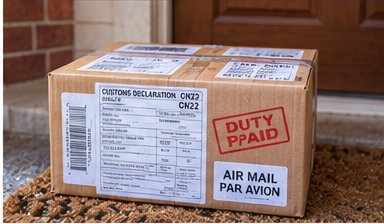
Consider someone who orders a piece of clothing from an overseas boutique. The order confirmation shows only the item price and a flat shipping charge. A week later, the carrier sends a text with a link to pay an additional amount before the package will be released for delivery. That amount is the import duty plus the carrier’s processing fee, not an extra charge from the boutique itself.
How to Tell If a Customs Fee Request Is Legitimate
Legitimate customs fee requests generally come directly from the tracking page of the carrier that is actually handling your shipment, and they reference your real tracking number. Check the tracking number in the fee request against the one from your original shipping confirmation email. If they match and the request comes from the carrier’s official website or app, the request is very likely legitimate.
Be cautious of unsolicited text messages or emails asking for a small “redelivery fee” or “customs fee” that do not clearly reference your specific tracking number, since package delivery scams frequently imitate these messages. If you are unsure, go directly to the carrier’s official tracking page yourself, using the tracking number from your original order confirmation, rather than clicking a link in a message you were not expecting.
Can You Avoid Customs Fees Ahead of Time?
Sometimes. Before ordering from an international seller, check whether their checkout process includes an option for duties and taxes to be calculated and paid at checkout. Retailers who use Delivered Duty Paid shipping build the estimated duty into your total price, so there is no separate bill later. If a retailer’s checkout does not mention duties at all, assume you may owe an additional fee once the package clears customs in your country.
Every country also sets a minimum value threshold below which packages are not charged duty at all, often called a de minimis threshold. If your order is under that value, you may not owe anything even though the package is crossing an international border. This threshold varies significantly by country, so it is worth checking your own country’s customs authority website if you order internationally on a regular basis.
What Happens If You Do Not Pay
If a customs fee goes unpaid, the carrier will generally hold the package rather than deliver it, and after a set period the package may be returned to the sender or, in some cases, destroyed, depending on the carrier’s policy and the country involved. If you decide not to pay, contact the carrier directly to understand your options rather than simply ignoring the notice, since holding periods and outcomes vary by carrier and destination country.
Frequently Asked Questions
Does the seller get any of the customs fee I pay?
No. Customs duties and taxes go to the government of the destination country, and any additional processing fee goes to the carrier that handled clearing the package through customs, not to the original seller.
Why did one international order have no customs fee while another did?
This usually comes down to the declared value of each order relative to your country’s duty-free threshold, the specific product category, and whether the seller used Delivered Duty Paid or Delivered Duty Unpaid shipping terms.
Can I dispute a customs fee I think is too high?
Yes, most customs authorities have a formal process for disputing an assessed duty if you believe the declared value or classification was incorrect. Contact the carrier or customs authority directly for their specific dispute process.
If your business regularly receives international shipments and needs a reliable way to log, notify, and track every incoming package, including the ones that clear customs on a different timeline than expected, mailroom automation software can help keep everything organized in one place.
