
Standardizing Multi-Carrier Package Intake in a High-Volume Mailroom
Standardizing multi-carrier package intake means logging every delivery the same way regardless of which carrier dropped it off, USPS, UPS, FedEx, Amazon Logistics, or DHL, so the mailroom has one consistent record instead of five different habits shaped by five different label formats and delivery routines. Most mailrooms do not consciously decide to handle carriers differently; it happens gradually, because each carrier’s paperwork, scanning app, and driver behavior are different, and staff adapt intake on the fly for whichever truck just pulled up. The result over time is a mailroom running several inconsistent processes at once, which makes reporting, auditing, and even simple questions like “how many packages did we receive today” much harder to answer accurately.
Why Carrier Fragmentation Happens in the First Place
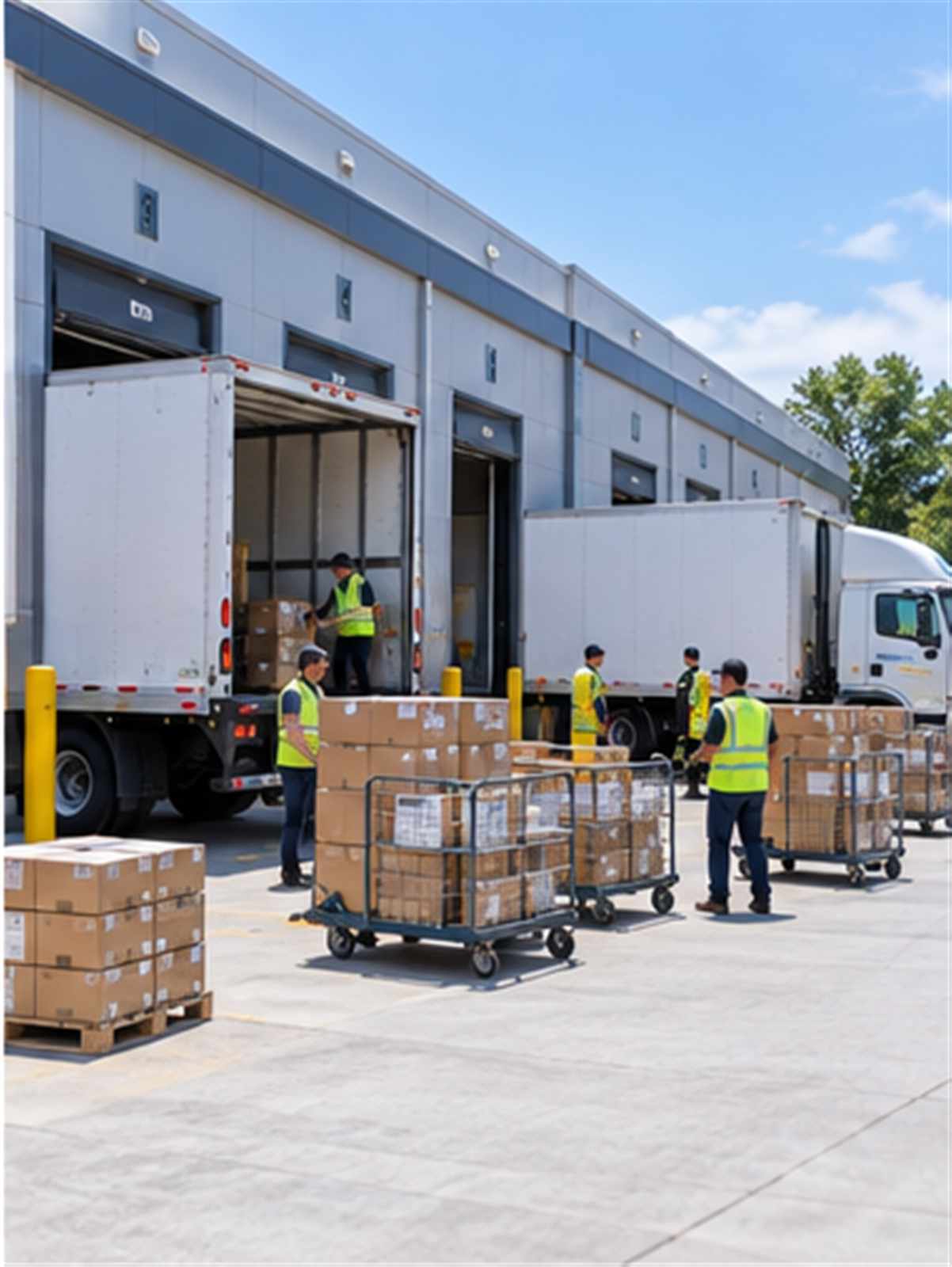
The scale of the problem starts with just how much volume is moving through these carriers. U.S. parcel volume reached roughly 22.4 billion packages shipped in 2024, and the four dominant carriers, USPS, Amazon Logistics, UPS, and FedEx, together account for about 92 percent of all domestic shipments. USPS alone moves roughly 7.3 billion packages a year, Amazon Logistics around 6.3 billion, UPS about 4.7 billion, and FedEx approximately 3.7 billion. A single receiving dock at a mid-sized facility is realistically seeing all four on a regular basis, often within the same hour, each with a different label format, a different signature or scan requirement, and a different driver who may or may not be familiar with the building’s specific drop-off procedure.
Staff naturally develop shortcuts for each carrier. A USPS driver might just hand a stack of mail through a window with no formal signature step. A UPS or FedEx driver typically scans a barcode on their own handheld device and may or may not ask for a countersignature. An Amazon Logistics driver, often driving a personal or gig-economy vehicle rather than a branded truck, might simply leave packages at a designated drop point with no interaction with staff at all. Each of these is a reasonable adaptation in the moment, but stacked together they create a mailroom where some packages are logged the moment they arrive, others are logged an hour later during a slow period, and others are never formally logged until someone comes looking for them.
What Standardized Intake Actually Looks Like
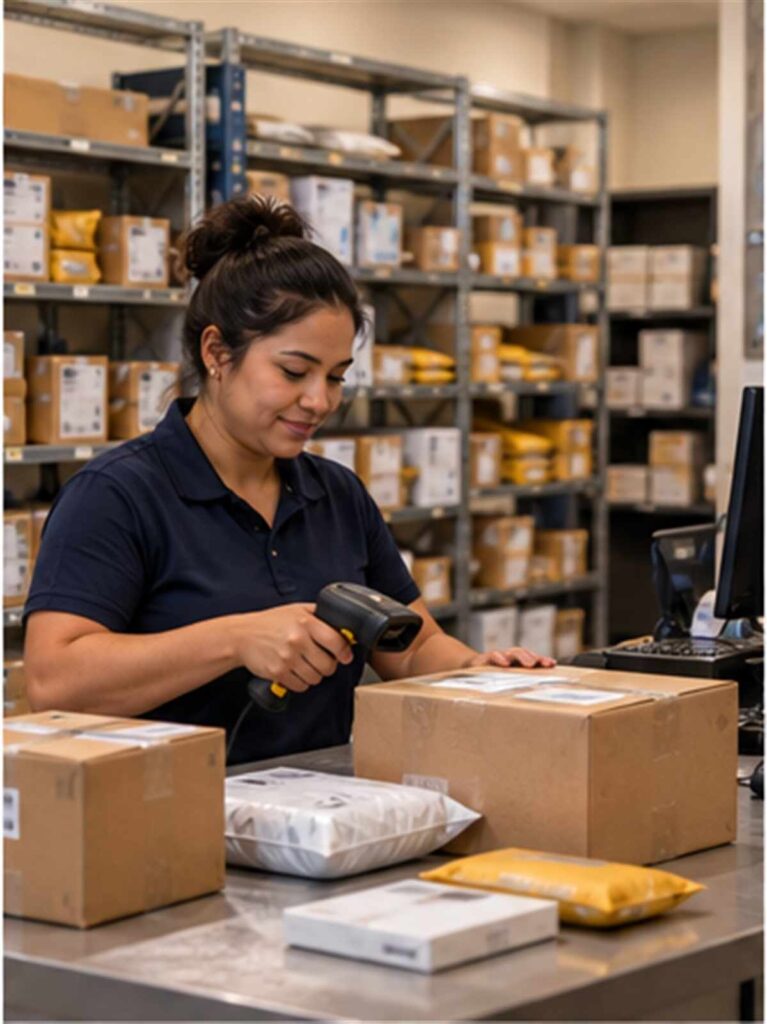
Standardizing intake does not mean forcing every carrier’s driver to follow an identical physical process, since that is often outside a mailroom’s control. It means the mailroom’s own side of the interaction, what staff scan, what gets logged, and what triggers a notification, works the same way no matter which truck the package came off of. In practice this usually means scanning a barcode on the shipping label itself, whichever carrier printed it, rather than relying on a carrier-specific app or a manual log entry that varies by who is working that shift.
A facility that has standardized this way can answer, at any moment, exactly how many packages arrived that day broken down by carrier, exactly which ones are still awaiting pickup, and exactly how long each one has been sitting since intake, all from one system rather than piecing together information from four different carrier portals plus whatever notes staff kept by hand. That single view is what makes the daily reconciliation process, confirming nothing was missed or double-logged, take minutes instead of the better part of an hour.
The Cost of Not Standardizing
Inconsistent intake shows up most painfully when something goes wrong. A resident or employee calls asking about a package the tracking page says was delivered, and staff have to manually check which carrier it came from before they even know where to start looking, a paper log for USPS drop-offs, a separate spreadsheet someone started for Amazon, or nothing at all if it came through UPS and staff assumed the driver’s scan was sufficient documentation. Reconstructing what actually happened to one missing package can eat up a significant chunk of a staff member’s day when the underlying data is scattered across four different informal systems instead of centralized in one place.
It also makes staffing and training harder than it needs to be. A new hire has to learn not just how to receive a package, but four slightly different unwritten procedures depending on which carrier shows up, information that usually lives only in the heads of more experienced staff rather than in any documented process. That kind of tribal knowledge is fragile; it disappears when an experienced staff member leaves, and it is nearly impossible to audit or improve since there is no single documented workflow to review.
How a Unified Intake System Changes the Daily Workflow
With a system built around a single intake workflow, staff scan the label barcode as the first step regardless of carrier, and the system reads what it needs from that scan, recipient information where available, carrier, tracking number, so the rest of the intake, photographing the package, assigning a location or shelf, and sending a notification, happens the same way every time. The staff-facing process becomes carrier-agnostic even though the underlying carriers and their delivery habits remain just as varied as ever.
This also solves a subtler problem: cross-carrier duplicate detection. It is common for the same item to accidentally generate two tracking numbers, once when a retailer hands it to a regional carrier and again when that carrier hands it off to USPS for final delivery, sometimes called “last mile” handoff. A unified system that logs every scan in one place can catch when two tracking numbers are actually the same physical package arriving at two different points in the chain, something that is nearly impossible to catch when each carrier’s activity lives in a separate silo.
Handling Volume Spikes Without Adding Carrier-Specific Chaos
Standardized intake matters even more during high-volume periods. A facility that already treats every carrier the same way at intake does not need to improvise a special process when Amazon Logistics volume triples during a promotional event, or when USPS package volume climbs during the holiday shipping season. The workflow staff already know how to run simply gets used more often, rather than staff having to remember an ad hoc exception process for whichever carrier happens to be flooding the dock that week.
Facilities that have moved to this kind of inbound package tracking software consistently report being able to absorb significantly higher volume without proportionally adding staff hours, largely because the intake process itself is no longer the bottleneck; the bottleneck moves to genuinely volume-driven tasks like sorting and notification, which scale more predictably than an inconsistent manual intake process does.
Reporting Across Carriers Instead of Within Them
Once intake is standardized, reporting becomes something a facilities or receiving manager can actually use for planning rather than just record-keeping. Questions like which carrier is driving the most volume growth, which carrier has the highest rate of packages sitting unclaimed past a certain number of days, or whether Tuesday afternoons consistently see a surge that justifies adjusting staff schedules, all become answerable from one parcel management report instead of requiring someone to manually cross-reference four separate carrier systems that were never designed to talk to each other.
Rolling Out a Standardized Process Without Disrupting Daily Operations
Switching an existing mailroom from four informal, carrier-specific habits to one standardized intake process does not require shutting down operations to retrain everyone at once. Most facilities have better results phasing it in by carrier, starting with whichever carrier generates the most volume or the most recurring problems, since that is where staff will notice the improvement fastest and where the old inconsistent process was causing the most friction. Once staff are comfortable scanning one carrier’s labels through the new workflow, extending that same habit to the next carrier is a much smaller step than trying to retrain the entire intake process in a single day.
It also helps to involve the staff who actually work the receiving desk in deciding exactly where scanning happens in the physical workflow, at the door, at a dedicated intake station, or at the point where packages are shelved, rather than dictating a process from outside that does not match how the space and daily traffic actually work. Staff who helped shape the process are generally faster to adopt it consistently, and they are more likely to flag genuine exceptions, like a carrier whose label occasionally will not scan cleanly, before those exceptions turn into a habit of skipping the scan altogether.
Frequently Asked Questions
- Do all carriers use a scannable barcode that works with a unified system? Yes, every major carrier’s shipping label includes a scannable barcode encoding the tracking number, even though the label layout and design differ significantly between USPS, UPS, FedEx, Amazon Logistics, and DHL.
- Does standardizing intake require carriers to change how they deliver? No, it only changes what happens on the receiving side once a package is physically in the building. Carriers continue delivering however they normally do; the mailroom’s own logging process is what becomes consistent.
- How does this help during peak shipping season? A facility with one proven intake workflow can simply run that same workflow more often during a volume spike, rather than staff having to improvise or fall back to slower manual logging when a particular carrier’s volume surges.
- Can a unified system catch duplicate tracking numbers from carrier handoffs? Yes, when every scan is logged centrally, the system can flag when two different tracking numbers correspond to the same physical package moving through a multi-carrier handoff, something that is difficult to catch when each carrier’s data stays in its own separate system.
If your mailroom is still running a slightly different process for every carrier that pulls up to the dock, TekCore’s schedule a demo page is a good next step to see how a single intake workflow could apply across your entire carrier mix.
