
Why Does My Package Say “Delivered” on the Retailer’s App But Not Yet on the Carrier’s Tracking Page?
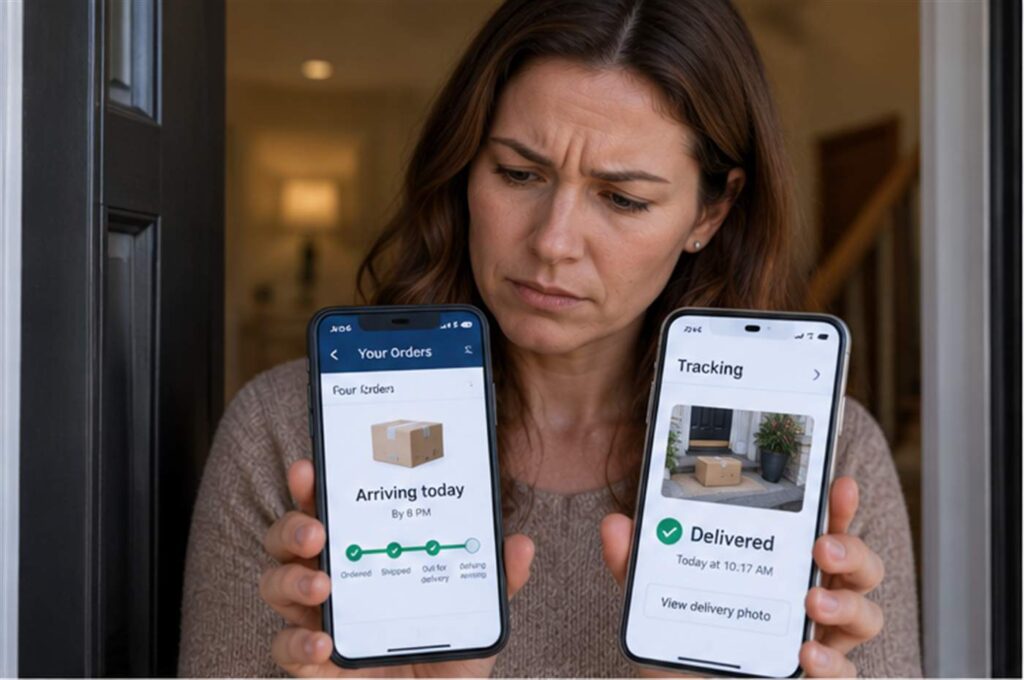
When a retailer’s app shows “delivered” before the carrier’s own tracking page has updated, it almost always means the two systems are simply receiving and displaying the same scan data on different schedules, not that anything actually went wrong with your delivery. Retailers pull tracking updates from the carrier through an automated feed, and that feed can lag behind, or occasionally run ahead of, what shows up if you check the carrier’s website directly. The short version is that this kind of mismatch is common, usually resolves itself within a day, and rarely means your package is lost.
What Is Actually Happening When the Two Trackers Disagree
Every retailer that lets you track a package inside its own app or website is not generating that tracking information itself. It is pulling status updates from the shipping carrier, USPS, UPS, FedEx, or a regional courier, through an automated data connection, then displaying that information inside its own interface with its own labels and timing. According to Route’s shopper help documentation, which explains this exact scenario to online shoppers, “the carrier’s website may display updates more quickly than the app,” and these short delays are described as expected and normal rather than a sign of a problem. The retailer’s app is a secondhand messenger, and messengers do not always deliver the message at the same instant.
Consider a realistic example: a shopper orders a pair of shoes from an online retailer. The delivery driver scans the package as delivered at 2:15 in the afternoon. The carrier’s own tracking page reflects that scan within a few minutes, since it is reading directly from the source. The retailer’s app, however, only refreshes its tracking data from the carrier every few hours through a batch update process, so the shopper does not see “delivered” in the retailer’s app until early evening, well after the actual event. To the shopper checking both screens side by side in the meantime, it looks like the systems disagree, when really one of them just has not caught up yet.
Why Retailer Apps and Carrier Websites Don’t Always Update at the Same Time
The reverse situation, where the retailer’s app shows “delivered” before the carrier’s page does, happens for a related but distinct reason. Some retailers use third-party shipping and tracking platforms that receive an early signal from the carrier’s internal logistics system, sometimes called a pre-delivery or last-scan notification, that gets translated into a “delivered” status in the retailer’s app slightly before the carrier’s own public-facing tracking page finishes updating. Amazon’s own customer service documentation acknowledges this kind of mismatch directly, noting that tracking information in its app can differ from what appears on the carrier’s website, and that this does not indicate a problem with the shipment itself.
There is also a simpler explanation that applies more often than people expect: not every carrier updates its own public tracking page in true real time. Large carriers process enormous volumes of scans every day, and while the scan event itself is recorded the instant it happens, the public tracking page you see in a browser is often generated from a slightly delayed copy of that data for performance reasons. A retailer with a more tightly integrated data connection can sometimes reflect that same scan sooner than the carrier’s own consumer-facing tracking page does.
Common Technical Reasons Behind the Mismatch
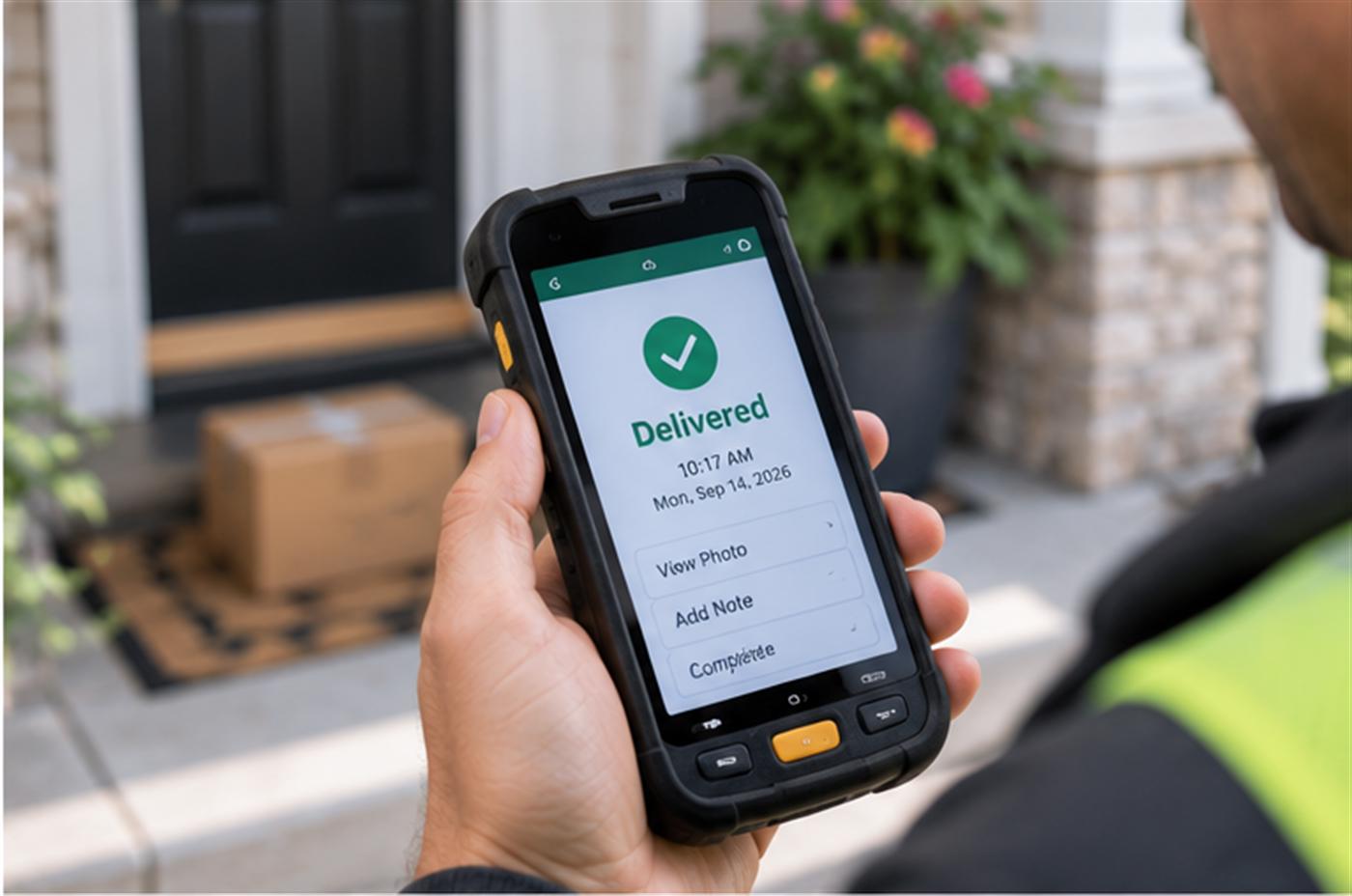
A handful of technical causes account for most of these discrepancies. A batch-based data feed on the retailer’s side is the most frequent one, where tracking updates are pulled on a fixed schedule, such as every one to four hours, rather than continuously. A caching delay on the carrier’s public tracking page is another, where the page itself is regenerated periodically rather than querying the live database on every visit. Occasionally a genuine data transfer error causes tracking information to update out of order or to briefly disappear and reappear, which can look alarming but is usually a display glitch rather than a shipment issue.
Wait a reasonable window before assuming something is wrong. Most of these mismatches resolve within 24 to 48 hours as both systems catch up to the same underlying scan data, so treat a short-term discrepancy as expected rather than urgent.
When This Is Normal vs When It’s a Sign of a Real Problem
A timing mismatch between two tracking displays is different from a package that is genuinely missing. If the retailer’s app says “delivered” but the carrier’s page still shows “out for delivery” or an earlier status, and this resolves within a day or two, that is the ordinary version of this issue. It becomes worth escalating if the discrepancy persists for more than 48 hours, if neither system ever shows a delivery scan at all despite the order being well past its expected delivery window, or if the “delivered” status appears with a delivery photo or GPS location that clearly does not match your address. Those signs point toward an actual delivery problem rather than a display lag, and are worth contacting the carrier and retailer about directly with your tracking number in hand.
What to Do If the Discrepancy Doesn’t Resolve
If more than two days pass and the two tracking sources still disagree, or if the package genuinely has not arrived despite one system saying it has, contact the carrier directly rather than relying only on the retailer’s app, since the carrier can usually pull more detailed scan history, including a delivery photo or GPS coordinates if one was captured. It also helps to contact the retailer separately, since retailers sometimes have a support escalation path with the carrier that individual customers do not have access to on their own. Have your tracking number, order number, and delivery address ready for both conversations, since that information lets either party pull up the specific scan history for your shipment rather than searching generically.
How to Avoid Confusion Going Forward
Checking the carrier’s own tracking page directly, rather than relying solely on a retailer’s app, gives you the most current and authoritative view of a shipment’s status, since it removes one layer of data-feed lag from the equation. Saving the carrier’s tracking number separately from the retailer’s order confirmation also makes it easier to check both sources quickly if a discrepancy does come up, rather than needing to dig back through an email or app order history first.
Frequently Asked Questions
- Does this mean my package was actually delivered twice, once by each system? No. Both the app and the carrier’s page are reporting on the same single delivery event, they are just reflecting it at different times because of how each system pulls and displays tracking data.
- Should I be worried if the mismatch lasts overnight? Not usually. A gap of several hours to a full day between when one tracker updates and the other catches up is within the normal range for this kind of data-feed lag.
- Can I trust the retailer’s app over the carrier’s website, or the other way around? The carrier’s own tracking page is generally the more authoritative source, since it is closer to the original scan data, but neither source is more “correct,” they are simply on different update schedules.
- What if the retailer’s app shows a delivery photo but the carrier’s site doesn’t? This is common and not a sign of a problem. Some retailers surface the delivery photo through their own app interface even when the carrier’s public tracking page does not display it directly.
If you are the one responsible for tracking deliveries for other people, such as running a mailroom, apartment complex, or business receiving area, relying on two separate systems that do not always agree can turn a simple timing lag into a real headache. Teams in that position often find it easier to rely on dedicated package tracking software that gives everyone one consistent, real-time record instead.
