
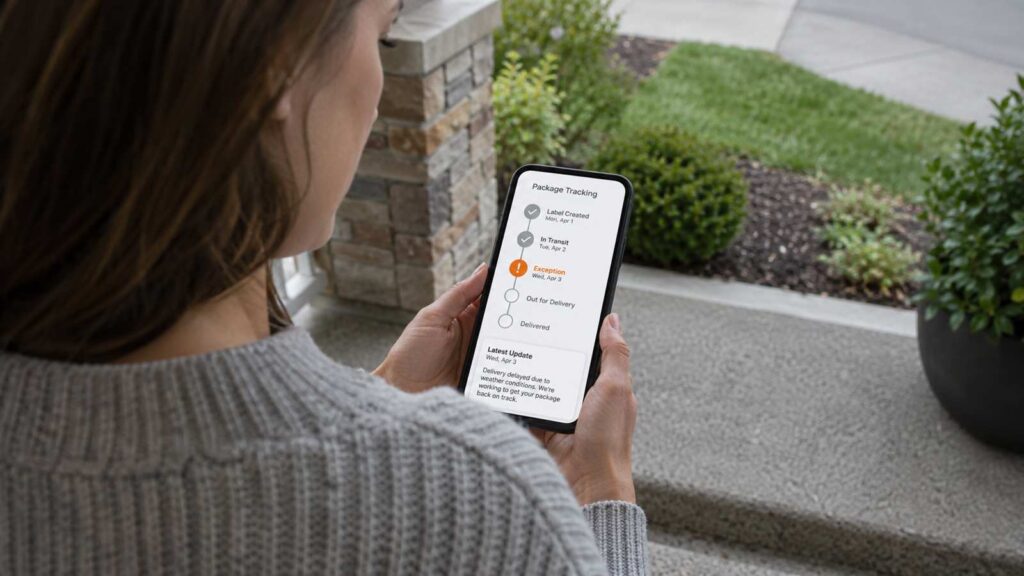
What Does an “Exception” Status Mean on My Package Tracking?
A tracking exception simply means something interrupted the normal path your package was supposed to follow, and the carrier flagged it instead of letting it move through silently. It is not automatically bad news; an exception can be as minor as a weather delay that resolves itself in a day, or as serious as a bad address that needs your attention right away. The important part is that “exception” is a catch-all label, so the real answer to what is happening lives in the short description printed right under that word on your tracking page.
Why Carriers Use One Vague Word for So Many Different Problems
USPS, UPS, FedEx, and DHL all use some version of the word exception because their tracking systems are built around a simple idea: a package should move from scan to scan on a predictable schedule, and anything that breaks that schedule gets flagged so a human or an automated process can look at it. Rather than build a separate status for every possible disruption, carriers group them under exception and then attach a short reason code or description that explains the specifics.
That design choice is efficient for the carrier, but it can be confusing for the person watching their package, because seeing the word exception without reading further can feel alarming even when the underlying cause is routine. Postal researchers and carrier documentation generally separate these into two broad buckets, processing exceptions that happen at sorting and distribution facilities, and delivery exceptions that happen once the package has reached the local area or is out for delivery. Knowing which bucket you are looking at is often the fastest way to gauge how worried to be.
The Most Common Reasons You Will See This Status
Most exceptions fall into a fairly short list of causes, and the specific wording under the status usually tells you which one applies.
- Weather or natural disaster. Severe storms, flooding, or wildfires can shut down a sorting facility or a delivery route for a day or more, and this is entirely outside your control or the carrier’s.
- Incorrect or incomplete address. A missing apartment number, a misspelled street name, or a typo in the ZIP code can stop a package mid-route until it is corrected.
- Customs hold. International shipments can sit in an exception state while duties are calculated or paperwork is reviewed, which is a different situation from a routine domestic delay.
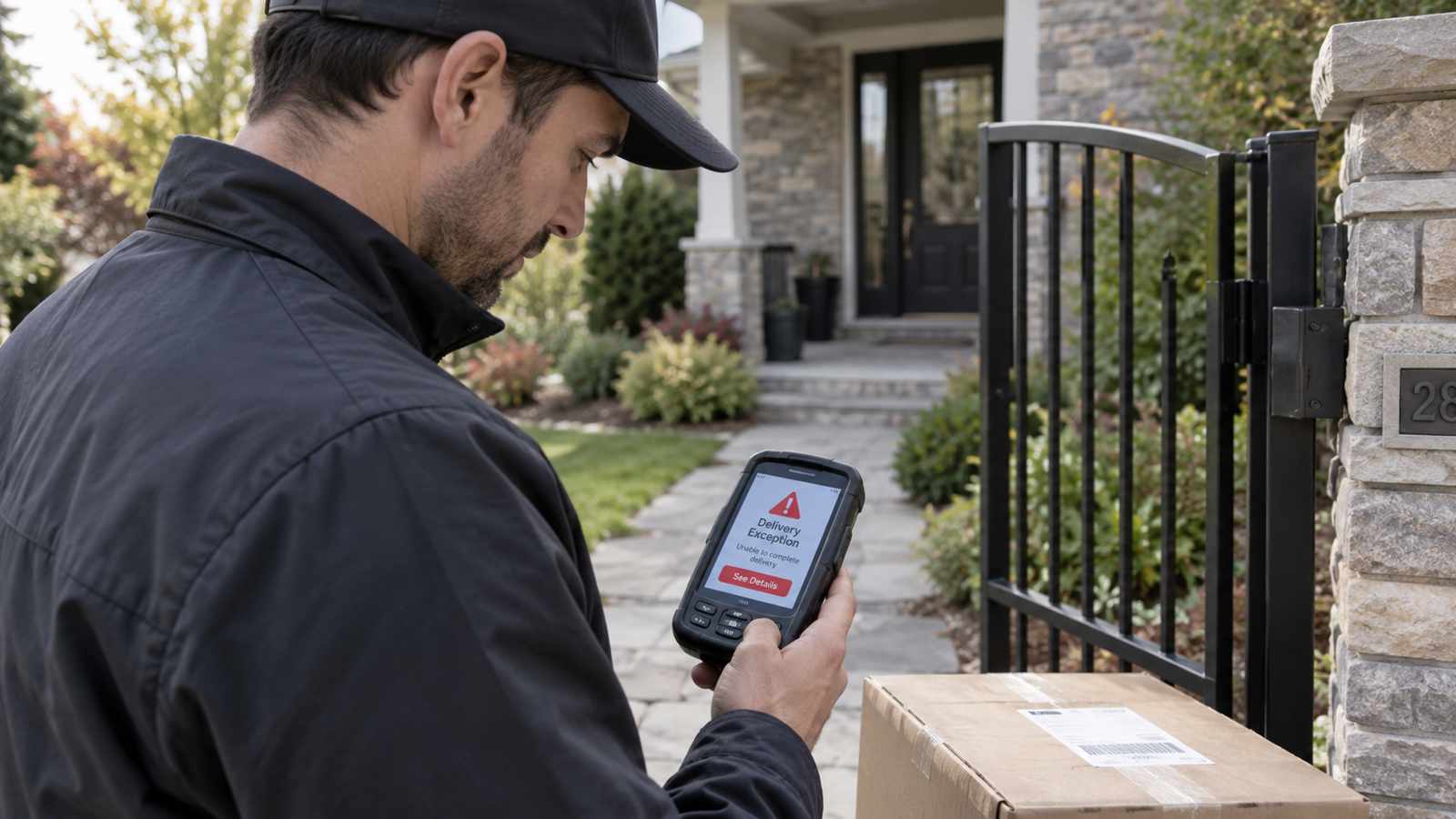
- Unable to access delivery location. A locked gate, a blocked driveway, or a business that was closed when the driver arrived can all trigger this status.
- Damage discovered in transit. If a package is damaged badly enough that it cannot safely continue, many carriers will flag it as an exception while they inspect it rather than deliver something broken.
- Missed connection. Occasionally a package misses the truck or flight it was supposed to be on, and the exception reflects that it will now travel on a later one.
For example, imagine ordering a birthday gift that ships across three states. The tracking page suddenly shows an exception with the description “delay due to weather conditions” the same week a major storm hits a regional hub the package was routed through. That single line explains everything: nothing is wrong with the address or the package itself, and the delay should clear within a day or two once the facility reopens and catches up on its backlog.
How the Wording Differs Between USPS, UPS, FedEx, and DHL
The concept is universal, but the exact label and level of detail vary by carrier. USPS tends to use short phrases like “Delivery Exception” or “Processing Exception” paired with a brief reason line underneath, such as “Local Weather Delay” or “Receptacle Blocked.” UPS typically uses the term “Exception” alongside a specific reason code visible when you click into the tracking detail, covering things like “Receiver Not Available” or “Incorrect Address.” FedEx often labels the same situation “Delivery Exception” and, similar to UPS, includes a short cause description directly beneath the main status line. DHL, which handles a large share of international shipments, frequently pairs an exception with a customs-related note, since cross-border shipments carry additional documentation and duty requirements that domestic packages do not.
None of these differences change what you should actually do, which is always to read the specific description rather than reacting to the word exception by itself. But knowing that UPS and FedEx tend to expose a more granular reason code than USPS can help explain why the same underlying problem, like a blocked driveway, might read as a short generic line on one carrier’s tracking page and a more specific one on another.
How Scale Makes the Occasional Exception Unavoidable
It helps to remember how much volume flows through these networks every single day. Priority Mail achieved approximately 93.4 percent on time performance in fiscal year 2024, according to filings with the Postal Regulatory Commission. That means even in a system running close to its target, a meaningful share of shipments still encounter something that pushes them off schedule, whether that is weather, an address problem, or a missed connection. An exception on your one package is rarely a sign that something is uniquely wrong with your order; it is usually just your shipment landing in the normal, expected slice of the network that runs into friction on any given day.
Processing Exceptions Versus Delivery Exceptions
A processing exception happens somewhere in the middle of the journey, typically at a sorting or distribution facility, and it usually reflects a routing, volume, or logistics problem rather than anything about your specific address. These tend to resolve as the network catches up, and they rarely require you to do anything at all.
A delivery exception happens closer to home, often on the day delivery was attempted or scheduled, and it is more likely to need action from you. If the description mentions a signature requirement, a business closure, an access problem, or an incorrect address, that is your cue to check the details and respond, since the carrier is effectively waiting on you before it tries again.
What to Actually Do When You See This Status
The single best habit is to read the full description under the word exception before doing anything else, since that line almost always names the real cause. From there, the right response depends on what it says.
- Address problem. Contact the carrier or the sender as soon as possible to confirm or correct the address, since packages with unresolved address issues are often returned to sender after a set number of days.
- Weather or volume delay. No action is needed. Check back in a day or two for a new scan showing the exception has cleared and the package is moving again.
- Access or delivery attempt issue. Look for instructions about a redelivery request, a note about a hold at a local facility, or a callback number, and follow those directly rather than waiting for a second unscheduled attempt.
- Customs hold. International exceptions can take longer and sometimes require you to submit documentation or pay duties before the package is released to continue.
Consider a small business owner who orders replacement inventory and sees an exception reading “unable to access delivery location, gate code required.” Rather than waiting and hoping the driver tries again, the fastest fix is to call the carrier’s local number, provide the gate code, and often get the package delivered that same afternoon instead of losing another day to a second failed attempt.
When an Exception Turns Into a Real Problem
Most exceptions clear within one to three business days as facilities catch up or the underlying issue gets resolved. It becomes worth escalating when the status has not changed in five or more business days with no new scan at all, when the description explicitly mentions damage, or when it mentions the package is being returned to the sender and you still want it delivered. At that point, contacting the carrier directly with your tracking number, rather than continuing to refresh the tracking page, is the faster path to an answer, since a live agent can often see internal notes that never make it to the public tracking display.
Can an Exception Ever Lead to a Refund?
An exception by itself does not automatically qualify you for a refund; most carriers treat a delay as a normal, if unwelcome, part of shipping rather than a service failure. That said, if the exception drags on well past the carrier’s original estimated delivery window, many sellers and marketplaces will offer a partial refund, a shipping cost credit, or expedited replacement shipping as a goodwill gesture, especially if you reach out and explain the situation with your tracking number in hand. Some premium services, like USPS Priority Mail Express, do carry a formal money-back guarantee tied to specific delivery deadlines, so it is worth checking whether your original shipping method included that kind of guarantee before assuming nothing can be done.
Frequently Asked Questions
Does an exception mean my package is lost? No. It almost always means something delayed the package, not that it disappeared. A package is generally only considered lost after tracking shows no movement for an extended period well beyond the carrier’s normal delivery window.
Will I be charged again if there is an exception? Almost never for routine delays like weather. You may be asked to pay duties on an international customs hold, or in rare cases pay for a corrected address label, but a domestic weather or volume exception carries no extra cost.
How long can an exception status last? Most resolve within one to three business days. Customs-related and address-related exceptions can take longer, sometimes a week or more, depending on how quickly the underlying issue is resolved.
Should I reorder the item if I see an exception? Generally no, not right away. Give it a few business days to clear on its own before assuming the shipment will not arrive, since most exceptions are temporary rather than a sign of a lost package.
On a side note, if you are the one responsible for tracking inbound packages for a mailroom, apartment community, or business receiving area, being able to spot an exception the moment it appears, instead of hearing about it from a frustrated recipient first, is exactly what package tracking software is designed to help with.
