
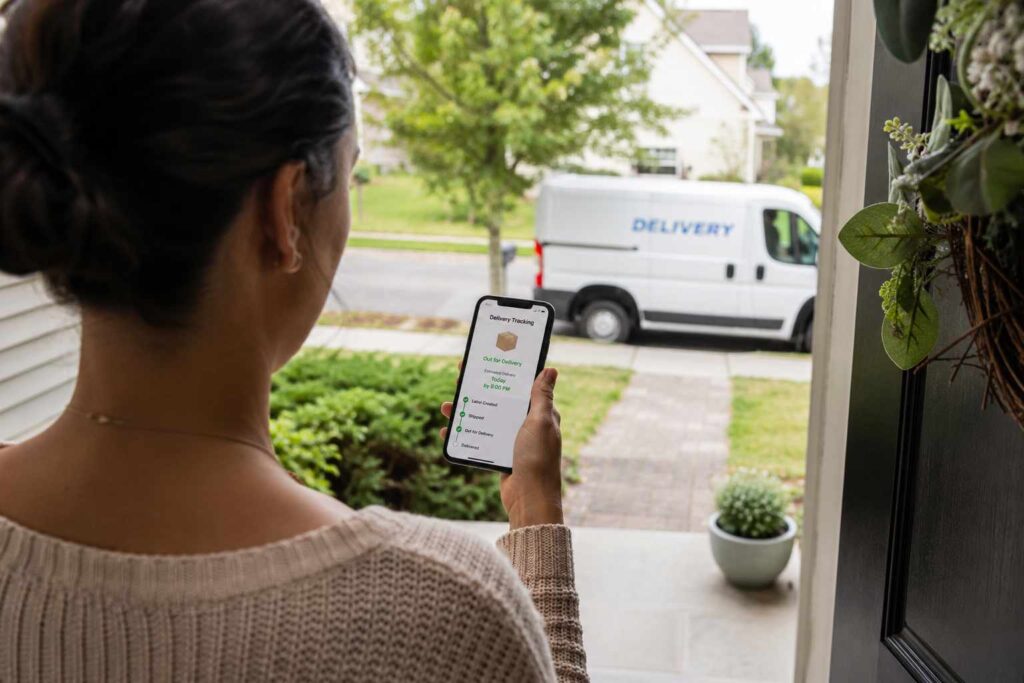
Why Did My Package's Estimated Delivery Date Change?
Your package's estimated delivery date changed because carriers recalculate it as new information comes in, and that first date you saw was only ever a prediction, not a promise. USPS, UPS, and FedEx all generate an initial estimate the moment a shipping label is created, based on the service level and the distance the package needs to travel, then they update that estimate every time the package is scanned somewhere new. If the package hits a delay, gets rerouted, or reaches a sorting facility later than the carrier's network expected, the estimated date shifts to match reality instead of the original guess.
This is a common source of frustration because the first date you see, often right after checkout, feels like a commitment. It is not. It is closer to a weather forecast: a reasonable prediction built from typical transit patterns that gets revised as actual conditions come in. Understanding how and why that revision happens can save you from panicking over a date change that turns out to be completely normal.
How Carriers Build the Original Estimate
When a shipping label is first created, the carrier does not yet know exactly where your package is or how smoothly its journey will go. Instead, it estimates a delivery window using historical transit times for that specific route and service level. A UPS Ground shipment from Ohio to California, for example, gets a different estimate than the same shipment from Ohio to Pennsylvania, purely based on distance and the carrier's typical network performance on that lane.
That early estimate is built before the package has been scanned even once. It reflects what usually happens, not what is actually happening with your specific box. As the package physically moves through the carrier's network, real scan data starts replacing that early guess, and the date on your tracking page adjusts to match.
What Actually Triggers a Date Change
Several things can cause the estimated date to move, and most of them are routine parts of how shipping networks operate rather than signs that something has gone wrong.
New scan data. Once your package reaches the "out for delivery" stage, USPS in particular tends to lock in a much more accurate final date, since the package is now physically close to its destination and there is little room left for the estimate to be wrong.
Weather and operational disruptions. Severe weather, from heavy snow to flooding, can delay entire regional sorting hubs, which pushes back the estimated dates for every package moving through that hub, not just yours.
Volume surges. During busy shipping periods, a facility can receive more packages than it is staffed to process that day, which slows throughput and shifts estimated delivery dates for packages routed through it.
Routing changes. A package can be rerouted to a different sorting facility for operational reasons, which changes the remaining distance and transit time, and therefore the estimate.
Address or label issues. A partially illegible label, an incomplete address, or a mismatch between the shipping label and the package's actual contents can require manual handling, which takes longer than automated sorting and pushes the date out.
How the Three Major Carriers Handle This Differently
USPS tends to give a fairly broad estimate early on and narrow it significantly once the package is scanned as out for delivery, since its network relies heavily on that final local scan to confirm same-day delivery is realistic. UPS and FedEx, by comparison, generally provide a tighter estimate earlier in transit because their networks rely more on scheduled hub-to-hub transit legs with predictable timing, though both will still push a date back if a scan is missed at one of those hub transfers.
This is part of why the same shipment, in theory, can behave differently depending on which carrier is used. A UPS or FedEx estimate that has not moved in several days despite ongoing scans is usually still on track, since those networks are built around fixed transit windows between hubs. A USPS estimate that has not updated in several days is more worth a second look, since USPS relies more heavily on live scan data to keep the estimate current.
International Shipments Add Another Layer
Cross-border packages have an extra reason for the estimated date to move: customs clearance. A package can sit at a border facility for anywhere from a few hours to several days waiting for customs processing, and that time is difficult for any carrier to predict in advance because it depends on the receiving country's own customs workload, not on the shipping carrier's network. When an international package's estimated date shifts by more than a domestic shipment typically would, customs holding time is usually the reason, even if the tracking page does not spell that out directly.
Does a Later Date Mean Your Package Is Lost?
No, not by itself. A shifting estimated delivery date is extremely common and, in the vast majority of cases, simply reflects the carrier updating its prediction with better information. It only becomes a real concern if the tracking history stops updating entirely for several days in a row, if the estimated date has already passed with no new scans, or if the status shows something unusual like being returned to a sorting facility without explanation.
If tracking is actively updating, even if the date keeps sliding a day or two at a time, that is a sign the package is still moving through the network normally. Carriers would rather give you a slightly later but accurate date than an optimistic one they cannot hit.
How to Read a Changing Estimate Without Losing Your Mind
A practical way to think about it is to treat the very first estimate, the one you see right after checkout, as the least reliable number you will ever be shown. Treat the estimate that appears once the package shows "out for delivery" as the most reliable one, since by that point the carrier knows exactly where the package physically is. Everything in between is a moving target that narrows as the package gets closer to you.
It also helps to check the full tracking history rather than just the headline date. A package that is still logging new scan events every day or two, even with a shifting delivery estimate, is behaving normally. A package with no new scans for three or more days is the pattern actually worth following up on with the carrier or the sender.
What to Do If the New Date Feels Too Far Out
If the revised estimate has pushed noticeably further out than you expected, the most direct step is to check the carrier's own tracking page for a stated reason, since UPS, FedEx, and USPS all show a status note (such as a weather delay or a rerouting event) alongside a changed date when one is available. If no reason is given and the date has moved by more than a few days, contacting the seller or the carrier directly with your tracking number is reasonable. Have the tracking number and the original ship date ready, since that is what a support agent will need to look into it.
For packages that stop updating altogether rather than just shifting to a later date, most carriers open a formal trace or investigation after the estimated delivery date has passed by a set number of days, which is a different process from a normal date revision and usually the right next step if scans have genuinely stopped.
Frequently Asked Questions
Is a changed delivery date the same as a delayed package? Not necessarily. A changed date usually means the carrier has more accurate information now than it did when it first generated an estimate. A delay specifically means the package is taking longer than the carrier's own normal transit time for that route, which is a narrower and less common situation.
Can the estimated date move earlier instead of later? Yes. If a package moves through the network faster than the original estimate assumed, some carriers will show an earlier date once enough real scan data supports it, though this happens less often than dates moving later.
Why did two different websites show two different delivery dates for the same package? Retailers and marketplaces sometimes cache or calculate their own estimate separately from the carrier's live tracking data, so the number on a retailer's order page can lag behind what the carrier's own tracking page currently shows. When the two disagree, the carrier's tracking page is the more current source.
Should I contact the seller or the carrier first? For a package that has simply had its date shift without any other issue, there is usually no need to contact anyone, since this resolves itself as the package continues moving. If the date has passed entirely with no new scans, the seller is often the faster first contact for a marketplace purchase, since they can open a carrier trace on your behalf and typically have a direct account relationship with the carrier that speeds up the process.
If you are the one responsible for tracking incoming deliveries for others, such as a building, office, or mailroom rather than a single personal package, keeping up with shifting carrier estimates across dozens or hundreds of packages a day gets complicated fast, and that is exactly the kind of visibility package tracking software is built to simplify.
