
Why Is My International Package Stuck in Customs, and What Should I Do?
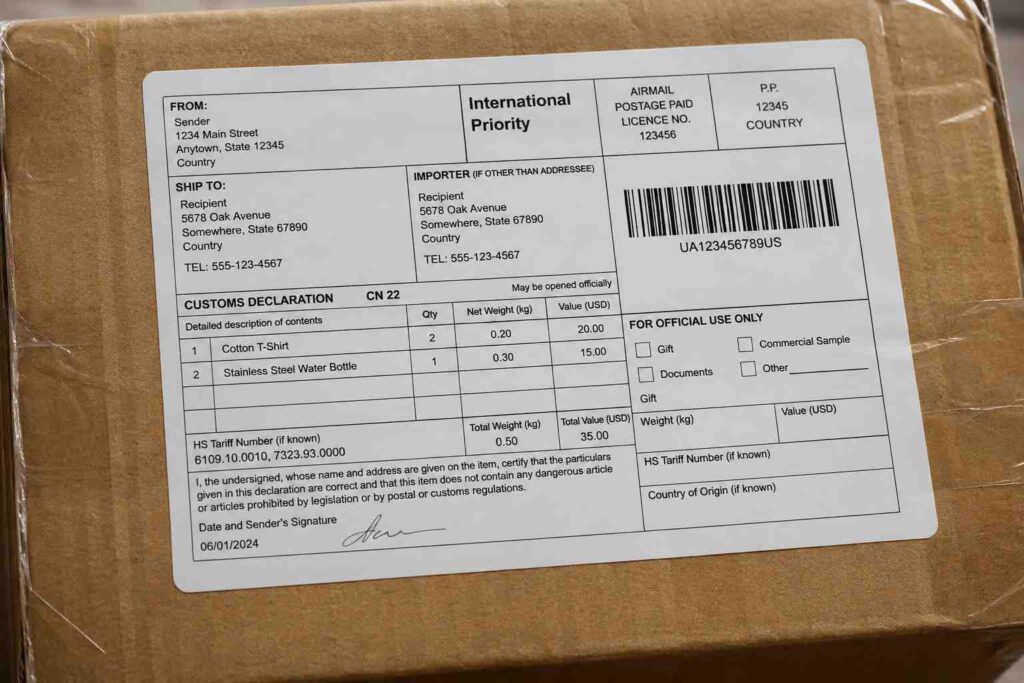
A package showing “stuck in customs” almost always means it is sitting in a normal processing queue, not that something has gone wrong. Most customs holds clear on their own within a few days to about two weeks, and the single most common cause is paperwork, a customs declaration form that is missing information, undervalued, or vague about what is inside. In the large majority of cases the right move is simply to wait, since customs agencies do not accept calls or provide expedited service for an individual shipment sitting in a routine queue.
How Long Customs Clearance Actually Takes
Clearance time varies a lot by country and by why a package was flagged in the first place. For inbound mail to the United States, packages typically move through a Customs and Border Protection International Mail Facility within 2 to 10 days, though total processing can stretch to a few weeks during high volume periods. Clearance into Canada can be as fast as 20 minutes for a straightforward shipment, but a package selected for inspection can take 12 to 48 hours or longer during busy periods. UK clearance is usually a matter of minutes to hours, with the full landing-to-delivery window running around a week when everything goes normally. When a shipment is specifically flagged for a document review or a formal inspection, hold times of two to four weeks are not unusual before it is released.
Because of this range, tracking pages tend to be vague once a package reaches customs. Many carriers stop showing detailed scan events at this stage since the package has technically left their custody and is being held by a government agency rather than the shipping company, so an unchanged tracking status for several days in a row is expected, not a sign the package is lost.
Common Reasons a Package Gets Held at Customs
A handful of ordinary issues account for most customs delays, and understanding them can turn a stressful wait into an informed one.
- Incomplete or inaccurate paperwork. Missing or vague information on the customs declaration, such as a generic item description or a quantity that does not match the package’s actual contents, is one of the most common reasons a shipment gets held for review.
- Declared value questions. When the value written on the customs form looks too low for what is being described, or falls outside the range customs officials expect for that type of item, the shipment is typically held until updated paperwork or documentation is provided.
- Unpaid duties or taxes. If import duties or taxes are owed and have not been paid in advance, customs will hold the package until that balance is settled, whether by the sender or the recipient.
- Random or targeted inspection. Customs agencies routinely inspect a percentage of packages to verify that the declared contents match what is actually inside, which typically adds a day or two, though it can take longer if something unexpected is found.
- Restricted or regulated items. Certain goods, including some electronics, food items, and anything requiring a specific license or certificate, can trigger an automatic hold regardless of how well the paperwork was filled out.
For example, imagine ordering a handmade item from an overseas seller who lists the customs value simply as “gift” with no dollar amount. That vague declaration is exactly the kind of thing that gets a package pulled for a documentation review, even though nothing is actually wrong with the shipment itself, and it can add a week or more to the timeline while the missing information is sorted out.
What You Can, and Cannot, Do While It Is Held
Customs agencies generally do not take instructions or expedite requests from an individual recipient while a package is inside their processing queue, so there is no phone call that speeds up a routine hold. What you can do is make sure nothing on your end is adding to the delay. Check your email, including your spam folder, for any message from customs, the carrier, or a customs broker asking for additional information or requesting payment of duties, since an unanswered request is one of the few things that turns a short hold into a long one. If you are the one who shipped the item internationally, double check that the customs form you filled out was complete and accurate, since correcting it after the fact usually has to go through the carrier or postal service rather than customs directly.
Outside of responding promptly to any request, the most effective thing to do is simply continue checking the tracking page periodically rather than repeatedly contacting a customer service line that has no more visibility into the hold than you do.
When to Actually Contact Customer Service or File an Inquiry
There is a real point where reaching out makes sense, it just comes later than most people expect. For USPS international shipments, meaningful escalation typically becomes possible after the package has been sitting at the same international processing point for about 7 days with no movement and no explanation. Before that point, a customer service inquiry usually just returns the same information already visible on the tracking page, since the shipment is genuinely still inside a normal processing window.
If your tracking history shows a specific status like “held for postage due,” “clearance delay,” or a request for additional documentation, that is different from ordinary silence and is worth acting on immediately, since it usually means customs is waiting on a specific action rather than simply working through a routine queue.
What Happens If Duties or Taxes Are Owed
Many countries assess import duties or taxes on packages above a certain declared value, and if that amount has not already been paid by the sender, the recipient is typically responsible for it before the package will be released. The carrier or postal service usually sends a notice, by mail, email, or text depending on the service, with instructions for how to pay online or in person. Ignoring that notice is one of the most common reasons a package that would have cleared in a few days instead sits for weeks, since nothing moves until the balance is settled. If a notice like this does not arrive within a reasonable window after your tracking shows a customs hold, it is worth checking directly with the carrier to confirm whether duties are actually owed, since notices can occasionally go to an old address or get caught in a spam filter.
How This Differs Between USPS, UPS, FedEx, and DHL
The general pattern, paperwork problems and volume causing most delays, holds true across carriers, but the process for getting information differs. USPS hands international mail off to Customs and Border Protection at an International Service Center, and once it is there, USPS itself often has limited visibility until the package clears and is handed back for final delivery, which is why USPS tracking can go quiet for the longest stretch of any major carrier. UPS and FedEx, by contrast, generally handle their own customs brokerage for shipments moving through their networks, which means their tracking pages tend to show more granular customs-related statuses, such as “clearance in progress” or “held for payment of duties and taxes,” and their customer service lines usually have more direct access to where a shipment actually stands. DHL operates similarly to UPS and FedEx in this respect, often showing a distinct “customs status” field separate from the main tracking timeline.
Because of this difference, a UPS or FedEx shipment that has not moved in three or four days is more worth a call than a USPS shipment showing the same gap, simply because the carrier itself has more visibility to offer. A helpful rule of thumb is to check whether the tracking page shows any customs-specific status language at all. If it does, that carrier likely has real information available. If tracking has simply gone silent with no customs-specific status shown, that is more often a USPS-style handoff gap where waiting is genuinely the only option for now.
How to Avoid Customs Delays on Future International Orders
A few habits meaningfully reduce the odds of a future international package getting flagged. When you are the one shipping internationally, filling out the customs form with a specific, accurate item description and a realistic declared value is the single biggest factor within your control, since vague descriptions like “gift” or “merchandise” with no further detail are a common trigger for a manual review. When you are the one receiving from an overseas seller, choosing sellers who are experienced with international shipping and who fill out detailed, accurate customs paperwork on their end can meaningfully cut down on how often your packages get flagged in the first place, since the paperwork quality is almost entirely on the sender’s side of the transaction. It also helps to know, before ordering, whether the item you are buying is likely to trigger a duty or tax based on its value and category, so an unexpected payment request does not sit unanswered in an inbox and stall an otherwise routine shipment.
Frequently Asked Questions
Is it normal for a package to sit in customs for over a week? Yes. Depending on the destination country and whether the shipment was flagged for review, a week to two weeks in customs is within the normal range, especially for international mail.
Why did my tracking stop updating once it reached customs? Many carriers hand off visibility to the customs agency at this stage, so detailed scan updates often pause even though the package is still moving through a normal process.
Can I call customs directly to ask about my package? Customs agencies generally do not provide individual shipment status over the phone. The carrier or postal service that handed the package off is the right first point of contact, and only after the shipment has been stalled well beyond the normal window.
What is the single most common reason for a customs delay? Incomplete or vague paperwork, particularly a missing or unrealistic declared value, is the most frequent cause of an otherwise routine shipment getting held for review.
On a side note, if you are the one responsible for receiving and logging international shipments for other people, such as running a mailroom, apartment complex, or business receiving area, a system built to track packages from arrival through pickup, like package tracking software, can make sorting out exactly where a delayed shipment stands much easier.
