
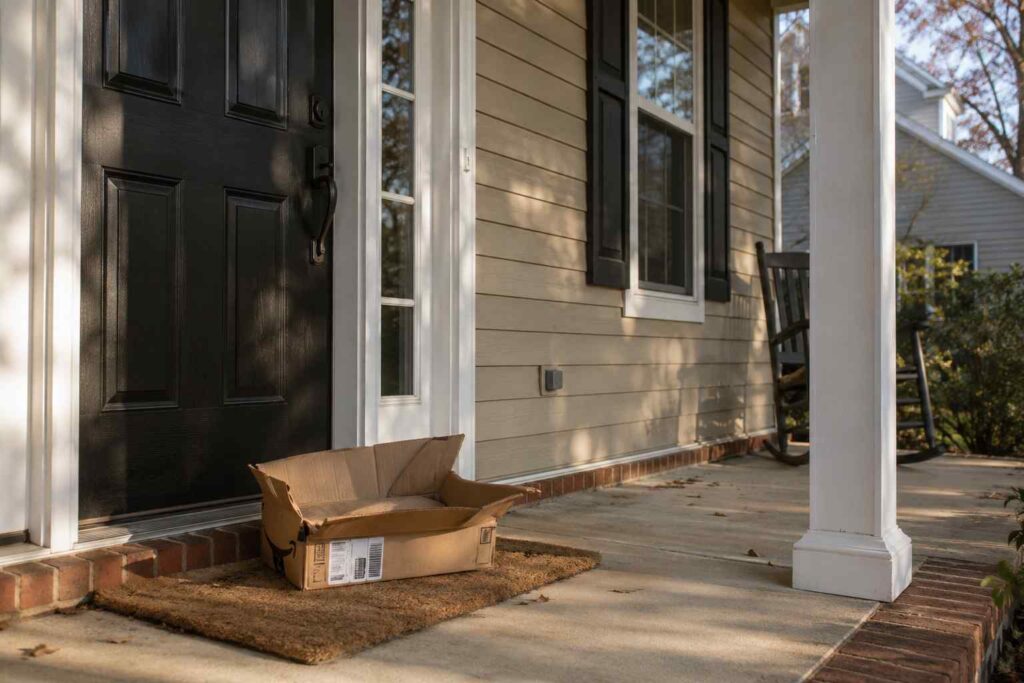
My Package Was Marked Delivered But Then Stolen, What Should I Do?
If your tracking says “delivered” but the package is nowhere to be found, first spend a few minutes checking nearby hiding spots, your household, and your neighbors, since a large share of “stolen” packages turn out to be misplaced by the driver rather than actually taken. If it truly is gone after that check, report it to the carrier and, for a valuable item, to the police, then file a claim with the carrier or contact the seller, since most major carriers and retailers have a specific process for exactly this situation.
How Common Is This, Really?
Package theft after a successful delivery, often called porch piracy, is far more common than most people realize. According to research from Capital One Shopping, package theft totaled 104 million incidents in 2025, which works out to roughly one out of every 228 package deliveries in the country. The same research found that 41.8 million Americans, about 31 percent of the population, were victims of package theft over a recent 12 month period, and that the average stolen package was worth $144.23.
Those numbers matter for one simple reason: if this has happened to you, you are dealing with a well understood, high volume problem that carriers and retailers already have a process for, not a rare edge case they will be confused by. Knowing that can make the next few steps feel a lot less overwhelming.
First Steps To Take Before Assuming It Was Stolen
Before treating a delivered-but-missing package as a theft, it is worth ruling out the more common, less dramatic explanations first, since carriers frequently leave packages in a spot other than your front door.
- Check nearby hiding spots. Drivers often tuck packages behind a screen door, planter, side entrance, garage, or under a porch bench to keep them out of view from the street.
- Ask everyone in your household. A family member or roommate may have already brought the package inside without mentioning it.
- Check with neighbors. A driver can easily misjudge which unit or house number a package belongs to, especially in an apartment building or a block of similar-looking homes.
- Look at the tracking details, not just the status word. Many carriers add a delivery note describing where the package was left, such as “left at front door” or “left with neighbor,” which can point you to exactly where to look.
For example, imagine an online order shows as delivered at 2:14 PM, but nobody was home and nothing is on the porch. Before assuming theft, check the tracking detail page rather than just the summary status. If it says “left at side door,” that single detail can resolve the entire situation in under a minute.
If You Live in an Apartment or Multi-Unit Building
Shared entryways add an extra layer of complexity, since a package can be marked delivered to the building without ever reaching your actual unit. Start with the leasing office or building front desk, since many properties hold packages there when a resident is not available, and a driver may have simply dropped it off with staff instead of leaving it at your door. If the building has a shared mail or parcel room, check there directly rather than relying on a text or email notification, since those notifications can be delayed or missed.
If the package genuinely never made it past the lobby, that gap between the building entrance and an individual unit is a common enough problem that most on-site management teams have a standard process for reviewing hallway or lobby camera footage on request, so it is worth asking directly rather than assuming nothing can be checked. This is also the exact gap that dedicated package tracking and chain-of-custody systems are built to close for larger buildings, since they log a delivery the moment it enters the building rather than leaving that final leg unaccounted for.
Reporting It: Carrier, Retailer, and Police
If you have genuinely ruled out a misdelivery or a mistaken pickup, the next step is to report the loss in the right order, since going straight to a police report without contacting the carrier or seller first usually just adds a delay.
Start with the retailer or seller if you bought the item online, since they typically have the fastest path to a resolution and can often initiate a trace or a replacement directly through their own shipping account. If the item shipped directly from the carrier, or the seller directs you to the carrier, you will need to file a claim yourself.
For a package worth filing a police report over, most local police departments accept an online report or a call to a non-emergency line for package theft, and having a report number can help support an insurance or carrier claim, especially for higher value items. It will not usually recover the package itself, but it creates an official record.
Carrier-Specific Steps
Each major carrier has its own claims process, and the filing window depends on the specific service that was used.
USPS. You can submit a Missing Mail Search Request starting seven days after the mailing date, according to USPS’s own help page. You will need the sender and recipient addresses, the size and type of package, identifying details such as the tracking number, and a description of the contents. For an actual insurance claim, USPS requires waiting at least 15 days after mailing for most services, or seven days for Priority Mail Express, with a 60 day deadline to file from the mailing date. Only insured mail is eligible for a paid claim, and either the sender or the recipient can file it.
UPS. According to UPS’s official claims page, you can start a claim for a lost package within 60 days of the scheduled delivery date through your UPS account. You will need the tracking number and documentation supporting the value of the contents, such as an invoice or receipt. UPS states that an investigation typically takes about 8 to 15 working days.
FedEx. FedEx’s official claims process allows you to file for a lost or missing shipment within 60 calendar days of the ship date for domestic packages, or within nine months specifically for shipments that never arrived at all, according to FedEx’s own claims guidance. Keep any packaging or related documentation until the claim is resolved, since FedEx may request it.
Amazon. For an order shipped and sold by Amazon, go to Your Orders, select the item, and choose the option for a problem with the order, such as “Package didn’t arrive.” Amazon typically resolves these cases quickly with a refund or replacement once you confirm the package is genuinely missing rather than misdelivered nearby. For third-party marketplace sellers, contact the seller first; if that does not resolve it, Amazon’s A-to-z Guarantee provides a backup path.
Reducing the Chances It Happens Again
Once the immediate situation is handled, a few practical changes can meaningfully cut the odds of a repeat, particularly if this is not the first time.
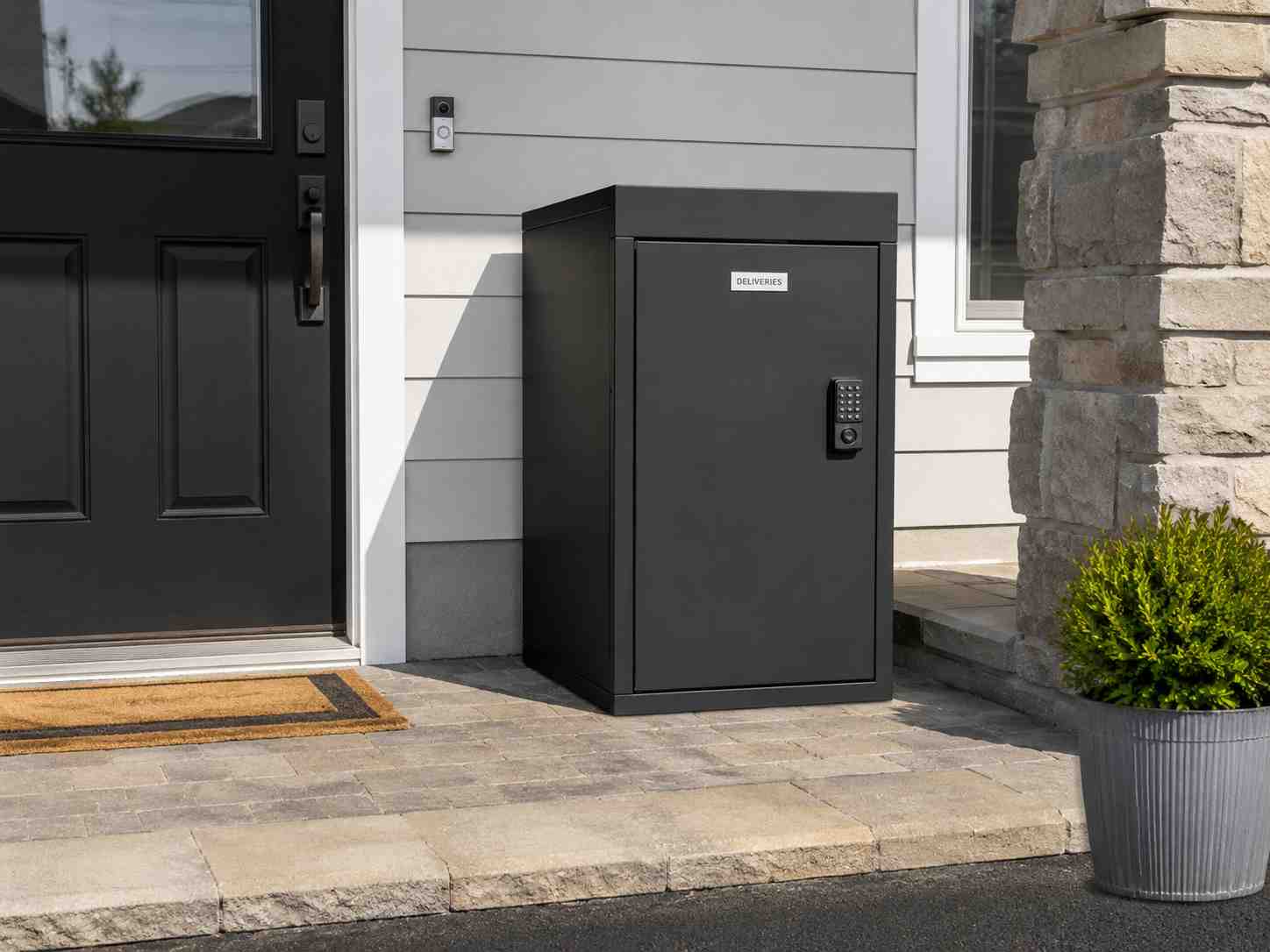
Consider requiring a signature on higher value deliveries, which most carriers offer as a paid or account-level option, so the package cannot be left unattended at all. A lockable delivery box or a designated pickup locker removes the package from public view entirely once it arrives. Many carriers also offer their own secure pickup network, such as a staffed retail location or a locker bank, as an alternative delivery address for orders where theft is a real concern. If you know you will not be home, rerouting a package to your workplace, a trusted neighbor, or a nearby pickup point avoids the exposure window altogether.
For a concrete example, a household that has lost two packages from its porch within a few months might switch to requiring a signature for anything over roughly $75 in value and start rerouting lower cost, routine deliveries to a locker at a nearby pickup point. That combination directly removes the two most common failure points, an unattended porch and a delivery nobody was home to receive, without adding much extra effort to everyday ordering.
It also helps to know that many credit cards include purchase protection that covers stolen items for a period after purchase, separate from anything the carrier or retailer offers, so it is worth checking the card used for the order before assuming a claim with the carrier is the only path to being made whole. Reviewing that benefit ahead of time, rather than after a theft, means you already know what documentation your card issuer will want if you ever need to use it.
Frequently Asked Questions
How long do I have to file a claim if my package was stolen? It depends on the carrier. USPS gives you 15 days after mailing for most services (7 days for Priority Mail Express) up to a 60 day deadline. UPS allows claims within 60 days of the scheduled delivery date. FedEx allows 60 calendar days from the ship date domestically, with a longer nine month window specifically for shipments that never arrived.
Will the carrier or retailer actually reimburse me? For carriers, reimbursement typically requires the shipment to have been insured, or covered under the retailer’s own shipping protection. Many online retailers, including Amazon, will refund or replace a genuinely missing order even without separate insurance, as part of their own buyer protection policies.
Should I file a police report for a stolen package? For lower value items it is often not necessary, but for higher value packages it is worth doing, since a police report number can support a carrier or insurance claim and creates an official record of the theft.
What is the fastest way to get this resolved? Contact the seller or retailer first if you bought the item online, since they usually have the most direct path to a refund, replacement, or carrier trace, and can act faster than starting a claim with the carrier yourself.
On a related note, if you are the one responsible for tracking packages for other people, such as running a mailroom, apartment complex, or business receiving area, it may be worth looking into package tracking software built specifically for that kind of volume.
