

How to Calculate the ROI of Package Tracking Software for Your Mailroom
The ROI of package tracking software is calculated by comparing what a mailroom currently spends on labor, replaced packages, and dispute resolution against the cost of the software, and most organizations recover their investment within the first several months once staff time and loss reduction are counted accurately. The hardest part is rarely the software cost itself, it is measuring the hidden labor cost of the manual process a facility is currently running.
Why Mailroom ROI Is Easy to Underestimate
When a facilities or operations manager first prices out package tracking software, the instinct is to compare the subscription cost against doing nothing, since the current process feels “free” because it does not appear as a separate line item on any budget. That framing misses most of the real cost. A manual mailroom process, a paper log, a spreadsheet, or a whiteboard, still costs money, it just spends that money in staff hours rather than a software invoice, which makes it invisible unless someone actually measures it.
Consider a receiving desk that handles 120 packages a day using a handwritten log. If logging each package by hand takes an average of ninety seconds, including writing down the sender, recipient, and shelf location, that is three hours of labor every single day spent purely on data entry, before a single package has even been picked up. At a fully loaded labor cost of 22 dollars an hour, that is roughly 66 dollars a day, or well over 17,000 dollars a year, just for intake logging on one desk.
The Three Cost Categories That Make Up Real ROI
A complete ROI calculation for package tracking software rests on three cost categories that manual processes handle poorly: labor time, loss and replacement cost, and dispute resolution time. Skipping any one of them tends to understate the real return significantly.
Labor time. This covers intake logging, shelving, recipient notification, and pickup confirmation. Package receiving software that captures sender, timestamp, and a photo in a single scan typically cuts intake time from over a minute per package to a few seconds, which compounds fast at higher volumes.
Loss and replacement cost. Every package a facility cannot account for either gets replaced at the organization’s expense or becomes an unresolved liability. The USPS Office of Inspector General reported at least 58 million packages stolen nationwide in 2024, a volume that makes even a small per-facility loss rate a real recurring cost once multiplied across a full year of shipments.
Dispute resolution time. When a recipient claims they never got a package, someone has to investigate: pulling security footage, calling the courier, interviewing staff. This routinely takes thirty minutes to an hour per incident for a manager who could otherwise be doing higher-value work, and that time cost rarely shows up in anyone’s spreadsheet even though it is completely real.
A Worked Example
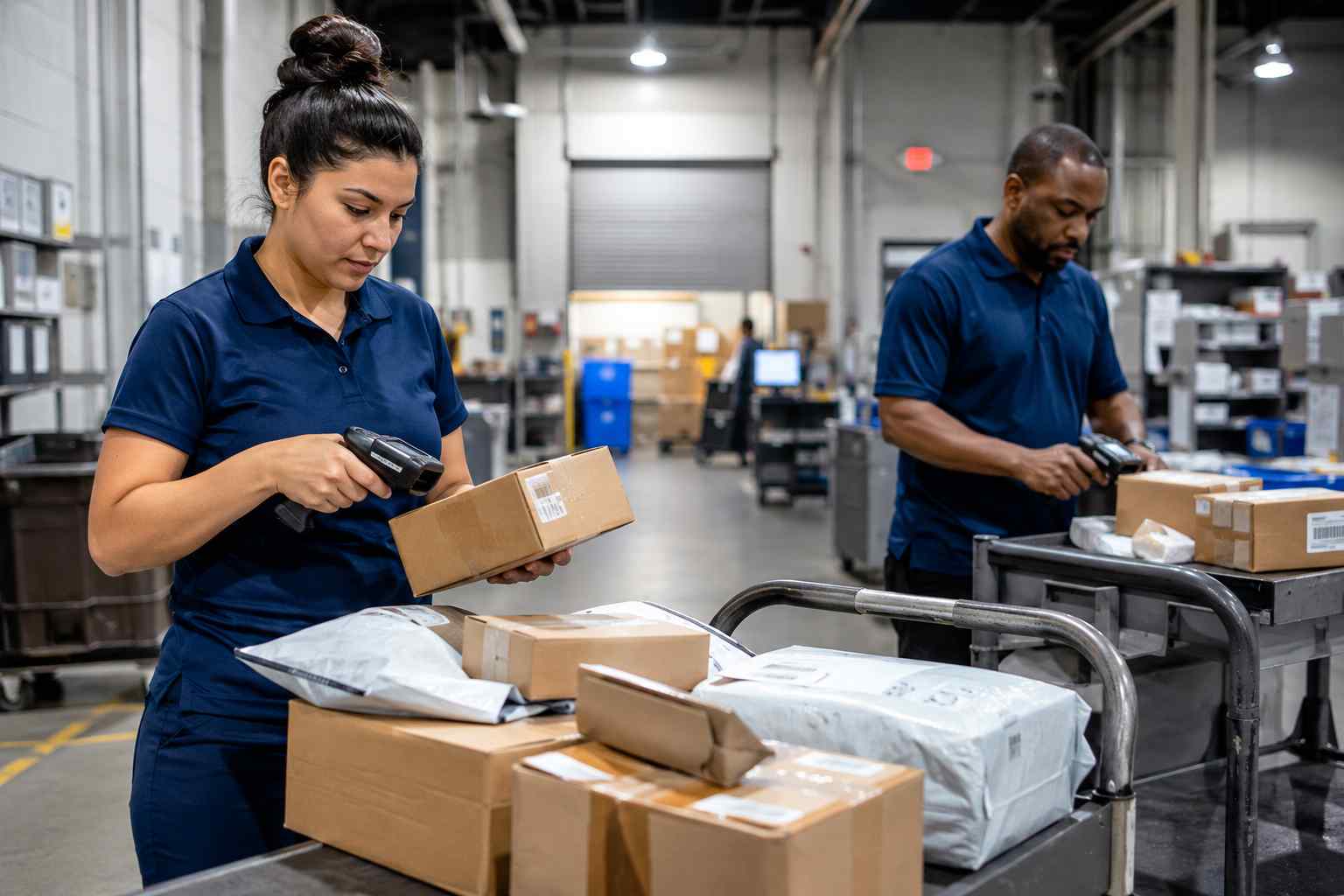
Take a mid-sized corporate receiving operation handling 150 packages a week with two staff members splitting intake and pickup duties. Under a manual process, intake alone consumes roughly 15 hours a month at 22 dollars an hour, or 330 dollars. Add a conservative two unresolved package disputes a month at 45 minutes of manager time each, valued at 35 dollars an hour, for another 52 dollars. Add one replaced package a month at an average value of 60 dollars. That totals roughly 442 dollars a month, or around 5,300 dollars a year, in costs the organization is already paying, just not through a vendor invoice.
Against that baseline, a mailroom management software subscription in the range of 150 to 250 dollars a month for a facility this size, combined with intake time cut by roughly 70 percent through one-scan logging and a meaningful drop in disputes from photo-verified handoffs, produces a positive return well inside the first year, often inside the first few months once the labor savings alone are counted.

Where the Numbers Shift by Facility Type
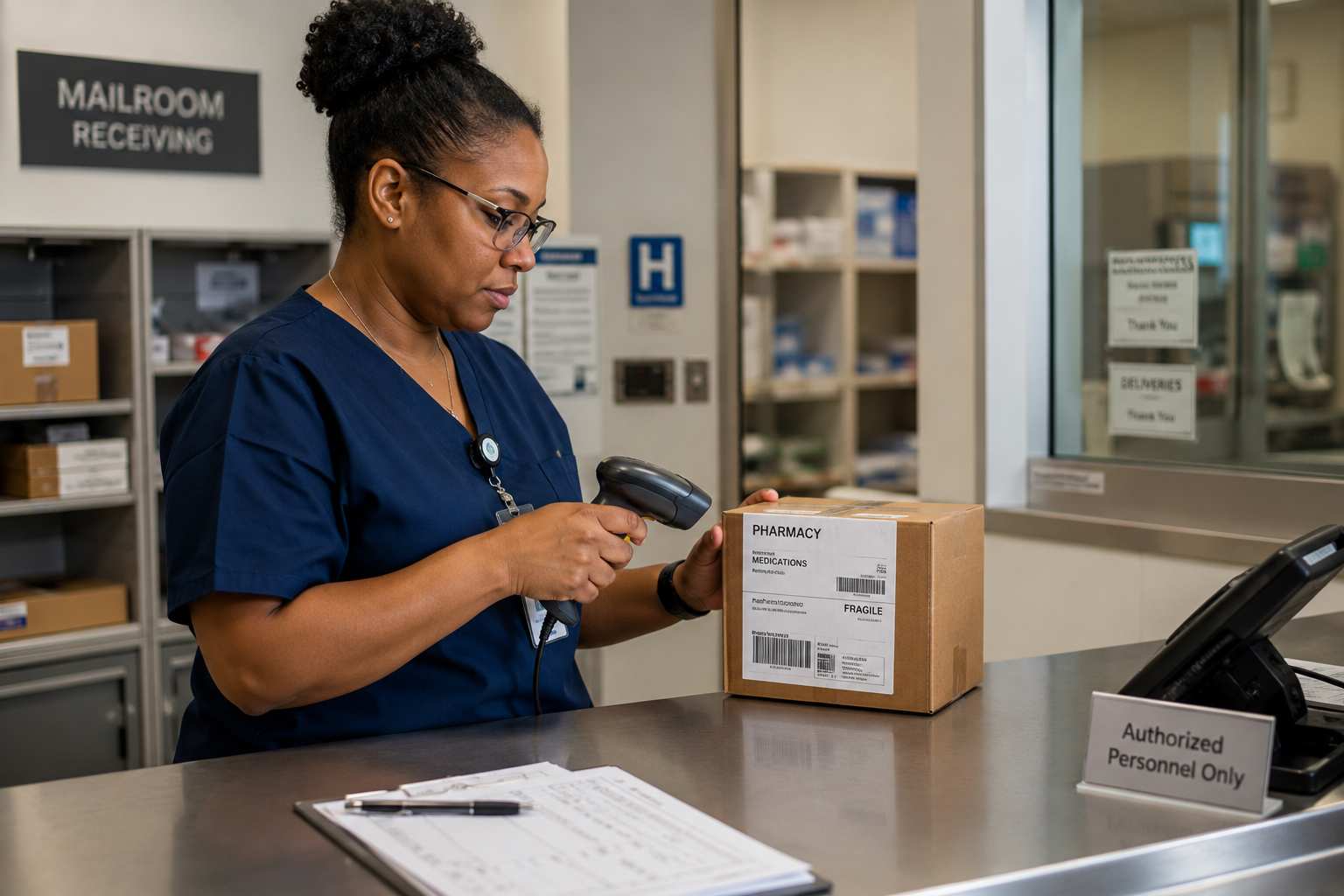
The exact ROI curve depends heavily on what kind of facility is running the numbers, since volume, staffing cost, and dispute frequency vary a lot by environment. A university mailroom handling thousands of student deliveries during move-in week has a completely different peak-volume profile than a steady year-round corporate office, which changes how quickly labor savings accumulate. A hospital mailroom handling sensitive or time-critical items weighs dispute and compliance risk more heavily than raw labor cost, since a mishandled delivery there can carry consequences well beyond a replacement cost. A residential property managing package volume for hundreds of units sees ROI driven mostly by reduced resident complaints and front-desk staff time rather than by loss prevention alone. TekCore’s industry benefits page breaks down how the calculation shifts across these environments in more detail.
Building Your Own ROI Estimate
A reasonably accurate estimate does not require a formal audit, just three numbers most managers can pull together in an afternoon. First, time a sample of ten to twenty package intakes with a stopwatch to get a real average handling time, rather than guessing. Second, pull the last three to six months of any records on replaced or reimbursed packages to estimate a monthly loss rate. Third, ask staff to informally track how many “where is my package” disputes they field in a typical week and roughly how long each one takes to resolve.
Multiplying those three figures out against fully loaded labor cost gives a realistic current-state baseline, which can then be compared directly against a package tracking ROI estimate for a given software plan. Most facilities find the labor-time savings alone justify the switch, with loss reduction and faster dispute resolution adding further margin on top.
Total Cost of Ownership: What to Include Beyond the Subscription
A subscription price by itself is not the full cost of adopting package tracking software, and skipping the rest of the total cost of ownership can make a switch look more expensive than it actually is once amortized, or occasionally cheaper than it actually is if implementation costs get ignored entirely. A complete comparison needs to account for setup and configuration time, staff training, and any hardware such as barcode scanners or label printers a facility does not already own.
Most cloud-based package tracking platforms are priced to minimize upfront cost specifically because vendors know a large setup fee discourages adoption, so implementation for a single-site mailroom typically takes a few hours to a few days rather than weeks, and existing barcode scanners or even a smartphone camera can often substitute for dedicated hardware during a trial period. TekCore’s editions and features page breaks down what is included at each tier, which is useful for estimating whether a facility needs the base feature set or a higher tier with additional integrations before running the labor-savings math above.
Training cost is the piece most often left out entirely. A scan-based intake and pickup workflow is intentionally simple, one scan and a photo instead of a handwritten log entry, so most staff reach full proficiency within a single shift rather than requiring a multi-day rollout. Even so, that adjustment period has a real, if small, cost that belongs in a conservative total cost of ownership calculation rather than being assumed away.
Consider a 200-unit residential property switching from a paper log to a package tracking platform. Setup, including staff training and configuring resident directories, takes roughly eight hours of combined manager and IT time, valued conservatively at 400 dollars total. Layered on top of the roughly 5,300 dollar annual labor and loss cost calculated earlier for a comparable facility, that one-time setup cost is recovered inside the first month of the labor savings alone, well before the software’s ongoing subscription cost is factored back in as an offset.
The Compliance and Risk-Reduction Value That Rarely Makes It Into the Spreadsheet
Everything calculated so far treats package tracking software purely as a cost-avoidance tool, reducing labor time, loss, and dispute hours. For some facilities, particularly hospitals, universities, and any organization handling regulated or high-value shipments, there is a second category of value that does not show up as a dollar figure in the same way but still belongs in the decision: a defensible chain of custody. Being able to produce a timestamped, photo-documented record of exactly who received a specific package and when is not just a convenience during a routine dispute, it is often the difference between a resolvable question and a genuine liability when a shipment involves medication, sensitive documents, or legal correspondence.
TekCore’s package chain of custody page covers this in more detail, but the ROI-relevant point is that this kind of documentation has an insurance-like value: most months it saves nothing extra beyond the labor and dispute time already counted, but in the specific months it matters, a single incident involving a lost regulated shipment can cost far more in remediation, legal exposure, or reputational damage than an entire year of software subscription fees. A hospital mailroom that cannot prove a specific medication shipment was received and handed off correctly is exposed in a way a corporate office losing a package of office supplies simply is not.
This does not mean every facility should inflate its ROI estimate with a speculative risk-avoidance number. It means that for facilities in higher-risk categories, the labor-and-loss calculation described earlier in this article represents a conservative floor on the real return, not the complete picture, and that floor is worth stating explicitly when presenting the business case to anyone who will ask about liability rather than just cost.
Common Mistakes When Calculating ROI
The most common mistake in an ROI calculation for package tracking software is comparing the subscription cost only against the price of the current system, which is usually zero, rather than against the true fully loaded cost of the labor and losses that system generates. A manager who stops at “we don’t pay for anything right now” has not actually calculated anything, since the manual process is never actually free, it only defers its cost into staff hours that are already being paid for through payroll.
A second common error is using list-price labor rates instead of fully loaded ones. A staff member’s hourly wage is only part of what an hour of their time actually costs an organization once benefits, payroll taxes, and overhead are factored in, typically adding twenty to forty percent on top of the base wage. Leaving that out understates the labor savings side of the calculation by a meaningful margin, sometimes enough to change whether the numbers justify the switch at all.
A third mistake is treating loss and dispute costs as a rounding error because no formal tally currently exists. The absence of a number is not the same as the cost being small, it usually just means no one has been counting. Facilities that go through the exercise of pulling three to six months of actual replaced-package records are frequently surprised by how much higher the total is than their informal impression suggested.
Finally, many estimates ignore ramp-up time and assume full savings apply from day one. In practice, staff need a short adjustment period to fully adopt a new scanning or verification workflow, and volume-based savings build gradually as the process becomes routine rather than appearing instantly. Building a conservative ramp-up assumption into the estimate, rather than projecting full savings starting in month one, produces a more defensible number and avoids an ROI case that looks overstated once the real numbers come in.
A related mistake is stopping the calculation once the visible costs are covered and leaving out opportunity cost entirely. Every hour a manager spends investigating a package dispute or a clerk spends re-shelving a misplaced item is an hour not spent on work that actually grows the business or improves resident and employee experience. That time has a real value even when it never shows up as a line item, and leaving it out of the estimate systematically understates the case for switching.
Frequently Asked Questions
How quickly do most mailrooms see a positive return? Facilities handling more than about 50 packages a week typically see labor savings alone offset the software cost within the first three to six months, with total ROI, including reduced loss and dispute time, often complete within the first year.
Does ROI only come from labor savings? No. Labor time is usually the largest and fastest-to-materialize component, but reduced package loss and faster dispute resolution both add real, if less immediately visible, savings on top of it.
What if our facility has low package volume? Lower-volume facilities still save meaningful staff time per package, they simply take longer to accumulate the same total dollar savings as a high-volume site, so the payback period is longer rather than the return being smaller per package handled.
Once you have a real current-state baseline, the ROI case for switching from a manual process usually makes itself. If you want help working through the numbers for a facility your size, you can get a quote and we will walk through the math together.
