
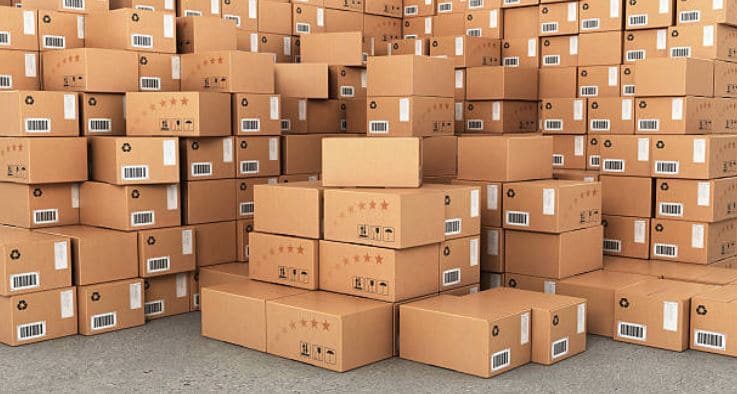
Package delivery volume has grown dramatically over the past decade, and every projection points to continued growth. For mailroom managers, this is not an abstract trend — it is a daily operational reality that shows up as more packages per shift, more recipients to notify, more storage space consumed, and more disputes to resolve when something goes missing.
Understanding the scale of the growth and what is driving it helps mailroom managers make the case for better tools and anticipate where their operations are headed.
How Much Has Package Volume Grown
The shift to e-commerce has fundamentally changed how goods move. What used to require a trip to a store — clothing, electronics, office supplies, household goods, medical equipment, food — now arrives at a building’s receiving dock. Online shoppers now number in the billions globally, and the volume of parcels moving through the carrier network has grown proportionally.
For organizations, the impact is not just consumer shopping. Business-to-business shipments have also shifted toward parcel delivery as supply chains have become more distributed. A corporate office that received a few dozen packages per week a decade ago may now receive that many per day. A university mailroom that handled a moderate volume of student packages before the pandemic now operates at year-round elevated volume as students order everything from their rooms.
The three carriers that dominate U.S. parcel volume — UPS, FedEx, and USPS — each process billions of packages annually, and that number has grown consistently year over year. Amazon’s own delivery network adds further volume that bypasses traditional carrier tracking infrastructure, creating additional complexity for receiving operations that need to log packages from any source.
What Rising Volume Does to Manual Operations
A manual package logging system has a capacity ceiling. One staff member using a clipboard or spreadsheet can process a limited number of packages per hour before accuracy degrades and delays accumulate. When volume exceeds that ceiling, packages pile up, notifications get delayed, recipients call to ask about deliveries, and the probability of a loss or dispute increases.
The staff time cost of manual logging also scales linearly with volume. More packages mean more time logging, more notifications to send manually, more follow-up on unclaimed items, and more time investigating disputes. There is no efficiency gain from processing the hundredth package faster than the first.
This is the core operational problem that rising package volume creates for organizations that have not automated their receiving workflow. The work grows with volume. The staff hours do not.
How Digital Package Tracking Absorbs Volume Growth
Package tracking software breaks the linear relationship between volume and staff time. Scanning a barcode takes the same few seconds whether the mailroom processes 20 packages per day or 200. The notification goes out automatically the moment the package is logged. The storage record and pickup confirmation happen in the same workflow without additional steps.
As a result, organizations that have automated their receiving workflow can handle significantly higher volume with the same staff. The operational ceiling rises dramatically, and the per-package cost of processing falls as volume grows. That efficiency advantage compounds over time as delivery volume continues to increase.
See how TekTrack’s automation features handle high-volume receiving environments across different organizational types.
Multi-Carrier Complexity
Rising volume has also brought greater carrier diversity. UPS, FedEx, and USPS remain dominant, but Amazon Logistics, DHL, OnTrac, LaserShip, and dozens of regional carriers now deliver meaningful package volumes to organizational mailrooms. Each carrier uses different barcode formats and label layouts.
A manual receiving workflow handles this by having staff interpret each label individually — a slow and error-prone process. TekTrack’s SmartScan™ technology reads barcodes from any carrier automatically, identifying the carrier and recipient without any manual configuration or data entry.
Planning for Continued Growth
Mailroom managers who are already feeling the strain of current package volume should plan for that volume to continue growing. The trends driving it — e-commerce adoption, distributed supply chains, same-day and next-day delivery expectations — are structural, not cyclical.
The practical planning questions are: At what volume does your current system break down? What does that cost in staff time and lost-package incidents? And what would it take to handle twice the current volume without adding staff?
The TekTrack ROI calculator helps you quantify the answer. For organizations approaching their manual processing ceiling, the numbers typically justify the investment within the first quarter of operation.
Industry-Specific Volume Pressures
Package volume growth affects different organizational types differently. University campuses face extreme peak-period pressure during move-in, back-to-school, and the holiday season. Corporate offices absorb growing volumes of equipment, supplies, and employee personal orders. Healthcare facilities handle increasing volumes of medical supplies, pharmaceuticals, and regulated devices requiring documented chain of custody. Residential communities face the most consistent year-round growth as residents shift more purchasing online.
Each of these environments has a different tolerance for manual processing and different consequences when the system fails. What they share is the trend: volume is up, and it is not coming back down.
Getting Ahead of the Problem
The best time to implement package tracking software is before the current system breaks down — not during the crisis that results from processing 150 packages per day with a clipboard built for 30.
Most organizations are fully operational on TekTrack within a few days of setup. There is no extended implementation, no IT project, and no retraining period that disrupts daily operations. Schedule a demo to see how TekTrack handles your current volume and scales as it grows, or review the FAQ for answers to common implementation questions.
